Feinstein Institutes, Northwell electrophysiologist successfully implant first modular cardiac rhythm management system in novel clinical trial
Feinstein Institutes, Northwell electrophysiologist successfully implant first modular cardiac rhythm management system in novel clinical trial
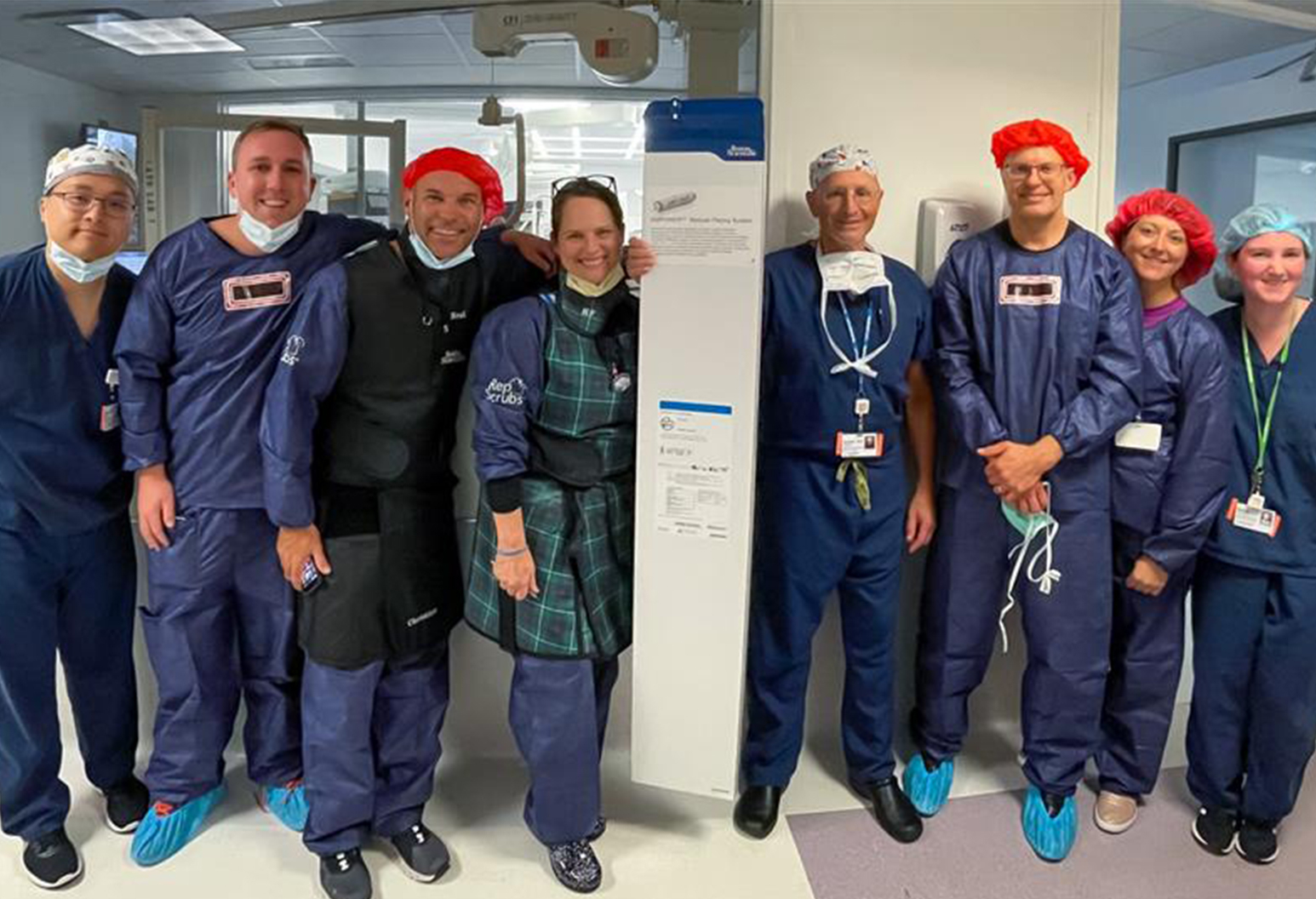
MANHASSET, N.Y.--(BUSINESS WIRE)--Like a paramedic in your chest, a team of Northwell Health clinicians, electrophysiologists and clinical trial investigators at The Feinstein Institutes for Medical Research successfully implanted a modular cardiac rhythm management (CRM) system in the first patient to be enrolled in the Boston Scientific MODULAR ATP clinical trial. The patient, James Giambrone, of Amityville, NY, is the first person to be part of the clinical trial in the Northeast and was implanted with an implantable defibrillator and leadless pacemaker.
Implanted at North Shore University Hospital (NSUH), the trial, led by Laurence M. Epstein, MD, system director of electrophysiology at Northwell, will evaluate the efficacy of communication between devices within the Boston Scientific mCRM™ Modular Therapy System – the EMBLEM™ MRI Subcutaneous Implantable Defibrillator (S-ICD) System and the EMPOWER™ Modular Pacing System (MPS). The trial will also investigate the system and procedure-related complication-free rate of the EMPOWER MPS.
These devices are designed for people who are at risk for sudden cardiac arrest and are intended to communicate with each other wirelessly. Working together, the EMPOWER MPS will help maintain a person’s regular heart rhythm. If needed, the S-ICD, which provides protection without touching the heart or substernal space, is designed to deliver a shock to restore normal functioning – much like a paramedic might deliver to someone suffering a heart attack.
“We are pleased to participate in this important study and enroll our first patient that will help evaluate the effectiveness of the mCRM Modular Therapy System and potentially expand the patient population that can benefit from S-ICD therapy,” said Dr. Epstein. “Positive outcomes from this trial may one day give physicians the added flexibility to provide a new option for patients who develop pacing needs while preserving many of the benefits S-ICD therapy.”
Dr. Epstein, the trial team, as well as members of Boston Scientific, implanted the devices in Mr. Giambrone, 56, during a procedure on October 6. One week earlier, Mr. Giambrone was admitted to NSUH’s Emergency Department, citing chest pains, elevated heartbeat and sweating. After a barrage of tests, treatments and a three-day medically induced coma, Mr. Giambrone was asked to participate in the clinical trial.
“I almost died. If Dr. Epstein and the entire team of nurses and doctors didn’t do what they did as quickly as they did, I wouldn’t be here today,” said Mr. Giambrone. “I am beyond grateful for what they have done for me. This has taught me the importance of listening to your body and taking care of yourself – don’t wait until the last literal minute.”
The S-ICD is a proven treatment option for the prevention of sudden cardiac death. Because it provides protection without touching the heart, it eliminates many complications associated with leads placed in those locations. The leadless pacemaker, which looks like a small capsule, is attached to the inside of the lower right chamber of the heart. After the surgery, Mr. Giambrone was out of the hospital and back to work within days. The MODULAR ATP trial will enroll up to 60 centers in the U.S., Canada and Europe up to 300 patients.
“About 450,000 Americans die each year from cardiac arrest, the most common cause of death. Clinicians and patients must have the most effective preventative treatments on-hand,” said Christina Brennan, MD, senior vice president of clinical research at the Feinstein Institutes. “Clinical trials are key to gathering critical information that can lead to the approval and adoptions of those treatments.”
Boston Scientific is the sponsor of the trial. For more information, go to: https://clinicaltrials.gov/ct2/show/NCT04798768
About the Feinstein Institutes
The Feinstein Institutes for Medical Research is the home of the research institutes of Northwell Health, the largest health care provider and private employer in New York State. Encompassing 50 research labs, 3,000 clinical research studies and 5,000 researchers and staff, the Feinstein Institutes raises the standard of medical innovation through its five institutes of behavioral science, bioelectronic medicine, cancer, health system science, and molecular medicine. We make breakthroughs in genetics, oncology, brain research, mental health, autoimmunity, and are the global scientific leader in bioelectronic medicine – a new field of science that has the potential to revolutionize medicine. For more information about how we produce knowledge to cure disease, visit http://feinstein.northwell.edu and follow us on LinkedIn.
Contacts
Matthew Libassi
631-793-5325
mlibassi@northwell.edu