Crystallographic Discoveries Bring New Clarity to Pharmaceutical Psilocybin Polymorph Characterization
Crystallographic Discoveries Bring New Clarity to Pharmaceutical Psilocybin Polymorph Characterization
Peer-reviewed study out today shows three most pharmaceutically relevant crystalline forms of psilocybin have been consistently created and observed since 1959
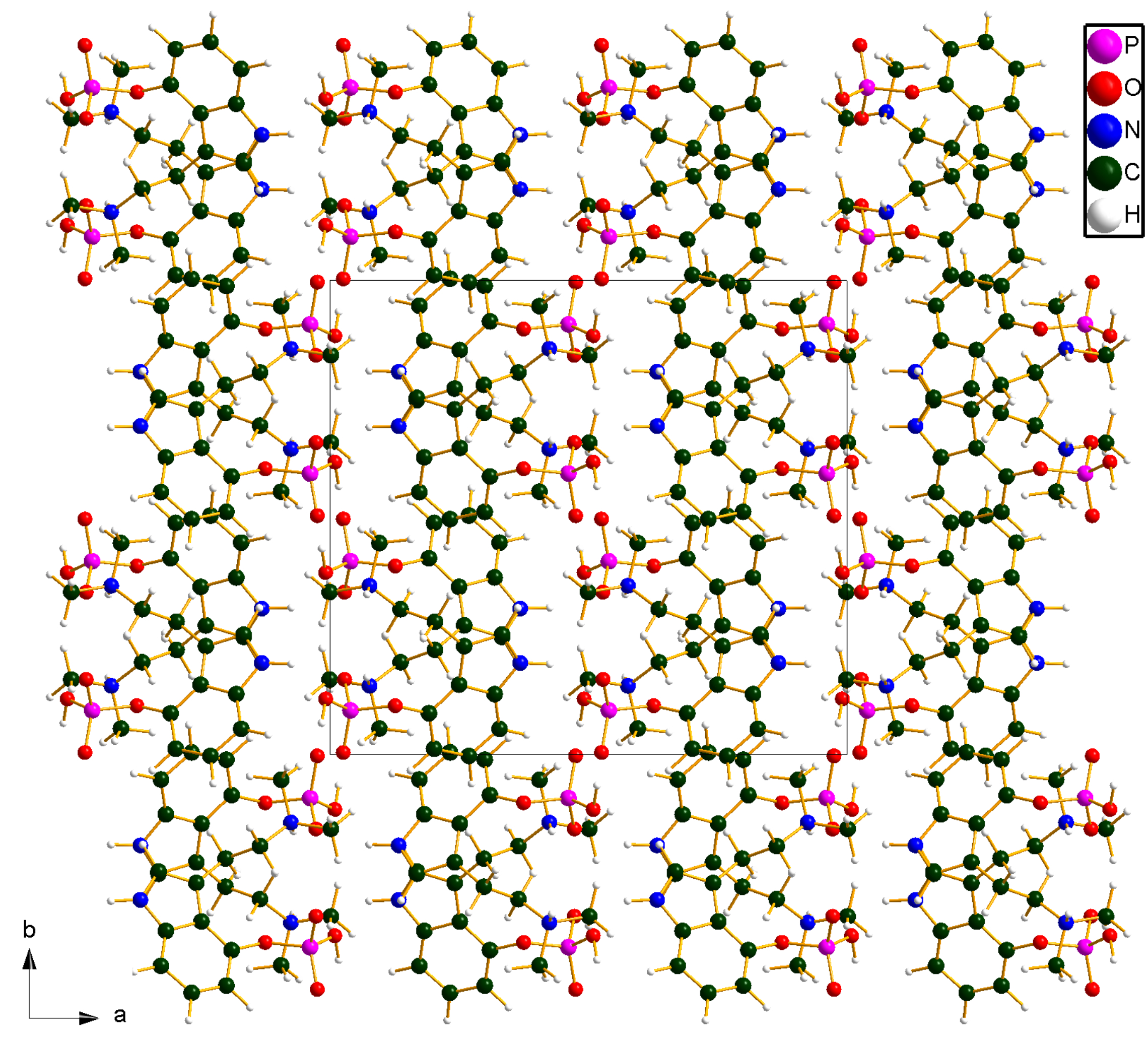
The true crystal forms of pharmaceutical psilocybin have been revealed for the first time. Research published today solves the crystallographic puzzle and brings new clarity to the unique crystalline arrangements, called polymorphs, that naturally arise from the production of synthetic psilocybin. The study conclusively shows that three psilocybin polymorphs repeatedly occur from the well-known crystallization process and that they have appeared in numerous places throughout the history of synthesizing psilocybin since 1959. Pictured: A graphical representation showing the exact atom locations in a psilocybin Polymorph A crystal. (Graphic: Business Wire)
MADISON, Wis.--(BUSINESS WIRE)--Breakthrough research has now revealed the true crystal forms of pharmaceutical psilocybin. A new study overcomes experimental challenges to solve the crystallographic puzzle and brings clarity to the unique crystalline arrangements, called polymorphs, that naturally arise from the production of synthetic psilocybin. The study conclusively shows that three psilocybin polymorphs repeatedly occur from the well-known crystallization process and that they have appeared in numerous places throughout the history of synthesizing psilocybin since 1959.
The peer-reviewed research, published today in the journal Acta Crystallographica Section C: Structural Chemistry (IUCr), uses the solved crystal structures to complete a precise and comprehensive assessment of their inevitability and historical precedence, questioning the patentability of these psilocybin polymorphs.
“Crystal structures are the gold standard in chemical characterization, but due to the physical properties of psilocybin, we initially believed that solving the crystal structures would be challenging, if not impossible,” says Alex Sherwood, Medicinal Chemist at Usona Institute, and lead author on the paper. “Thanks especially to the expert crystallographer, James Kaduk, we can now share this unique view into the atomic structure of a psilocybin crystal. The collaborative spirit and depth of support provided by everyone involved in this research helped to break new ground in psychedelic science.”
Advanced methods, new discoveries
A team of Usona chemists and collaborating crystallographers used powder X-ray diffraction (PXRD) data collected on psilocybin at the Advanced Photon Source synchrotron at Argonne National Laboratory to solve key psilocybin crystal structures. The newly solved structures enabled the researchers to precisely calculate the crystalline composition of 24 unique samples of psilocybin synthesized between 1963 and 2021, collected from laboratories, commercial manufacturers, and clinical trial sites around the world.
Key findings include:
- Over the last 57 years, each of the historical samples quantitively reflect one or more of the three repeatedly observed crystalline forms of psilocybin.
- Modern analysis of crystallographic research with psilocybin published in the 1970’s reveals the three predominant crystalline forms were described and publicly available for decades.
- Unusual characterization data originally reported to be unique were exposed instead as a simple mixture of the known polymorphs.
- Revisions are recommended on characterizations in recently granted patents that include descriptions of crystalline psilocybin mixtures inappropriately reported as a novel variant.
- Crystallization experiments show how to precisely control and obtain each polymorph individually and how to avoid undesirable mixtures in large-scale manufacturing.
“The process for isolating and crystallizing pure psilocybin has been consistently reproduced since first reported in 1959, and many different clues throughout history pointed to three psilocybin polymorphs resulting from that process,” says Sherwood. “The crystal structure solutions unified all the old evidence and data with precision and elegance. Once we put it all into one place, the full picture came together to tell a complete and compelling story about psilocybin crystallization.”
Open science approach
Usona Institute is a non-profit medical research organization that takes an open science approach to established findings, therefore making public the scientific discoveries and processes that arise from its research. The study published in IUCr today is an open access paper.
Psilocybin is a naturally occurring substance found in numerous species of mushrooms known for their psychoactive properties. Following its chemical synthesis in 1959, purified synthetic psilocybin has been evaluated in clinical trials aimed at understanding its efficacy in treating a range of mental health conditions including addiction, depression, and anxiety.
Evaluation of psilocybin as a pharmaceutical tool has driven efforts such as contemporary commercial-scale production, as well as attempts to block manufacturing of psilocybin through patent protection. The findings published today are part of a post grant review (PGR) filing by non-profit Freedom to Operate of a recently granted patent for synthetic psilocybin.
To learn more about Usona, visit www.UsonaInstitute.org
About Usona Institute
Usona Institute is a 501(c)(3) nonprofit medical research organization (MRO) that conducts and supports pre-clinical and clinical research to further the understanding of the therapeutic effects of psilocybin and other consciousness-expanding medicines. Its focus is on alleviating depression and anxiety in people for whom current medical treatments fall short in offering relief and a better quality of life.
Contacts
For media inquiries:
Penny Patterson, Director of Communications
penny.patterson@usonainstitute.org
+1-608-278-7662