Feinstein Institutes Scientists Develop Long-Term Vagus Nerve Implant for Bioelectronic Medicine Research
Feinstein Institutes Scientists Develop Long-Term Vagus Nerve Implant for Bioelectronic Medicine Research
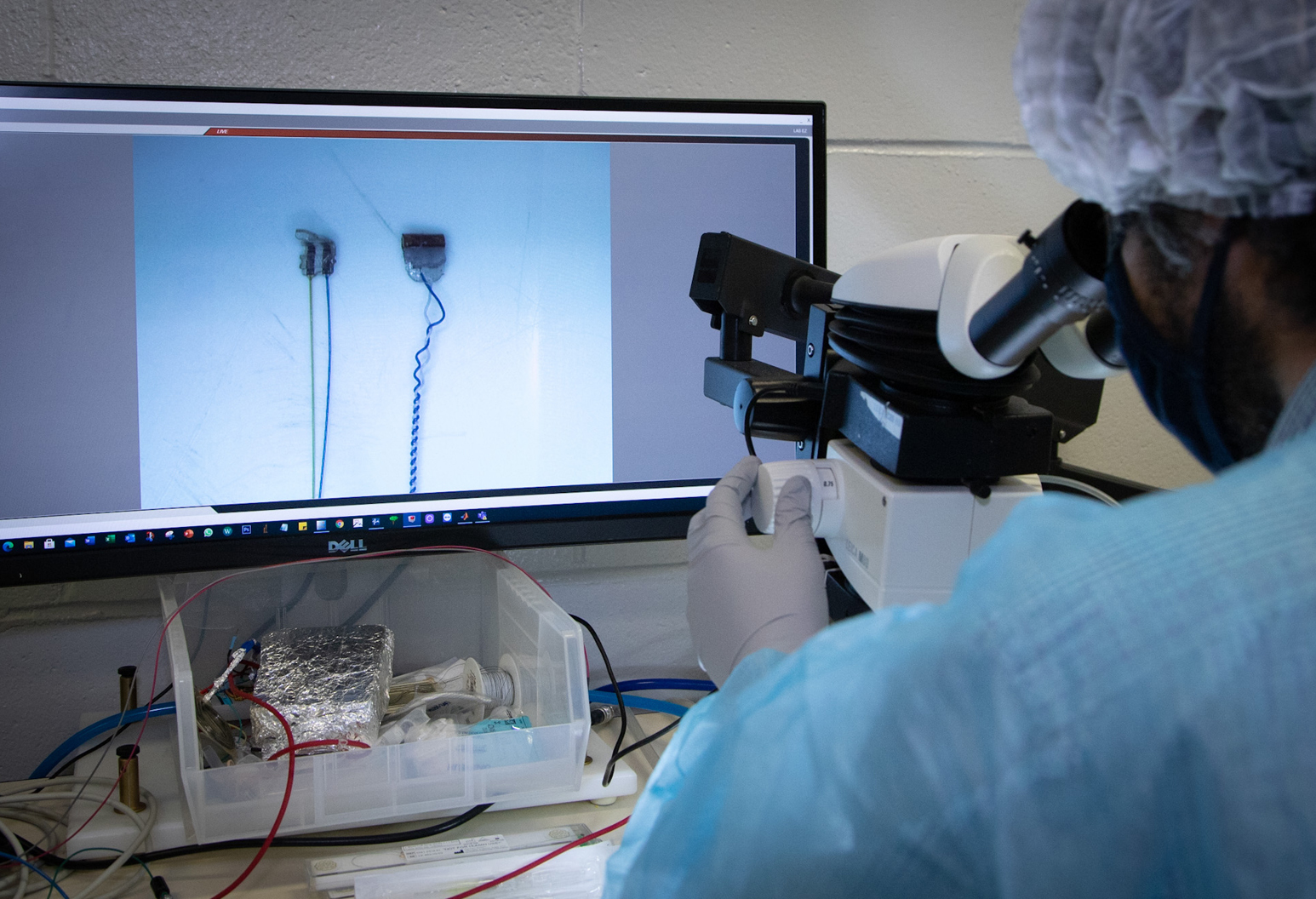
MANHASSET, N.Y.--(BUSINESS WIRE)--Researchers at the Institute of Bioelectronic Medicine at The Feinstein Institutes for Medical Research developed a long-term implant model for vagus nerve stimulation (VNS) in mice that successfully modulates heart rate and inflammatory proteins. The device and procedure may change the way preclinical bioelectronic medicine research is conducted and lead to alternative therapies for various chronic diseases, including Crohn's, rheumatoid arthritis and heart failure, among others.
The team's research recently published in the journal eLife, in collaboration with the University of Colorado and New York University, builds off previous studies unveiled by the Feinstein Institutes in 2020 that showed the effective use of a long-term vagus nerve implant in mice. The new paper describes the surgical technique to implant a mico-cuff electrode onto a mouse cervical vagus nerve, and methods for calibrating its dose and evaluating its effectiveness in suppressing inflammation.
"To better understand the power VNS may hold in treating some of the most devastating conditions and diseases, we needed a device to deliver long-term stimulation in preclinical studies," said Stavros Zanos, MD, PhD, assistant professor at the Feinstein Institutes and principal investigator of the study published. "This new research will hopefully act as a blueprint for institutions worldwide to help advance the exciting field of bioelectronic medicine."
The vagus nerve, a major nerve in the body, allows the brain and organs to communicate and regulate homeostasis, like heart rate and oxygen levels. Bioelectronic medicine and particularly VNS is the study of how nerve mapping and modulation can affect the body’s function, primarily inflammation – which is the cause of many autoimmune disorders.
Because of prior surgical and technological challenges of implanting a stimulator to fit a mouse's tiny vagus nerve, this new cuff-electrode and outlined surgical procedure is an advancement to conduct more long-term and thorough VNS research. Earlier VNS studies have been limited to short-term stimulation -- a timeframe of minutes to hours, whereas the new device can be implanted for at least four weeks.
“Little is known about the effects of chronic VNS because of the surgical and technical challenges of creating a long-term VNS implant for the microscopic anatomy of mice," said Ibrahim T. Mughrabi, MD, PhD, investigator at the Feinstein Institutes and first-author on the paper. "We have now created a solution to conduct more in-depth research."
The vagus nerve is involved in the regulation of heart rate and breathing, among other physiological functions. The team monitored how the vagus nerve's stimulation affected these physiological functions for at least four weeks and observed responses in 60-90 percent of the mice. The device did not impair other bodily functions such as appetite and blood pressure. The group also studied whether stimulation through long-term implants could suppress tumor necrosis factor (TNF), a protein that causes inflammation, and found that the TNF levels were significantly suppressed.
"This is an important new bioelectronic tool for mouse models of human disease,” said Kevin J. Tracey, MD, president and CEO of the Feinstein Institutes. "This technology is timely because it will enable many other labs to help us unravel the molecular and neuroscientific mechanisms of bioelectronic medicine.”
About the Feinstein Institutes
The Feinstein Institutes for Medical Research is the research arm of Northwell Health, the largest health care provider and private employer in New York State. Home to 50 research labs, 2,500 clinical research studies and 5,000 researchers and staff, the Feinstein Institutes raises the standard of medical innovation through its five institutes of behavioral science, bioelectronic medicine, cancer, health innovations and outcomes, and molecular medicine. We make breakthroughs in genetics, oncology, brain research, mental health, autoimmunity, and are the global scientific leader in bioelectronic medicine – a new field of science that has the potential to revolutionize medicine. For more information about how we produce knowledge to cure disease, visit feinstein.northwell.edu.
Contacts
Matthew Libassi
516-465-8325
mlibassi@northwell.edu