Cleerly Unveils Groundbreaking Late-Breaking Clinical Trial Results Demonstrating AI-QCT’s Predictive Power for Women’s Cardiovascular Risk at ACC.25
Cleerly Unveils Groundbreaking Late-Breaking Clinical Trial Results Demonstrating AI-QCT’s Predictive Power for Women’s Cardiovascular Risk at ACC.25
New Findings from the CONFIRM2 Registry Reveal Significant Gender Disparities in Coronary Plaque Features and Associated Risks for Major Adverse Cardiovascular Events
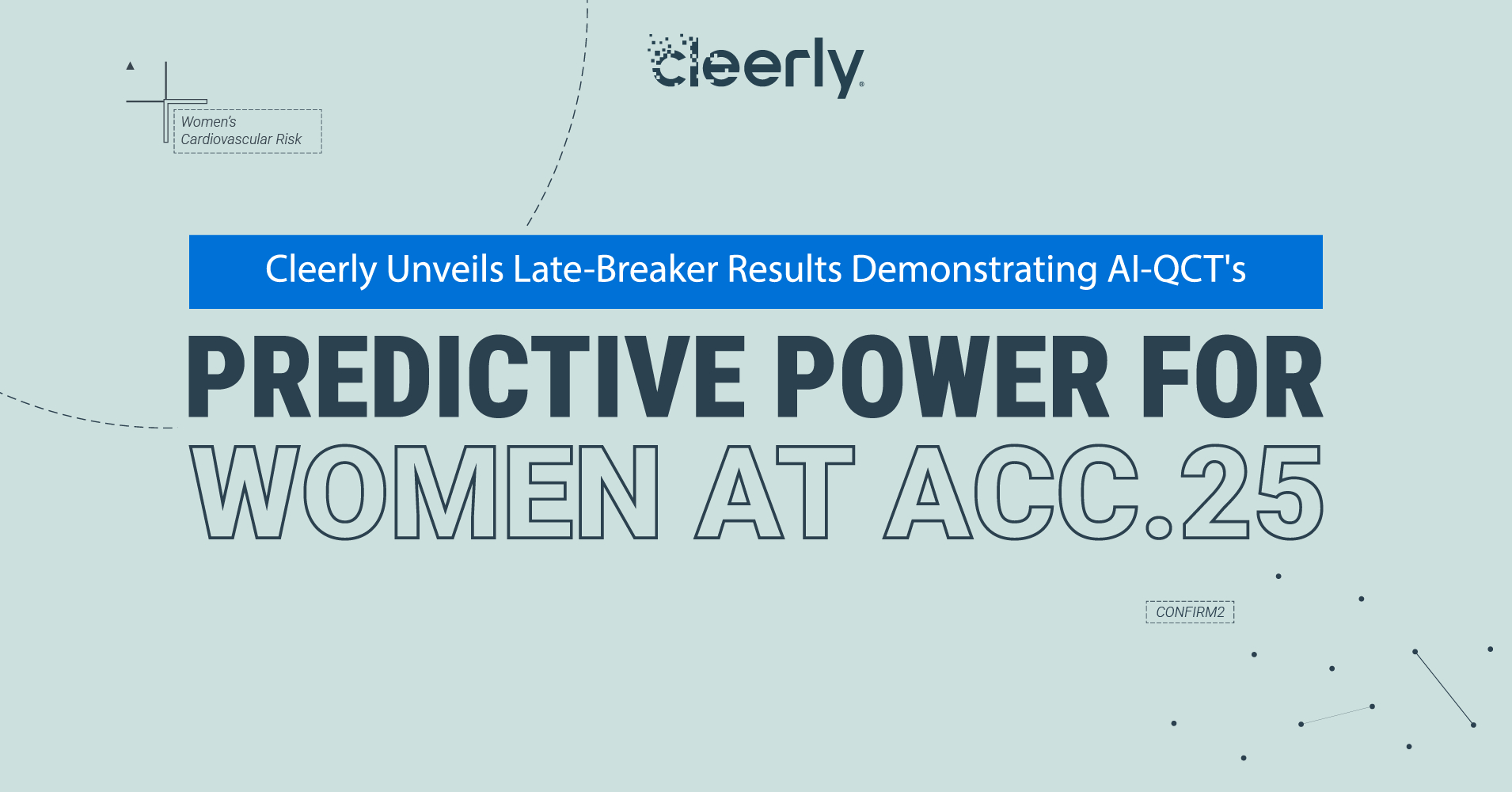
Cleerly Unveils Groundbreaking Late-Breaking Clinical Trial Results Demonstrating AI-QCT's Predictive Power for Women’s Cardiovascular Risk at ACC.25. New Findings from the CONFIRM2 Registry Reveal Significant Gender Disparities in Coronary Plaque Features and Associated Risks for Major Adverse Cardiovascular Events. The study, titled “Artificial Intelligence-based Quantitative Computed Tomography (AI-QCT) Coronary Plaque Features Predict Risk More Pronounced in Females: The International Multicentric Registry CONFIRM2,” was led by Gudrun M. Feuchtner, MD, MBA, and presented during the Clinical and Investigative Horizons I session on March 31st, 2025.
DENVER--(BUSINESS WIRE)--Cleerly, the leader in cardiovascular AI imaging, has announced revolutionary findings from its late-breaking clinical trial presented at the American College of Cardiology's Annual Scientific Session + Expo (ACC.25) in Chicago, Illinois. The study, titled “Artificial Intelligence-based Quantitative Computed Tomography (AI-QCT) Coronary Plaque Features Predict Risk More Pronounced in Females: The International Multicentric Registry CONFIRM2,” was led by Gudrun M. Feuchtner, MD, MBA, and presented during the Clinical and Investigative Horizons I session on March 31st, 2025. This research is simultaneously published today in Circulation: Cardiovascular Imaging, a peer-reviewed journal of the American Heart Association.
The findings demonstrate that AI-QCT features of coronary artery disease (CAD), as detected by Cleerly’s AI-QCT, can identify women at high risk for major adverse cardiovascular events (MACE) and improves risk stratification.
Share
The findings demonstrate that AI-QCT features of coronary artery disease (CAD), as detected by Cleerly’s AI-QCT, can identify women at high risk for major adverse cardiovascular events (MACE) and improves risk stratification - a population that has historically been underdiagnosed and undertreated for CAD.
The CONFIRM2 study is notable for including approximately 50% female participants and a diverse cohort of 3,500 individuals from 11 countries, highlighting the broad applicability of these findings in addressing cardiovascular health disparities.
Key Findings on Gender Disparities in Cardiovascular Risk
- Higher Risk for Women: Despite a higher total AI-QCT CAD burden in men, similar increases in AI-QCT-derived plaque features (total plaque volume, calcified plaque, non-calcified plaque, and percentage atheroma volume) confer a significantly higher risk for MACE in women. Traditional risk scores performed poorly, while AI-QCT added significant predictive value for both sexes.
- Enhanced Detection and Risk Stratification: Cleerly’s AI-QCT improves the detection and characterization of coronary atherosclerosis, offering more precise prognostic risk stratification for MACE that surpasses traditional risk factors.
- Gender-Specific Insights: AI-QCT reveals that certain coronary plaque features present a higher risk of MACE in women compared to men, emphasizing the need for tailored preventive strategies for women.
- Prognostic Value Consistency: The analysis shows that AI-QCT has strong prognostic value in both women and men, with stenosis and non-calcified plaque identified as the strongest independent predictors in women.
Implications for Women’s Heart Health
These findings underscore the urgent unmet need to integrate AI-QCT into clinical practice for unbiased risk estimation in both men and women.
- Enhanced Precision & Personalization: Using AI-QCT-based risk stratification instead of traditional risk scores strongly enhances precision and enables tailored preventive care.
- Addressing Underdiagnosis & Undertreatment: Transitioning to an AI-QCT-based approach may eliminate bias and tackle the longstanding issue of underdiagnosis and undertreatment of CAD in women, ultimately improving outcomes.
- Increased Awareness & Tailored Therapies: AI-QCT’s ability to identify higher risk in women should drive greater awareness and prompt reinforced anti-atherosclerotic therapies and other preventive measures tailored specifically to women.
- Potential for Sex-Specific Guidelines: These insights may lead to the development of sex-specific treatment guidelines, ensuring women receive the most appropriate and effective care for their cardiovascular health.
“This research is a significant step forward in addressing the historical disparities in cardiovascular care for women. AI-QCT provides physicians with a powerful, unbiased tool that not only enhances detection but also enables more precise risk prediction and personalized care. These findings underscore the urgency of incorporating AI-QCT into clinical practice to improve outcomes for all patients, and especially for women,” said Gudrun M. Feuchtner, MD, MBA, lead researcher of the study, from Medical University Innsbruck, Austria, on behalf of the CONFIRM2 investigator group led by Principal Investigator Alexander van Rosendael, MD, PhD, from Leiden University Medical Center and Ibrahim Danad, MD, from Radboud Medical University Center, Netherlands.
About Cleerly
Cleerly is the company on a mission to eliminate heart attacks by creating a new standard of care for heart disease. Through its FDA-cleared solutions driven by artificial intelligence, Cleerly supports comprehensive phenotyping of coronary artery disease, as determined from advanced noninvasive CT imaging. Cleerly’s approach is grounded in science, based on millions of images from over 40,000 patients. Led by a world-class clinical and technical team, Cleerly enhances health literacy for each and every stakeholder in the coronary care pathway. For more information, please visit: cleerlyhealth.com.
Contacts
Cleerly Media Contact
Christy Sievert
press@cleerlyhealth.com