Feinstein Institutes report on early mapping of vagus nerve, unveil novel stimulator for bioelectronic medicine research
Feinstein Institutes report on early mapping of vagus nerve, unveil novel stimulator for bioelectronic medicine research
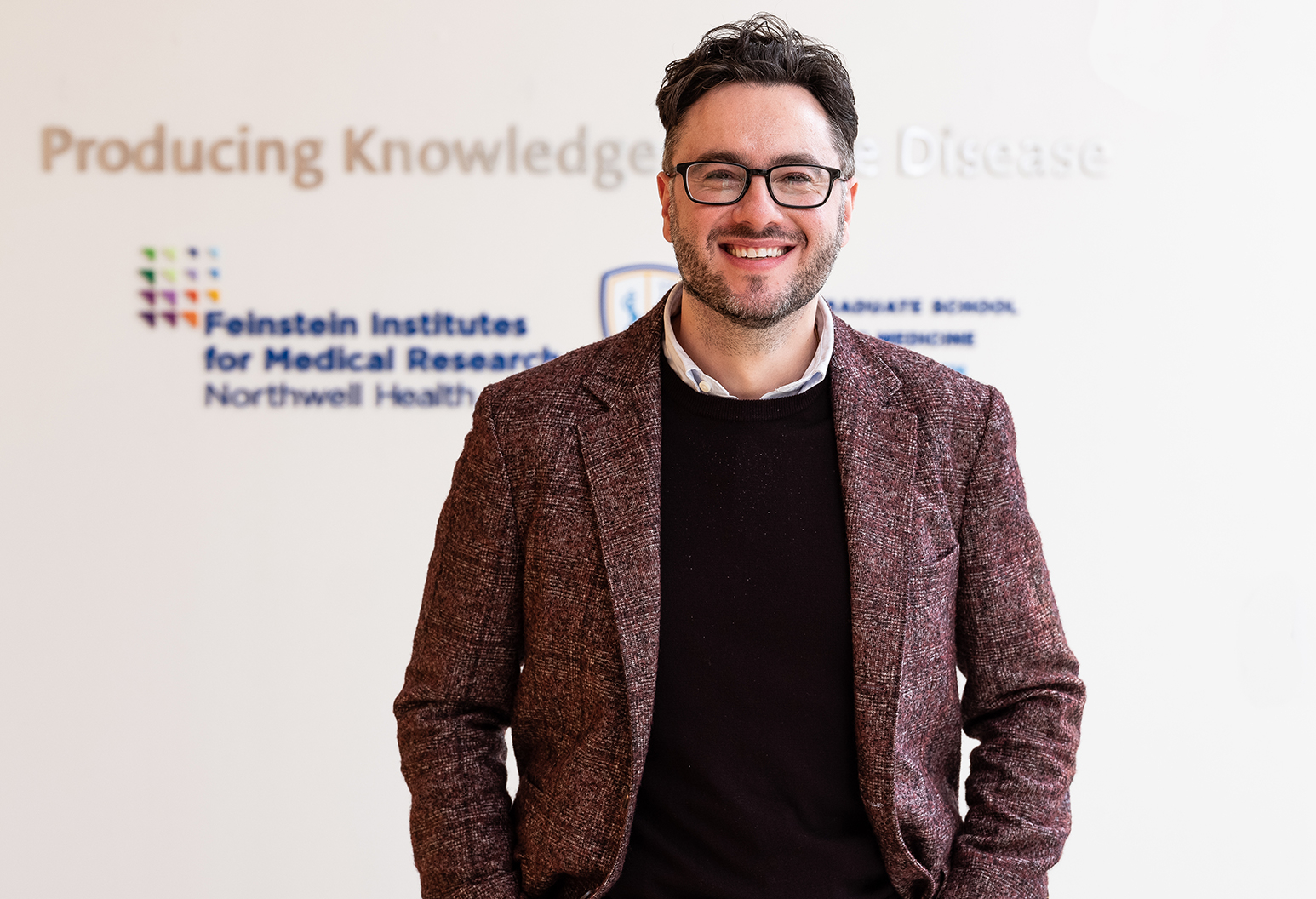
MANHASSET, N.Y.--(BUSINESS WIRE)--Starting in the brain and extending to our organs, the vagus nerve helps communicate and maintain how the body functions, including heart rate, breathing and immune response. For the first time, researchers at The Feinstein Institutes for Medical Research are microscopically mapping more than 100,000 individual fibers that make up the vagus nerve to determine how they are anatomically connected and which bodily function it controls. Bioelectronic medicine scientists published their early mapping in the journal Brain Stimulation, along with a novel vagus nerve stimulator that can activate targeted fibers, opening up new avenues of vagus nerve stimulation (VNS) research.
The study, led by Stavros Zanos, MD, PhD, associate professor at the Feinstein Institutes’ Institute of Bioelectronic Medicine, deployed advanced methods for surgical dissection, imaging and microscopic anatomy to map how vagal fibers are organized inside the vagus nerve in animal models. The team found fibers that connect to the larynx, lung and heart lie in different parts of the nerve. They also discovered that sensory and motor fibers are in separate locations, which are close to the neck and later disappear as the nerve enters the chest cavity.
“To advance the field of bioelectronic medicine and effectiveness of vagus nerve stimulation therapies, we must first understand what part of the nerve we are stimulating and what that does to the body,” said Dr. Zanos, senior author of the paper. “Through our early mapping and new electrical stimulation vagal nerve cuff, we hope to unlock the potential of VNS to treat more effectively organ-specific diseases.”
The team’s animal model VNS cuff wraps around the vagus nerve and has 10 contacts instead of the standard two contacts used today in clinical VNS devices. By electrically stimulating individual contacts around the nerve, the group showed that nerve fibers can be more selectively activated. For example, by stimulating the contact that lies away from nerve fibers to the larynx and closer to nerve fibers to the lung, they were able to affect lung function with a smaller impact on laryngeal function.
The cuff’s effectiveness shows the ability to hone in and select fibers to a single organ of interest while avoiding others. Existing VNS therapies cannot easily target the nerves that engage a specific organ (i.e. the heart in atrial fibrillation or the lungs in pulmonary hypertension). Frequently, existing VNS therapies produce side effects from non-targeted organs, like voice changes, throat pain and coughing. Even though those effects are not life-threatening, a more selective, targeted approach to VNS could potentially reduce those side effects and use VNS to treat organ-specific diseases better.
“Despite the importance of the vagus nerve and wide interest in methods to stimulate it, the basic anatomy of this nerve is largely unknown,” said Kevin J. Tracey, MD, president and CEO of the Feinstein Institutes and Karches Family Distinguished Chair in Medical Research. “Dr. Zanos’ current study provides a new basic foundation for understanding vagus nerve function and structure.”
This current research aided in Dr. Zanos and the Feinstein Institutes securing a $6.7 million grant from the National Institutes of Health (NIH). The award will help Dr. Zanos and his lab create a detailed map of the anatomy of the human vagus nerve. The funding is part of the NIH Common Fund’s Stimulating Peripheral Activity to Relieve Conditions program.
The Feinstein Institutes for Medical Research is the global scientific home of bioelectronic medicine, which combines molecular medicine, neuroscience and biomedical engineering. At the Feinstein Institutes, medical researchers use modern technology to develop new device-based therapies to treat disease and injury.
Built on years of research in molecular mechanisms of disease and the link between the nervous and immune systems, our researchers discover neural targets that can be activated or inhibited with neuromodulation devices, like vagus nerve implants, to control the body’s immune response and inflammation. If inflammation is successfully controlled, diseases – such as arthritis, pulmonary hypertension, Crohn’s disease, inflammatory bowel diseases, diabetes, cancer and autoimmune diseases – can be treated more effectively. Beyond inflammation, using novel brain-computer interfaces, our researchers developed techniques to bypass injuries of the nervous system so that people living with paralysis can regain sensation and use their limbs. By producing bioelectronic medicine knowledge, disease and injury could one day be treated with our own nerves without costly and potentially harmful pharmaceuticals.
About the Feinstein Institutes
The Feinstein Institutes for Medical Research is the home of the research institutes of Northwell Health, the largest health care provider and private employer in New York State. Encompassing 50 research labs, 3,000 clinical research studies and 5,000 researchers and staff, the Feinstein Institutes raises the standard of medical innovation through its five institutes of behavioral science, bioelectronic medicine, cancer, health system science, and molecular medicine. We make breakthroughs in genetics, oncology, brain research, mental health, autoimmunity, and are the global scientific leader in bioelectronic medicine – a new field of science that has the potential to revolutionize medicine. For more information about how we produce knowledge to cure disease, visit http://feinstein.northwell.edu and follow us on LinkedIn.
Contacts
Julianne Mosher Allen
516-880-4824
jmosherallen@northwell.edu