NIH awards Feinstein Institutes $3.8M to study radiation exposure and sepsis
NIH awards Feinstein Institutes $3.8M to study radiation exposure and sepsis
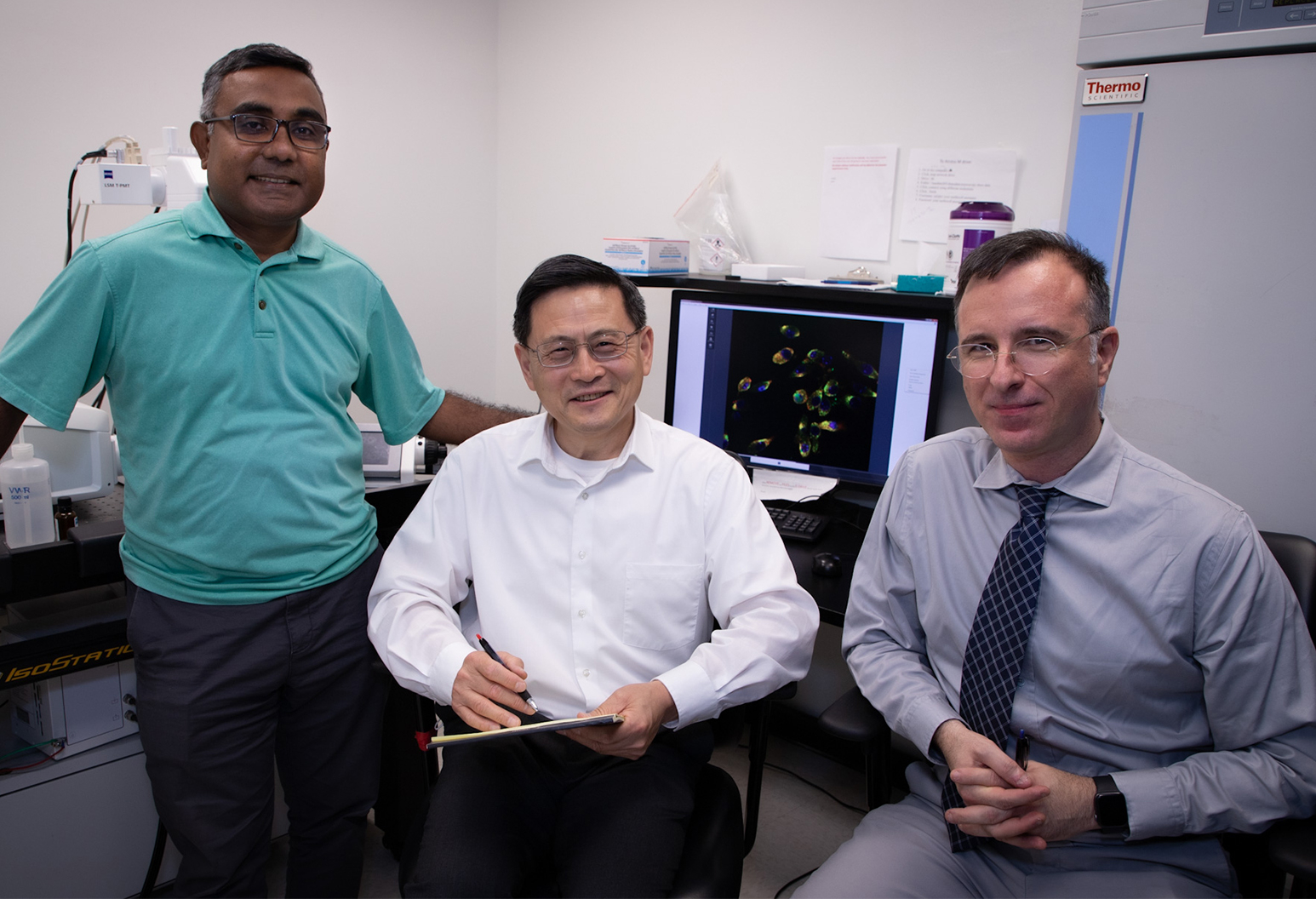
MANHASSET, N.Y.--(BUSINESS WIRE)--Terrorism, acts of war, nuclear power plant malfunctions; the risk of massive radiation exposure is ever-present. Scientists from The Feinstein Institutes for Medical Research have been awarded a five-year, $3.8 million grant from the National Institutes of Health (NIH) to study how radiation affects the human body’s immune system and how to better treat sepsis in people who have been exposed to radiation injury.
The novel research, led by Feinstein Institutes’ co-principal investigators Ping Wang, MD, Max Brenner, MD, PhD, and Monowar Aziz, PhD, will unravel the effects radiation has on immune cells, including neutrophils and macrophages, and how the body responds – or fails to respond – to invading bacteria, resulting in sepsis. The results may shed new insights into medical countermeasures for victims of major radiation exposure with or without sepsis.
Sepsis occurs when the body’s immune system triggers inflammation to help fight against infection; if out of control, this inflammatory response can cause damage to multiple organ systems and often leads to death.
“If you are exposed to radiation, your immune system is then weakened and it’s difficult for your body to fight off infection,” said Dr. Wang, professor and chief scientific officer at the Feinstein Institutes. “With the support of the NIH, we hope to find molecular targets in a body that has been exposed to radiation that could be used to boost the immune system so that complications, like sepsis, could be fought off.”
Specifically, the new study will examine the role of extracellular cold-inducible RNA-binding protein (eCIRP), an alarm molecule released during sepsis that causes immune dysfunction. The team observed that radiation exposure increases the release of eCIRP and that deficiency of eCIRP improves survival. In the new research, Drs. Wang, Aziz, and Brenner will explore the possibility of inhibiting eCIRP to ultimately counter immune system dysfunction in victims of major radiation exposure.
“Radiation exposure can cripple the immune system, so there is a significant need to understand how this occurs,” said Kevin J. Tracey, MD, president and CEO of the Feinstein Institutes. “The NIH support of Drs. Wang, Aziz, and Brenner offer a significant new opportunity to better understand the impact of radiation and the risks of subsequent immunosuppression and infection.”
Sepsis affects at least 1.7 million Americans annually, causing the death of 270,000 patients and 30 percent of all hospital deaths. The Feinstein Institutes continues to lead in research to study the molecular mechanisms of sepsis to develop treatments. Most recently, Dr. Wang also received a $2.5 million grant from the NIH to study how neutrophils, a type of white blood cell, interact with eCIRP.
About the Feinstein Institutes
The Feinstein Institutes for Medical Research is the home of the research institutes of Northwell Health, the largest health care provider and private employer in New York State. Encompassing 50 research labs, 3,000 clinical research studies and 5,000 researchers and staff, the Feinstein Institutes raises the standard of medical innovation through its five institutes of behavioral science, bioelectronic medicine, cancer, health system science, and molecular medicine. We make breakthroughs in genetics, oncology, brain research, mental health, autoimmunity, and are the global scientific leader in bioelectronic medicine – a new field of science that has the potential to revolutionize medicine. For more information about how we produce knowledge to cure disease, visit http://feinstein.northwell.edu and follow us on LinkedIn.
Contacts
Julianne Mosher Allen
516-880-4824
jmosherallen@northwell.edu