From Scorpion to Immunotherapy: City of Hope Scientists Repurpose Nature’s Toxin for First-of-Its Kind CAR T Cell Therapy to Treat Brain Tumors
From Scorpion to Immunotherapy: City of Hope Scientists Repurpose Nature’s Toxin for First-of-Its Kind CAR T Cell Therapy to Treat Brain Tumors
The research published today and scorpion venom will also be key component of CAR T cell therapy for glioblastoma in newly opened City of Hope clinical trial
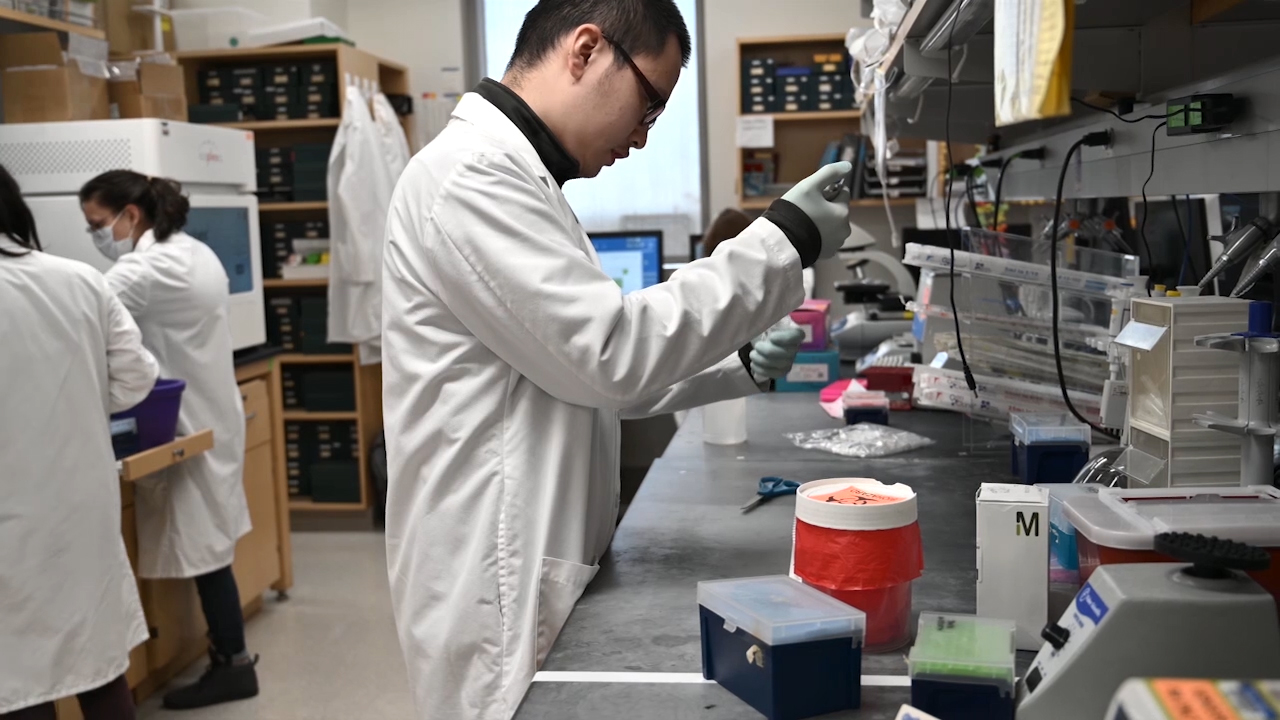
DUARTE, Calif.--(BUSINESS WIRE)--City of Hope scientists have developed and tested the first chimeric antigen receptor (CAR) T cell therapy using chlorotoxin (CLTX), a component of scorpion venom, to direct T cells to target brain tumor cells, according to a preclinical study published today in Science Translational Medicine. The institution has also opened the first in-human clinical trial to use the therapy.
CARs commonly incorporate a monoclonal antibody sequence in their targeting domain, enabling CAR T cells to recognize antigens and kill tumor cells. In contrast, the CLTX-CAR uses a 36-amino acid peptide sequence first isolated from death stalker scorpion venom and now engineered to serve as the CAR recognition domain.
Glioblastoma (GBM), the most common type of brain tumor, is also among the most deadly of human cancers, according to the American Cancer Society. It is particularly difficult to treat because the tumors are disseminated throughout the brain. Efforts to develop immunotherapies, including CAR T cells, for GBM must also contend with a high degree of heterogeneity within these tumors.
For the study, City of Hope researchers used tumor cells in resection samples from a cohort of patients with GBM to compare CLTX binding with expression of antigens currently under investigation as CAR T cell targets, including IL13Rα2, HER2 and EGFR. They found that CLTX bound to a greater proportion of patient tumors and cells within these tumors.
CLTX binding included the GBM stem-like cells thought to seed tumor recurrence. Consistent with these observations, CLTX-CAR T cells recognized and killed broad populations of GBM cells while ignoring nontumor cells in the brain and other organs. The study team demonstrated that CLTX-directed CAR T cells are highly effective at selectively killing human GBM cells in cell-based assays and in animal models without off-tumor targeting and toxicity.
“Our chlorotoxin-incorporating CAR expands the populations of solid tumors potentially targeted by CAR T cell therapy, which is particularly needed for patients with cancers that are difficult to treat such as glioblastoma,” said Christine Brown, Ph.D., City of Hope’s Heritage Provider Network Professor in Immunotherapy and deputy director of T Cell Therapeutics Research Laboratory. “This is a completely new targeting strategy for CAR T therapy with CARs incorporating a recognition structure different from other CARs.”
Michael Barish, Ph.D., City of Hope professor and chair of the Department of Developmental and Stem Cell Biology, initiated the development of a CAR using chlorotoxin to target GBM cells. The peptide has been used as an imaging agent to guide GBM resection surgery, and to carry radioisotopes and other therapeutics to GBM tumors.
“Much like a scorpion uses toxin components of its venom to target and kill its prey, we’re using chlorotoxin to direct the T cells to target the tumor cells with the added advantage that the CLTX-CAR T cells are mobile and actively surveilling the brain looking for appropriate targets,” Barish said. “We are not actually injecting a toxin, but exploiting CLTX’s binding properties in the design of the CAR. The idea was to develop a CAR that would target T cells to a wider variety of GBM tumor cells than the other antibody-based CARs.”
“The notion is that the higher the proportion of tumor cells that one can kill at the beginning of treatment, the greater the probability of slowing down or stopping GBM growth and recurrence,” Barish added.
Dongrui Wang, a doctoral candidate in City of Hope’s Irell & Manella Graduate School of Biological Sciences, was the lead scientist to establish and optimize the CLTX-CAR T cell platform and to determine that cell surface protein matrix metalloprotease 2 is required for CLTX-CAR T cell activation. He added that “while people might think the chlorotoxin is what kills the GBM cells, what actually eradicates them is the tumor-specific binding and activation of the CAR T cells.”
Based on the promising findings of this study, the study team intends to bring this therapy to patients diagnosed with GBM with the hope of improving outcomes against this thus far intractable cancer. With recently granted Food and Drug Administration approval to proceed, the first-in-human clinical trial using the CLTX-CAR T cells is now screening potential patients.
This work was supported by the Ben & Catherine Ivy Foundation of Scottsdale, Arizona, and the clinical trial will be supported by The Marcus Foundation of Atlanta.
City of Hope, a recognized leader in CAR T cell therapies for glioblastoma and other cancers, has treated nearly 500 patients since its CAR T program started in the late 1990s. The institution continues to have one of the most comprehensive CAR T cell clinical research programs in the world — it currently has 29 ongoing CAR T clinical trials, including CAR T trials for HER-2 positive breast cancer that has spread to the brain, and PSCA-positive bone metastatic prostate cancer. It was the first and only cancer center to treat GBM patients with CAR T cells targeting IL13Rα2, and the first to administer CAR T cell therapy locally in the brain, either by direct injection at the tumor site, through intraventricular infusion into the cerebrospinal fluid, or both. In late 2019, City of Hope opened a first-in-human clinical trial for patients with recurrent glioblastoma combining IL13Rα2-CAR T cells with checkpoint inhibitors nivolumab, an anti-PD1 antibody, and ipilimumab, blocking the CTLA-4 protein.
About City of Hope
City of Hope is an independent biomedical research and treatment center for cancer, diabetes and other life-threatening diseases. Founded in 1913, City of Hope is a leader in bone marrow transplantation and immunotherapy such as CAR T cell therapy. City of Hope’s translational research and personalized treatment protocols advance care throughout the world. Human synthetic insulin and numerous breakthrough cancer drugs are based on technology developed at the institution. A National Cancer Institute-designated comprehensive cancer center and a founding member of the National Comprehensive Cancer Network, City of Hope is the highest ranked cancer hospital in the West, according to U.S. News & World Report’s Best Hospitals: Specialty Ranking. Its main campus is located near Los Angeles, with additional locations throughout Southern California. For more information about City of Hope, follow us on Facebook, Twitter, YouTube or Instagram.
Contacts
Letisia Marquez
626-218-3398
lemarquez@coh.org