What Makes a Strong Awareness Campaign? 6 Lessons from Breast Cancer Awareness Month
Every October, organizations across industries communicate around Breast Cancer Awareness Month. Research organizations announce new findings. Companies launch fundraising campaigns and partnerships. Healthcare organizations share educational resources. Brands introduce limited-edition products and community initiatives.
With so many organizations communicating around the same timely topic, October offers a useful case study in how to make important news stand out without getting lost in a busy news cycle.
The broader public relations challenge is one companies face throughout the year: When many organizations are communicating around the same topic, what makes one press release useful, distinctive, and discoverable?
Timely news often needs to be shared when the conversation is already happening. Companies can look for ways to add value, give audiences a clear reason to pay attention, and make their news easy to find, understand, and reference after the initial announcement.
Here are six characteristics that can make an awareness campaign — and the communications supporting it — more effective.
- Give Your Audience Something Specific to Understand
- Make the News Easy to Understand
- Add Original Information, Data, or Expertise
- Use Multimedia to Tell More of the Story
- Connect the Announcement to a Larger Story
- Make the Information Available Beyond the Initial Announcement
1. Give Your Audience Something Specific to Understand
A strong awareness campaign starts with substance. Rather than simply saying an organization “supports breast cancer awareness,” the most useful communications explain what the organization is doing, why it matters, and what audiences should know.
That information might include:
- New research or survey findings
- Specific statistics or data
- A new program or initiative
- Funding or partnership details
- Educational resources
- Expert perspectives
- Patient or community experiences
- Measurable results or commitments
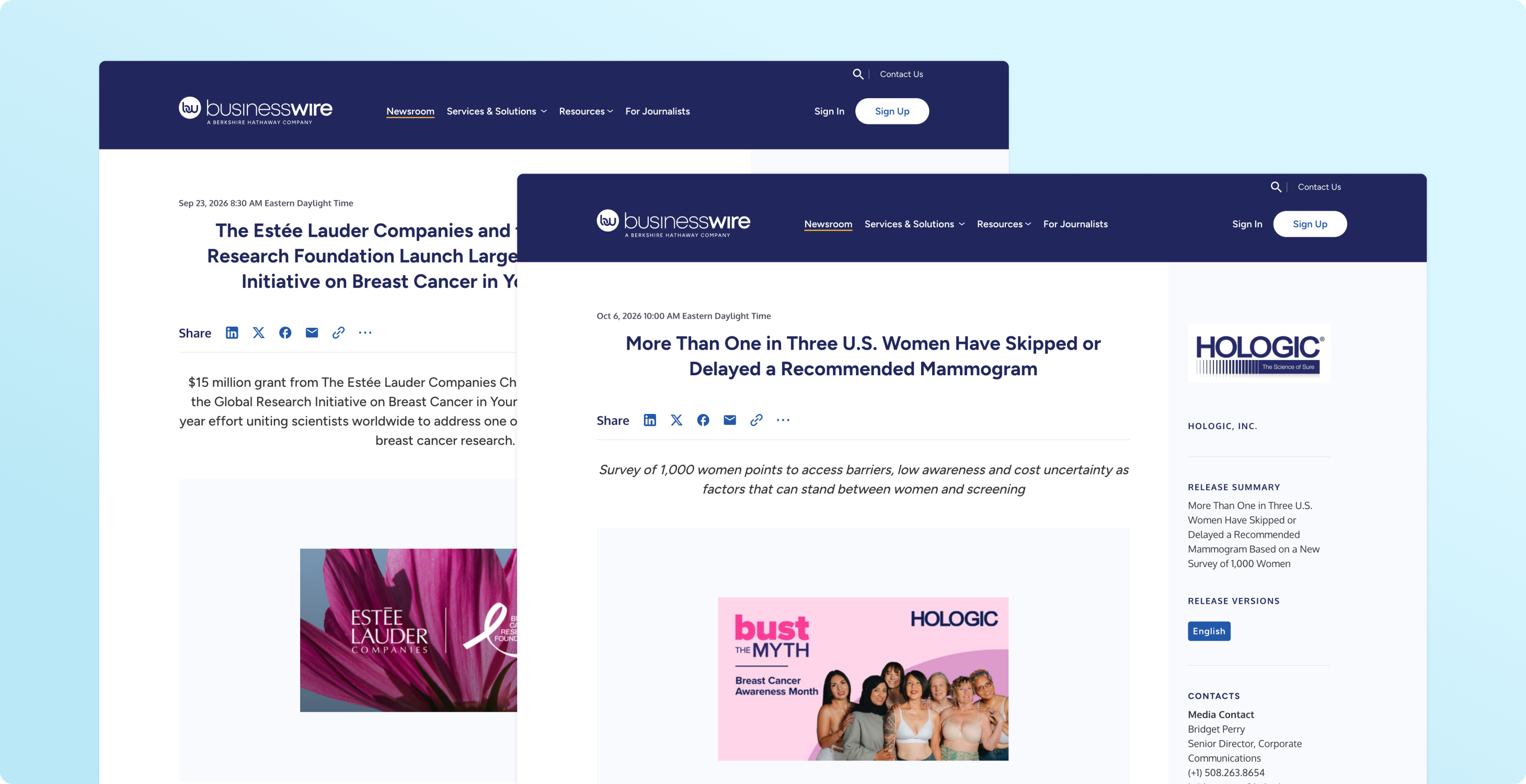
For example, The Estée Lauder Companies and the Breast Cancer Research Foundation announced a $15 million, five-year commitment to establish a global research initiative focused on breast cancer in younger women. The announcement provides specific details about the initiative and the research need it is designed to address, giving audiences information beyond a general statement of support.
Hologic takes a different approach, using survey data to highlight barriers to breast cancer screening. Its announcement leads with a specific finding: more than one in three U.S. women surveyed had skipped or delayed a recommended mammogram. The release then provides additional context around factors that can contribute to delayed screening.
Specific information gives an awareness campaign substance. It also makes the content easier for search engines and AI systems to interpret because important facts, topics, people, organizations, and relationships are clearly stated.
PR takeaway: Before announcing an awareness campaign, ask: What will someone know after reading this that they didn’t know before?
2. Make the News Easy to Understand
Even a substantive announcement can lose attention if readers have to work to figure out what happened. A strong press release headline should communicate the central news clearly. The summary and opening paragraphs should quickly establish the who, what, and why.
This matters for people scanning a news feed, journalists evaluating a story, and audiences discovering information through search. It also matters for AI-powered discovery. Clear, descriptive language helps systems identify the main subject and understand the relationships among the people, organizations, events, products, research, and issues discussed in a release.
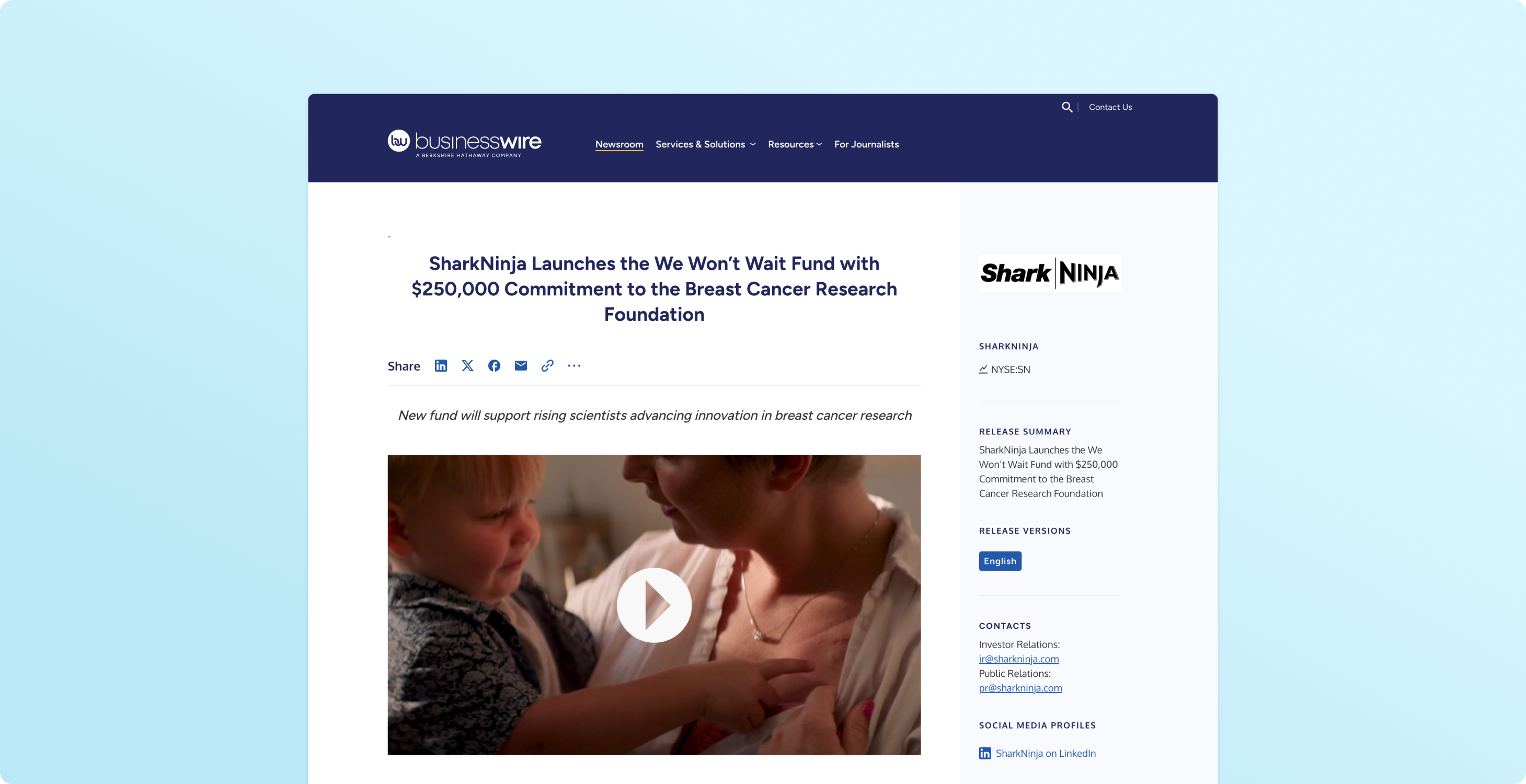
SharkNinja’s announcement of its “We Won’t Wait” Fund provides a straightforward example. The headline immediately identifies the action (launching a new fund) and gives readers a concrete sense of its significance with the $250,000 commitment to the Breast Cancer Research Foundation. The summary then provides additional context about the company’s initiative and its goals.
Instead of opening with several paragraphs about the company, its history, or its commitment to a cause, get to the announcement. Supporting company information can come later.
This approach also creates opportunities to naturally use the terms audiences may search for. If the announcement is about a $250,000 commitment to breast cancer research, for example, the headline and opening should clearly identify that subject rather than relying on vague language such as “new initiative” or “important partnership.”
PR takeaway: Write the headline and opening so someone can understand the central announcement without reading the entire release.
3. Add Original Information, Data, or Expertise
During an awareness month, repeating familiar messages makes it harder for an organization to stand out. Original information gives audiences a reason to pay attention.
Research, survey findings, proprietary data, expert commentary, new initiatives, customer or patient experiences, and measurable results can all increase the informational value of a communications campaign.
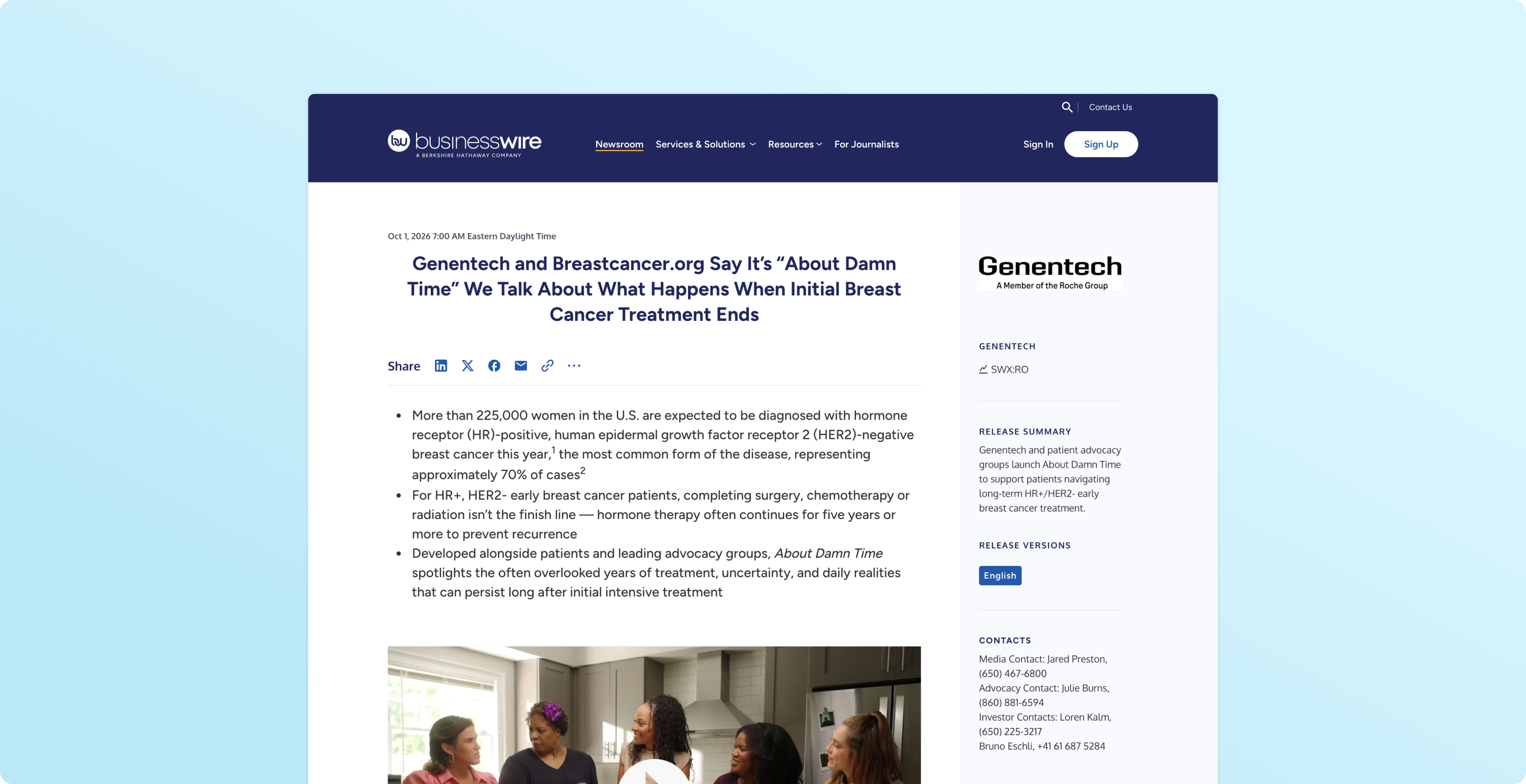
Genentech and Breastcancer.org, for example, built their “About Damn Time” campaign around an issue that can receive less attention: what happens after initial breast cancer treatment ends. The announcement combines patient perspectives, expert commentary, research, and educational resources to address the longer-term experience of breast cancer.
Not every awareness campaign needs original research. But every campaign should consider what new or useful information it can contribute.
Ask:
- What do we know that our audience may not?
- Can we provide original data or research?
- Do we have an expert who can explain the issue?
- Can we share a specific outcome or result?
- Is there a customer, patient, employee, or community perspective that adds context?
- Are we addressing an aspect of the issue that receives less attention?
These questions can help transform a seasonal message into substantive thought leadership.
Original information can also support search and AI visibility. When an organization contributes specific facts, data, research, and expertise, it gives search engines and AI systems more useful information to identify, understand, and potentially reference.
PR takeaway: Don’t just repeat the conversation. Look for an opportunity to add something to it.
4. Use Multimedia to Tell More of the Story
A strong awareness campaign doesn’t have to rely on text alone. Photos, videos, infographics, logos, charts, and supporting documents can provide additional context and give audiences different ways to engage with an announcement.
This can be particularly valuable for awareness campaigns, where the people, programs, research, products, and communities behind the announcement are often an important part of the story.
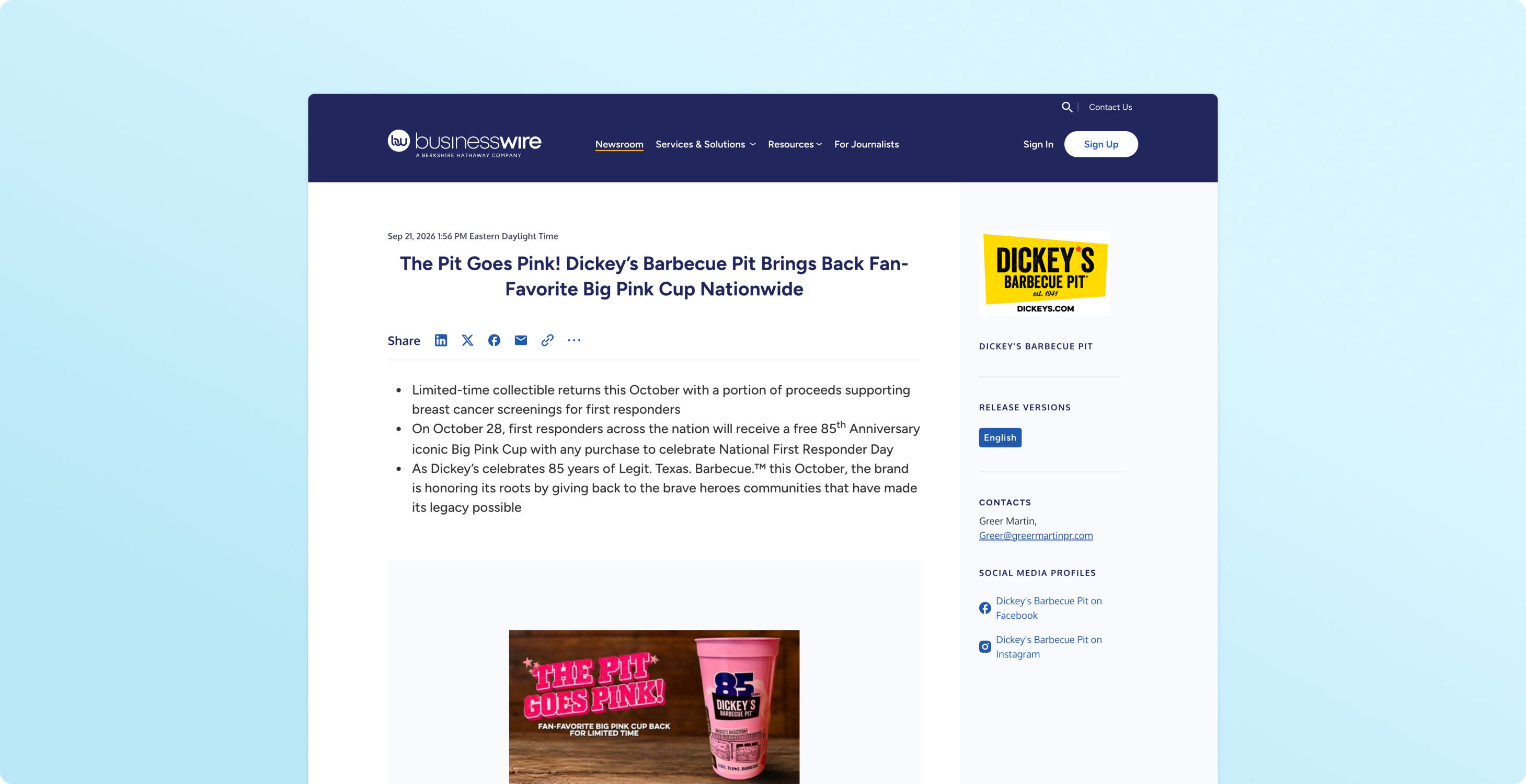
Dickey’s Barbecue Pit takes a consumer-focused approach, connecting its Big Pink Cup promotion with fundraising and breast cancer awareness. The campaign gives the audience a tangible way to participate while connecting the product story to a broader cause.
Multimedia should support the story rather than simply decorate it. The goal is to create a more complete news experience by giving audiences additional information and ways to engage with the announcement.
PR takeaway: Consider what images, video, data visualizations, or supporting materials could help audiences better understand the story.
5. Connect the Announcement to a Larger Story
One of the biggest differences between a generic awareness message and a strong awareness campaign is the reason behind the announcement.
Consider the difference between:
- “Company X recognizes Breast Cancer Awareness Month.”
- “Company X launches a new research initiative, announces a partnership, shares new findings, expands a patient resource, or commits funding to address a specific need.”
The second has a story.
The awareness month provides the context, but the company’s action provides the news.
That distinction appears across the examples above. The Estée Lauder Companies and BCRF are launching a major research initiative. Genentech and Breastcancer.org are addressing the experience after initial treatment. SharkNinja is launching a fund and committing $250,000 to breast cancer research. Dickey’s is connecting a consumer promotion to fundraising.
An effective awareness campaign might center on:
- A new partnership
- Original research
- A fundraising commitment
- A new product or service
- A community program
- An employee initiative
- A customer or patient resource
- A policy or advocacy effort
- A measurable business or social impact
The key is to give the audience a reason to care about the announcement beyond the fact that it is October.
PR takeaway: Build on the awareness moment with news that gives audiences something useful to learn, understand, or consider.
6. Make the Information Available Beyond the Initial Announcement
A press release shouldn’t disappear after its initial distribution. A well-structured press release gives the announcement a central, accessible home that people can return to when they encounter the story through search, social sharing, media coverage, or other channels.
This is increasingly important as search engines and AI systems use publicly available information to understand organizations, people, products, research, events, and other topics.
The fundamentals still matter: Use a descriptive headline and concise summary, provide specific facts and relevant terminology, and include links and other resources that help readers explore the topic in greater depth.
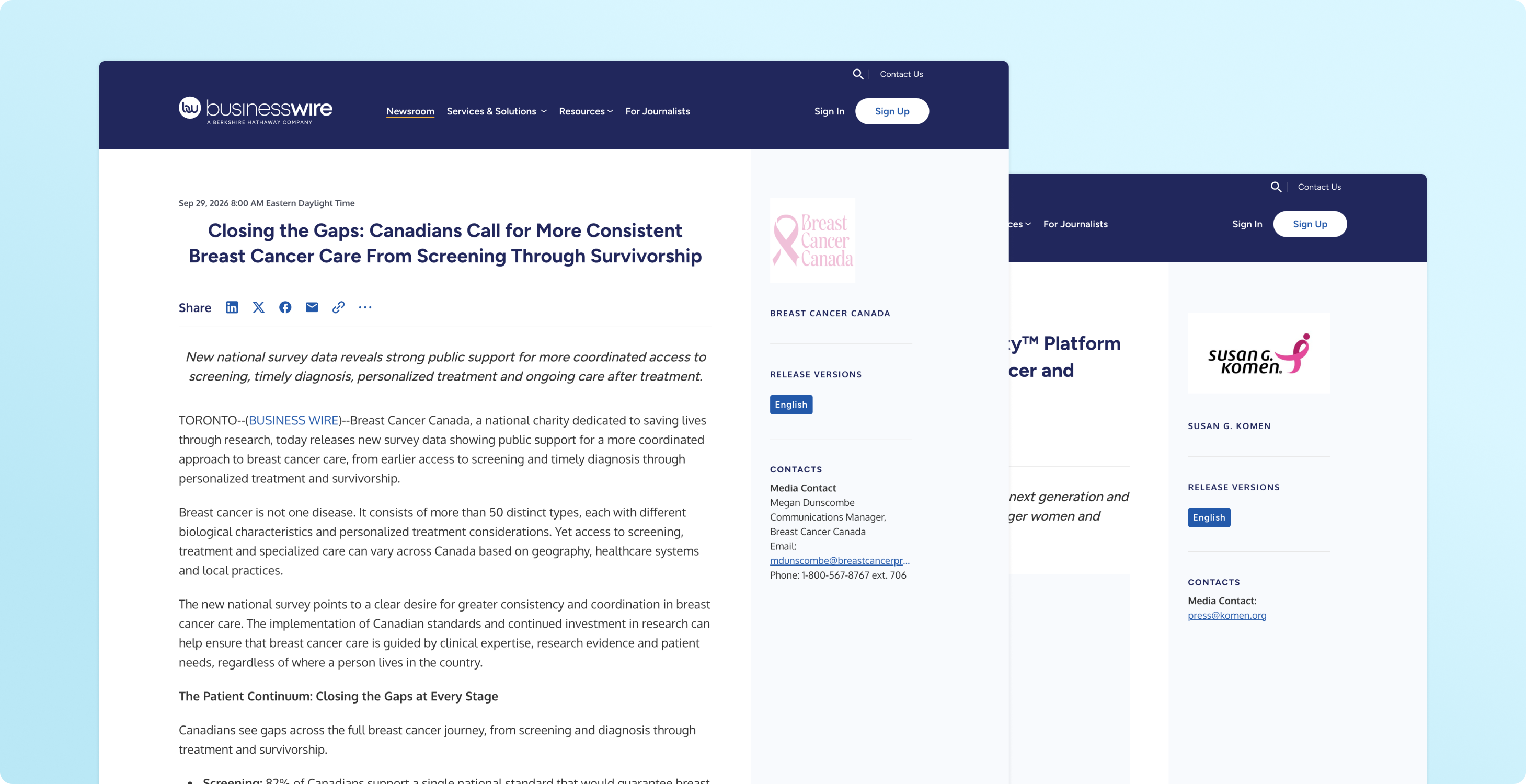
Susan G. Komen’s announcement of its new Breast Honesty platform is one example. The release explains what the platform is, why Komen created it, the issues it aims to address, and what audiences can find there. Those details give readers useful context beyond the initial announcement and create a reference point for people looking to learn more about the organization’s approach to breast cancer.
The Canadian Cancer Society’s announcement about gaps in breast cancer care offers another example. The release presents research findings, identifies specific challenges in the patient experience, and provides context around care from screening through survivorship. The result is information that remains useful beyond the announcement itself because it gives readers a fuller understanding of the issue.
What PR Teams Can Learn From Awareness Campaigns
The communications environment around Breast Cancer Awareness Month illustrates a challenge that applies to many other moments on the calendar.
Whether you’re planning communications around a health observance, sustainability initiative, cultural moment, industry event, or seasonal campaign, the same principles can help strengthen your approach:
- Provide specific information. Give audiences something meaningful to learn.
- Make the news clear. Put the who, what, and why up front.
- Contribute original information. Use data, research, expertise, and real experiences.
- Use multimedia strategically. Give audiences additional ways to understand and engage with the story.
- Connect the campaign to substantive action. Give the announcement a reason to exist beyond the calendar moment.
- Make the information discoverable. Build a complete, well-structured source of information that remains useful after distribution.
Awareness creates an opportunity to enter a conversation. Strong communications give audiences a reason to keep listening.
Business Wire can help organizations take that news further, with press release distribution to targeted audiences locally and around the world, translation services for global campaigns, and built-in features that support search and AI visibility. Whether you’re sharing research, announcing a partnership, launching an awareness campaign, or highlighting an initiative, the right newswire can help your announcements reach the audiences looking for them.
Ready to Send a Press Release? Discover Business Wire's Benefits →