CorWave Completes Enrollment in Feasibility Study and Presents First Clinical Data on Adaptive Support with its Wave Membrane LVAD
CorWave Completes Enrollment in Feasibility Study and Presents First Clinical Data on Adaptive Support with its Wave Membrane LVAD
CLICHY, France--(BUSINESS WIRE)--CorWave SA, a clinical-stage medical technology company pioneering innovative cardiac assist devices, announces the completion of enrollment in its feasibility study of the CorWave Left Ventricular Assist System (LVAS). The company also presented the first clinical data on the device's adaptive control algorithm at the 18th Branislav ‘BRANO’ Radovancevic Heart Failure Forum, held jointly with the 19th Innovations and New Treatment Strategies in Heart Failure symposium in Portorož, Slovenia.
The feasibility study was designed to evaluate the safety and performance of the CorWave LVAS in patients with advanced heart failure. It was conducted at two sites. The first is St Vincent's Hospital Sydney, Australia's leading heart transplant and mechanical circulatory support center, where Prof. Chris Hayward served as Principal Investigator. The second is the University Medical Center (UMC) Heart Center in Astana, Kazakhstan, a premier institution directed by Prof. Yuriy Pya that hosts one of the largest durable LVAD programs in Asia.
First clinical evidence on adaptive support with the CorWave LVAS
Unlike currently used rotary pumps, which deliver a fixed and continuous flow, the wave membrane technology developed by CorWave aims to preserve the physiological balance of the cardiovascular system: it allows the pump to synchronize with each heartbeat and adjust blood flow to the patient's activity.
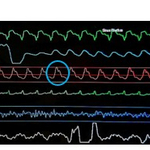
The case presented at BRANO demonstrated the pump operating in synchrony with the native heart, preserving a physiological pulse, and allowing the aortic valve to open on every beat. During exercise, both in hospital and in daily life, the pump automatically increased support as heart rate rose and reduced it at rest, without any intervention from the care team.
“St Vincent's has a long history of pioneering mechanical circulatory support, and we are proud to have led the first clinical use of the CorWave LVAS,” said Prof. Chris Hayward, cardiologist at St Vincent's Hospital and principal investigator of the study. “The wave membrane technology represents a genuinely new approach to supporting patients with advanced heart failure, and we look forward to contributing to the next stage of clinical development.”
“For the first time, we have seen a heart pump that responds on its own to what the patient is doing, beat by beat and as their activity changes, both in the hospital and at home,” said Prof. Yuriy Pya, CEO of the UMC and cardiac surgeon. “With CorWave implantation, our focus shifts from simply maintaining circulation to actively restoring it. We are not trying to replace nature — we are trying to give it the chance to work as it was meant to. Looking ahead to the CorWave pivotal study, we anticipate that this physiological approach will redefine the standard of care and significantly improve patient outcomes.”
“Leaders in our field have long championed smart pumps that adapt to the patient. This capability is built into the CorWave LVAS, and we have now seen it at work in patients, both in hospital and at home after discharge. This is an important step towards a new era in which LVADs keep pace with patients,” said Louis de Lillers, CEO of CorWave. “We are deeply grateful to the patients, their families and the clinical teams in Sydney and Astana whose commitment allowed us to complete enrollment, and we look forward to sharing the results as we prepare for our pivotal study,” he concluded.
The clinical results from the feasibility study will be presented at an upcoming international scientific meeting.
About CorWave
CorWave is a French clinical-stage company pioneering innovative cardiac assist devices. CorWave's wave membrane is a novel technology that sets it apart from currently marketed Left Ventricular Assist Devices (LVADs) through its physiological operation, designed to preserve pulsatility and automatically adjust flow to the patient’s activity level. Ultimately, CorWave's technology is designed to reduce complications associated with current devices and enable patients to lead active lives. A member of French Tech 120, CorWave was founded in 2012 by the start-up studio MD Start and is funded by renowned investors, including Bpifrance, EIC Fund, M&L Healthcare, Novo Holdings, Seventure Partners, Sofinnova Partners, Vlerick Group, and Ysios Capital. The company has raised over 100 million euros in equity funding and employs about a hundred people. In May 2025, after more than a decade of research and development, CorWave became the first company in over 25 years to bring a radically new pumping technology into clinical evaluation in the durable LVAD space.
Further information: www.corwave.com | x.com/corwave | www.linkedin.com/company/corwave CorWave LVAS is a medical device currently available for clinical investigations only.
This project received funding from the European Union’s research and innovation Horizon 2020 program under grant agreement #954151. |
|
The SPI fund’s investment in CorWave is part of the France 2030 Initiative. |
|
CorWave’s R&D program is supported by the French government through the Investments for the Future Program (PIA). |
|
CorWave’s industrialization program is supported by Île-de-France region through the “Relance Industrie” call for projects. |
Contacts
Press:
Taddeo
Camille Duchiron, +33 6 50 52 44 43, camille.duchiron@taddeo.fr
Marco Testa, +33 7 52 63 78 94, marco.testa@taddeo.fr