Feinstein Institutes Finds Mitochondria Transplantation Dramatically Enhances Heart Recovery After Cardiac Arrest
Feinstein Institutes Finds Mitochondria Transplantation Dramatically Enhances Heart Recovery After Cardiac Arrest
Study published in the American Journal of Respiratory and Critical Care Medicine
MANHASSET, N.Y.--(BUSINESS WIRE)--With only approximately 10 percent of out-of-hospital cardiac arrest patients surviving, and many facing severe neurological or organ damage, a new study from Northwell Health’s Feinstein Institutes for Medical Research offers hope, revealing that mitochondria transplantation dramatically improves heart recovery and protects organs.
Published as a letter to the editor in the American Journal of Respiratory and Critical Care Medicine (AJRCCM), this pivotal large-animal model study represents validation of an innovative therapeutic strategy with new data revealing that intravenous mitochondria transplantation (MTx) dramatically enhances cardiovascular recovery and mitigates multi-organ damage following cardiac arrest.
At the core of this innovative research lies the mitochondria, often called the “powerhouses” of our cells. These tiny organelles are vital for life, generating nearly all the energy that fuels every function in your body – from the heart beating and muscles moving to the brain thinking and organs repairing themselves. Healthy mitochondrial function is therefore essential for overall cellular and organ health. When cells are under severe stress or injury, such as during conditions like cardiac arrest, these crucial mitochondria can become damaged, leading to a profound energy crisis and widespread organ dysfunction throughout the body.
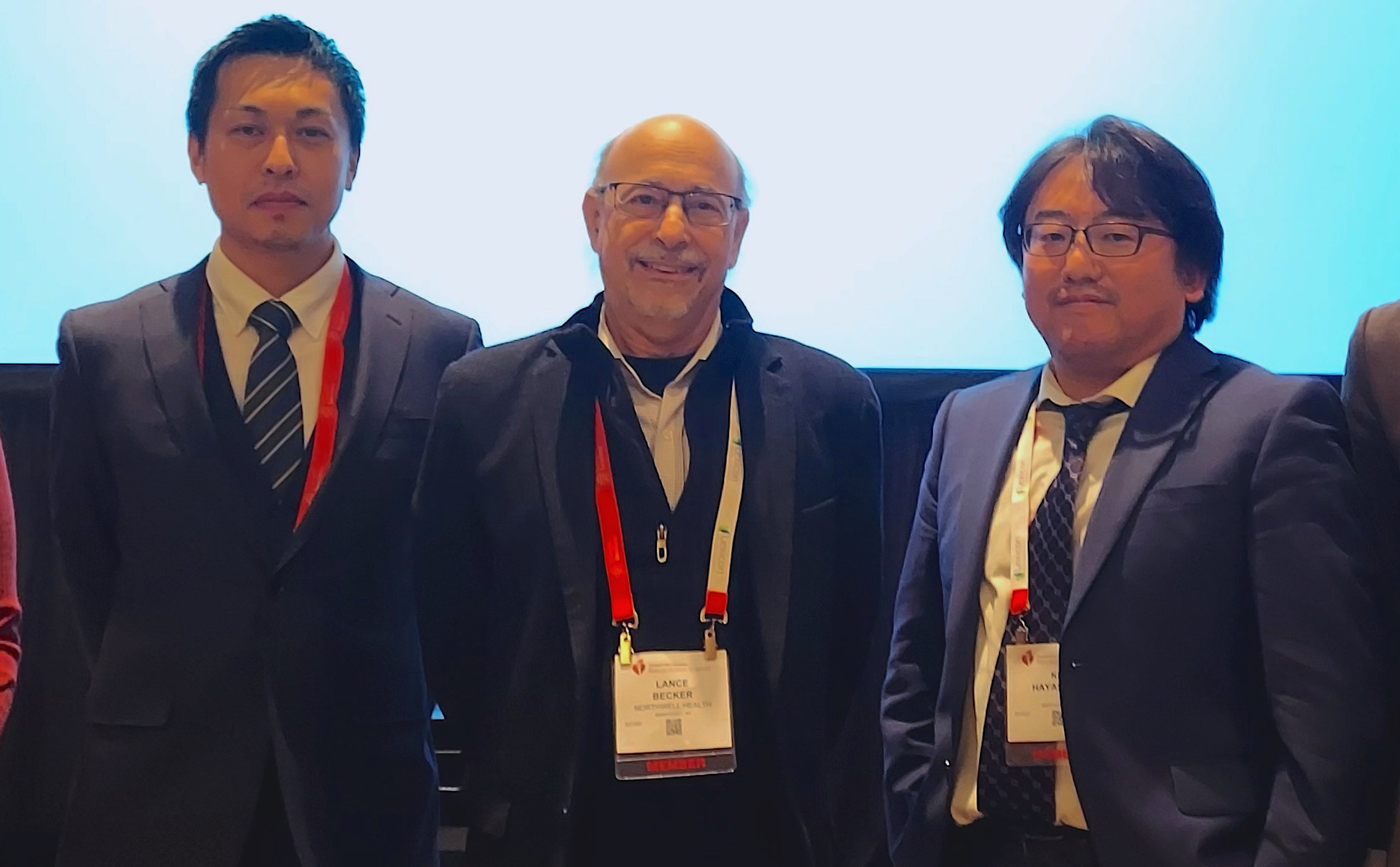
Led by Kei Hayashida, MD, PhD, a researcher with the Feinstein Institutes, and Lance B. Becker, MD, professor in the Institutes of Molecular Medicine and Bioelectronic Medicine at the Feinstein Institutes, investigators demonstrated an animal model of cardiac arrest that a single intravenous dose of mitochondria significantly improved the heart’s ability to pump blood. This improvement was driven when the heart pushed more blood with each beat, and its main pumping chamber squeezed more forcefully. This helped raise the blood pressure to a healthy level without needing powerful medications (vasopressors) to help it. The treatment also ensured that healthy blood flowed smoothly to all parts of the body, and it significantly reduced the early damage that often occurs in vital organs like the brain, heart, lungs, liver and kidneys.
“This study represents a critical step forward in our understanding and treatment of post-cardiac arrest syndrome,” said Dr. Hayashida. “By directly targeting mitochondrial dysfunction, we’ve shown that we can not only restore vital heart function, we can also protect multiple organs from the devastating effects of ischemia-reperfusion injury. This brings us closer to a disease-modifying strategy that could save countless lives.”
Cardiac arrest is a leading cause of death and severe disability, often resulting in profound myocardial dysfunction where the heart struggles to recover. Current treatments primarily focus on restoring circulation and supporting blood pressure, but do not address the fundamental cellular damage, particularly to mitochondria. This critical gap leaves many patients with poor outcomes, highlighting an urgent need for targeted, disease-modifying therapies.
“These findings address a critical clinical challenge: survival after cardiac arrest,” said Kevin Tracey, MD, president and CEO of the Feinstein Institutes and Karches Family Distinguished Chair in Medical Research. “At the Feinstein Institutes, we pursue knowledge to cure disease, and mitochondria transplantation is a burgeoning area of science that has the potential to transform treatment.”
This work builds on the team’s previous findings demonstrating improved survival and neurological outcomes following mitochondria transplantation in rodent models of cardiac arrest. The successful validation in a clinically relevant large-animal model marks another important step toward the clinical translation of this therapeutic approach for post-cardiac arrest syndrome.
Last year, Dr. Becker led the Feinstein Institutes’ inaugural Mitochondrial Transplantation and Next Generation Therapeutics Conference, which convened leading experts with the goal to accelerate the development of mitochondria transplantation as a treatment for a range of complex diseases. In 2023, Dr. Becker led a study that demonstrated mitochondria transplantation significantly improved neurological function and survival in animal models after cardiac arrest, pioneering a new therapeutic approach for oxygen-deprived cells.
About the Feinstein Institutes
The Feinstein Institutes for Medical Research is the home of the research institutes of Northwell Health, the largest health care provider and private employer in New York State. Encompassing 50+ research labs, 3,000 clinical research studies and 5,000 researchers and staff, the Feinstein Institutes raises the standard of medical innovation through its six institutes of behavioral science, bioelectronic medicine, cancer, health system science, molecular medicine, and translational research. We are the global scientific leader in bioelectronic medicine – an innovative field of science that has the potential to revolutionize medicine. The Feinstein Institutes publishes two open-access, international peer-reviewed journals Molecular Medicine and Bioelectronic Medicine. Through the Elmezzi Graduate School of Molecular Medicine, we offer an accelerated PhD program. For more information about how we produce knowledge to cure disease, visit http://feinstein.northwell.edu and follow us on LinkedIn.
Contacts
Julianne Mosher Allen
516-880-4824
jmosherallen@northwell.edu