Otsuka Unveils Unprecedented Phase 3 VISIONARY Two-Year eGFR Results Demonstrating VOYXACT® (sibeprenlimab-szsi) Stabilizes Kidney Function Decline to Baseline Physiologic Rate, Fundamentally Altering Disease Progression in IgA Nephropathy (IgAN)
Otsuka Unveils Unprecedented Phase 3 VISIONARY Two-Year eGFR Results Demonstrating VOYXACT® (sibeprenlimab-szsi) Stabilizes Kidney Function Decline to Baseline Physiologic Rate, Fundamentally Altering Disease Progression in IgA Nephropathy (IgAN)
- Phase 3 VISIONARY study met its key secondary endpoint, showing an annualized estimated eGFR slope of +0.3 (95% CI, -0.4 to 0.9) mL/min/1.73 m²/year with sibeprenlimab versus -4.2 (95% CI, -4.9 to -3.6) mL/min/1.73 m²/year with placebo
- VOYXACT is the first-and-only U.S. FDA-approved IgAN treatment to show stabilization of kidney function, with evidence of improvement, and a safety profile consistent with placebo over two years
- Adds to clinical evidence confirming VOYXACT’s selective APRIL inhibition as a disease-modifying therapeutic approach that targets a key IgAN driver to halt disease progression
- New findings complete the Phase 3 VISIONARY study, marking another milestone in Otsuka’s rolling submission of a supplemental Biologics License Application (sBLA) to the U.S. FDA for traditional approval of VOYXACT
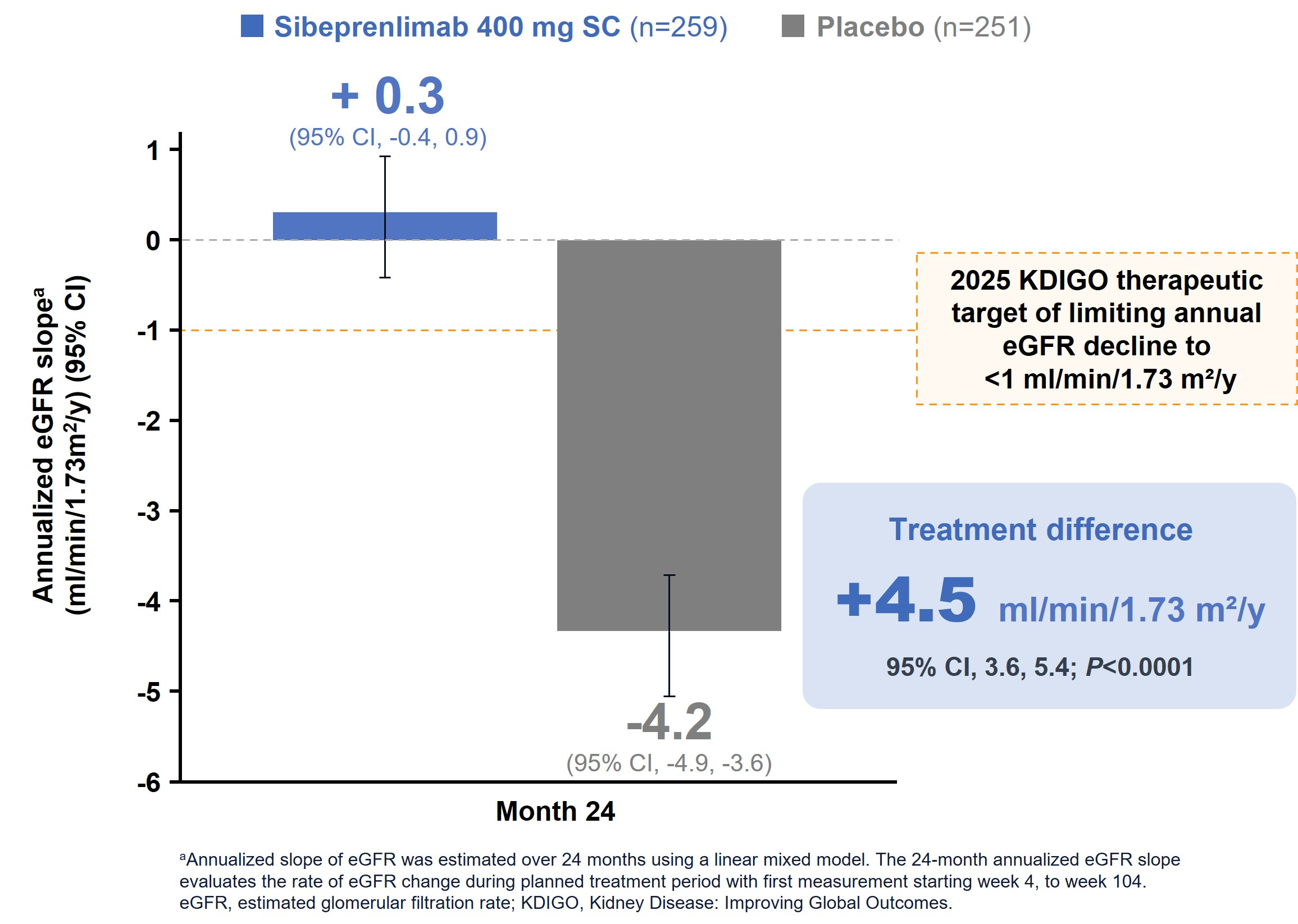
PRINCETON, N.J. & TOKYO--(BUSINESS WIRE)--Otsuka Pharmaceutical Development & Commercialization, Inc. and Otsuka Pharmaceutical Co., Ltd. (Otsuka) announced new data from the Phase 3 VISIONARY trial demonstrating that VOYXACT® (sibeprenlimab-szsi) stabilizes estimated glomerular filtration rate (eGFR) returning kidney function decline to baseline physiologic rate over two years (24 months) in adults with primary IgA nephropathy (IgAN) at risk for disease progression. Results presented during a late-breaking oral presentation at the GlomCon Hawaii 2026 conference showed the study achieved its key secondary endpoint, with an annualized eGFR slope of +0.3 (95% CI, -0.4 to 0.9) mL/min/1.73 m²/year with sibeprenlimab versus -4.2 (95% CI, -4.9 to -3.6) mL/min/1.73 m²/year with placebo, demonstrating a statistically significant treatment effect of +4.5 (95% CI, 3.6 to 5.4; p<0.0001) mL/min/1.73 m²/year at two years (24 months). VOYXACT is the first IgAN treatment to achieve the KDIGO therapeutic goal of effectively halting progressive kidney function decline to physiologic rate (<1 mL/min/1.73 m²/year for most adults)1. The overall safety profile of sibeprenlimab remained consistent through two years (24 months) and was comparable to placebo, with similar rates of overall adverse events (90.7% vs 90.0%), infections and infestations (51.4% vs 51.0%), and injection site reactions (35.1% vs 32.2%). No new safety signals were identified, and rates of serious infections were lower with sibeprenlimab than placebo (1.9% vs 4.0%), alongside lower rates of serious and severe adverse events and treatment discontinuations. A complete analysis of the Phase 3 VISIONARY two-year (24-month) results will be presented at an upcoming scientific congress.
“For nephrologists, stabilization of kidney function in IgAN patients represents a major advancement in the clinical management of this disease," said Dr. Dana Rizk, professor of medicine in the division of nephrology at the University of Alabama at Birmingham and VOYXACT VISIONARY study site principal investigator and co-chair of the steering committee. “The VISIONARY two-year eGFR results achieved the KDIGO treatment goal of reducing kidney function decline to near physiological level, fundamentally altering the disease progression. The magnitude and consistency of benefit across pre-specified sub-groups, coupled with the reassuring safety profile of VOYXACT, delivers new hope for better long-term outcomes in patients living with this progressive condition.”
The annualized eGFR slope (the study's key secondary endpoint) was estimated using a prespecified linear mixed-effects model that evaluated repeated eGFR measurements from Week 4 through Week 104 (24 months) to estimate the annual rate of kidney function change. At two years (24 months), the least square mean change from baseline in eGFR showed +1.3 mL/min/1.73 m² with sibeprenlimab (95% CI, −0.3 to 2.8), compared with −7.9 mL/min/1.73 m² with placebo (95% CI, −9.5 to −6.4), for a treatment difference of +9.2 mL/min/1.73 m² (95% CI, 7.1 to 11.4; p<0.0001). The least square mean change from baseline in eGFR at two years (24 months) was evaluated as a complementary secondary endpoint and was analyzed using a Mixed Model for Repeated Measures (MMRM) to assess the overall difference in kidney function from study entry to the two-year (24-month) timepoint.
“The VISIONARY trial provides the largest Phase 3 study in IgAN, with 24 months of follow-up in a broad, representative, patient population reflective of real-world clinical practice,” said John Kraus, M.D., Ph.D., executive vice president and chief medical officer, Otsuka. “These transformative results deliver the largest treatment effect reported in a Phase 3 IgAN trial, with a magnitude of benefit demonstrating stabilization of kidney function and halting of disease progression beyond symptom management, with the potential to redefine the treatment landscape. These data add to the body of evidence supporting selective APRIL inhibition as a safe, durable and disease-modifying therapeutic approach that targets underlying IgAN drivers.”
Otsuka would like to thank the patients, families, advocates, and investigators who participated in the Phase 3 VISIONARY trial, and who continue to advance IgAN research with the shared goal and persistent pursuit of delivering breakthroughs on patients' behalf.
VOYXACT is the first-and-only U.S. FDA-approved selective A-PRoliferation-Inducing-Ligand (APRIL) inhibitor, offering an early, targeted therapy that addresses key drivers of IgAN to alter disease progression2. VOYXACT was granted accelerated approval by the U.S. FDA in November 2025 after meeting the Phase 3 VISIONARY study's primary endpoint of statistically significant proteinuria reduction compared to placebo at nine months. VOYXACT was well tolerated, with a favorable safety profile comparable to placebo. The two-year eGFR results build on previously observed reductions in Gd-IgA1, proteinuria, and hematuria, underscoring VOYXACT’s ability to modify the disease and improve long-term clinical outcomes in IgAN2. These new findings complete the Phase 3 VISIONARY study dataset, marking another milestone in Otsuka’s rolling submission of a supplemental Biologics License Application (sBLA) to the U.S. FDA for VOYXACT traditional approval.
About the VISIONARY Study
VISIONARY (NCT05248646) is a global, randomized, double-blind, placebo-controlled Phase 3 study evaluating the efficacy and safety of VOYXACT (sibeprenlimab-szsi) in adults with primary IgAN at risk for disease progression. The primary efficacy endpoint assessed proteinuria reduction, as measured by the change in 24-hour urine protein-to-creatinine ratio (uPCR-24h) from baseline compared with placebo after nine months of treatment. The key secondary endpoint evaluates annualized eGFR slope over 24 months (two years), providing an assessment of kidney function over time. The least square mean change from baseline in eGFR at month 24 was also evaluated as a secondary endpoint, offering a complementary measure of overall treatment effect at a defined timepoint1,2. This program continues to advance the science in IgAN, with future data forthcoming in an open-label, long-term extension study (NCT05248659).
About IgAN
IgA nephropathy (IgAN) is a progressive, immune-mediated, chronic kidney disease that typically manifests in adults aged 20-40 years and can lead to kidney failure (KF) over the lifetime of most patients3-5. IgAN is characterized by the accumulation of Gd-IgA1 complexes in the kidneys7. IgAN can lead to progressive loss of kidney function and, eventually, KF, imposing a significant burden on patients5. Despite supportive care, there is an unmet need for treatments that address the root causes of the condition6. Continued research in IgAN remains crucial to uncovering opportunities for advancement in our understanding and treatment of patients6.
About VOYXACT® (sibeprenlimab-szsi)
VOYXACT (sibeprenlimab-szsi) is a humanized monoclonal antibody that binds to and blocks APRIL, which plays a key role in the 4-hit process of IgAN pathogenesis and is an important initiating and sustaining factor in IgAN progression by promoting the production of pathogenic galactose-deficient IgA1 (Gd-IgA1)2,6,7. Inhibition of APRIL results in reduced levels of serum galactose-deficient IgA1 (Gd-IgA1), which is implicated in the pathogenesis of IgAN. VOYXACT is a self-administered, subcutaneous injection dosed once every four weeks. VOYXACT is the first-and-only U.S. FDA-approved treatment for adults with primary IgAN at risk for disease progression that selectively inhibits APRIL, a key immune driver of the disease2. VOYXACT is the only U.S. FDA-approved selective APRIL inhibitor to demonstrate stabilization of eGFR compared with placebo over two years. VOYXACT was granted accelerated approval by the U.S. FDA on November 25, 2025. Otsuka has initiated a rolling submission of an sBLA to the U.S. FDA for VOYXACT traditional approval, which will include the 24-month (two-year) eGFR findings.
INDICATION and IMPORTANT SAFETY INFORMATION for VOYXACT® (sibeprenlimab-szsi)
INDICATION
VOYXACT is indicated to reduce proteinuria in adults with primary immunoglobulin A nephropathy (IgAN) at risk for disease progression.
This indication is approved under accelerated approval based on reduction of proteinuria. It has not been established whether VOYXACT slows kidney function decline over the long-term in patients with IgAN. Continued approval for this indication may be contingent upon verification and description of clinical benefit in a confirmatory clinical trial.
IMPORTANT SAFETY INFORMATION
CONTRAINDICATION
VOYXACT is contraindicated in patients with serious hypersensitivity to sibeprenlimab-szsi or any of the excipients of VOYXACT.
WARNINGS AND PRECAUTIONS
Immunosuppression and Increased Risk of Infections: VOYXACT suppresses the immune system by reducing antibody production, which may increase the risk of infections. Patients with chronic or recurring infections may have an increased risk of serious infection. In clinical trials, infections occurred in 49% of patients treated with VOYXACT compared with 45% of patients treated with placebo.
Before initiating VOYXACT, assess patients for active infections. During treatment, monitor patients for signs and symptoms of infection. If a serious infection develops, consider interrupting VOYXACT until the infection is controlled.
Immunosuppression and Immunization Risks: Because of its mechanism of action, VOYXACT may interfere with immune responses to vaccines and increase the risk of infection from live vaccines. Live vaccines are not recommended within 30 days prior to initiation of VOYXACT or during treatment with VOYXACT as safety has not been established. No data are available on the secondary transmission of infection from persons receiving live vaccines to patients receiving VOYXACT or on the efficacy of immunizations administered while receiving VOYXACT.
Common Adverse Reactions: The most common adverse reactions (reported in ≥10% of patients treated with VOYXACT and at a higher incidence than placebo) in patients treated with VOYXACT and placebo, respectively, were infections (49% versus 45%) and injection site reactions (24% versus 23%). The most common infection was upper respiratory infection (15% versus 14%), and the most common injection site reaction was injection site erythema (13% versus 12%). Most adverse reactions were reported as mild or moderate in severity and resolved without treatment interruption or discontinuation.
Pregnancy: There are no available data on VOYXACT use in pregnant women to evaluate for a drug-associated risk of major birth defects, miscarriage or other adverse maternal or fetal outcomes. Monoclonal antibodies, such as sibeprenlimab-szsi, can be actively transported across the placenta as pregnancy progresses; therefore, potential effects on a fetus are likely to be greater during the second and third trimester of pregnancy.
Lactation: There are no data on the presence of sibeprenlimab-szsi in human milk, the effects of sibeprenlimab-szsi on the breastfed infant, or the effects of sibeprenlimab-szsi on milk production.
Pediatric Use: Safety and effectiveness of VOYXACT in pediatric patients have not been established.
Geriatric Use: Clinical studies of VOYXACT did not include sufficient numbers of patients aged 65 and over to determine whether they respond differently from younger adult patients.
Pregnant women exposed to VOYXACT, or their healthcare providers, should report VOYXACT exposure by calling 1-833-869-9228 or visiting www.VOYXACT.com
To report SUSPECTED ADVERSE REACTIONS, contact Otsuka America Pharmaceutical, Inc. at 1-800-438-9927 or FDA at 1-800-FDA-1088 (www.fda.gov/medwatch).
Please see FULL PRESCRIBING INFORMATION and PATIENT INFORMATION
About Otsuka
Otsuka Pharmaceutical Co., Ltd. is a total healthcare company that focuses on each individual's potential to enhance their well-being. Our medical-related business provides treatments and diagnostics for both physical and mental health. Our nutraceutical business supports daily health maintenance and improvement. Otsuka's unique products and services are based on scientific evidence, under the guidance of our corporate philosophy: Otsuka-people creating new products for better health worldwide.
Otsuka America Pharmaceutical, Inc. and Otsuka Pharmaceutical Development & Commercialization, Inc. are the US-based indirect subsidiaries of the global healthcare company Otsuka Pharmaceutical Co. Ltd. Otsuka’s US companies share a deep commitment to the development and commercialization of innovative products in the spaces of neuroscience, nephrology, and immunology. At our core is perseverance–a fierce determination to overcome any obstacle, regardless of setbacks, on behalf of patients, caregivers, and their loved ones. We will not be bound by doing what’s been done before. Learn more at www.otsuka-us.com.
References
- Kidney Disease: Improving Global Outcomes (KDIGO) IgAN and IgAV Work Group. KDIGO 2025 Clinical Practice Guideline for the Management of Immunoglobulin A Nephropathy (IgAN) and Immunoglobulin A Vasculitis (IgAV). Kidney Int. 2025;108(4S):S1-S71.
- Perkovic, V., Trimarchi, H., Tesar, V., Lafayette, R., Wong, M. G., Barratt, J., Suzuki, Y., Liew, A., Zhang, H., Carroll, K., Jha, V., Quevedo, A., Han, S. H., Praga, M., Chacko, B., Sahay, M., Cheung, C. K., Kooienga, L., Walsh, M., … Rizk, D. V. (2026). Sibeprenlimab in IGA nephropathy — interim analysis of a phase 3 trial. New England Journal of Medicine, 394(7), 635–646. https://doi.org/10.1056/nejmoa2512133
- Pitcher, D. Braddon, et. al Long-term outcomes in IGA nephropathy. Clinical journal of the American Society of Nephrology: CJASN. https://pubmed.ncbi.nlm.nih.gov/37055195/.
- Cheung, Chee Kay & Boyd, JKF & Feehally, J.. (2012). Evaluation and management of IgA nephropathy. Clinical Medicine. 12. s27-s30. 10.7861/clinmedicine.12-6-s27.
- Lai K. Iga nephropathy. Nature reviews. Disease primers. 2016
- Cheung CK, Barratt J, Liew A, Zhang H, Tesar V, Lafayette R. The role of BAFF and April in IGA nephropathy: Pathogenic mechanisms and targeted therapies. Frontiers in nephrology. February 1, 2024.
- Chang S, Li XK. The Role of Immune Modulation in Pathogenesis of IgA Nephropathy (nih.gov)
Contacts
Contacts for Media
Otsuka in the U.S.
Jill Roman
Corporate Communications
Otsuka America Pharmaceutical, Inc.
jill.roman@otsuka-us.com
Otsuka in Japan
Jeffrey Gilbert
Leader, Pharmaceutical PR
Otsuka Pharmaceutical Co., Ltd.
gilbert.jeffrey.a@otsuka.jp
+81 3 6361 7379