HRL Demonstrates a Silicon Quantum Processor That Runs Itself
HRL Demonstrates a Silicon Quantum Processor That Runs Itself
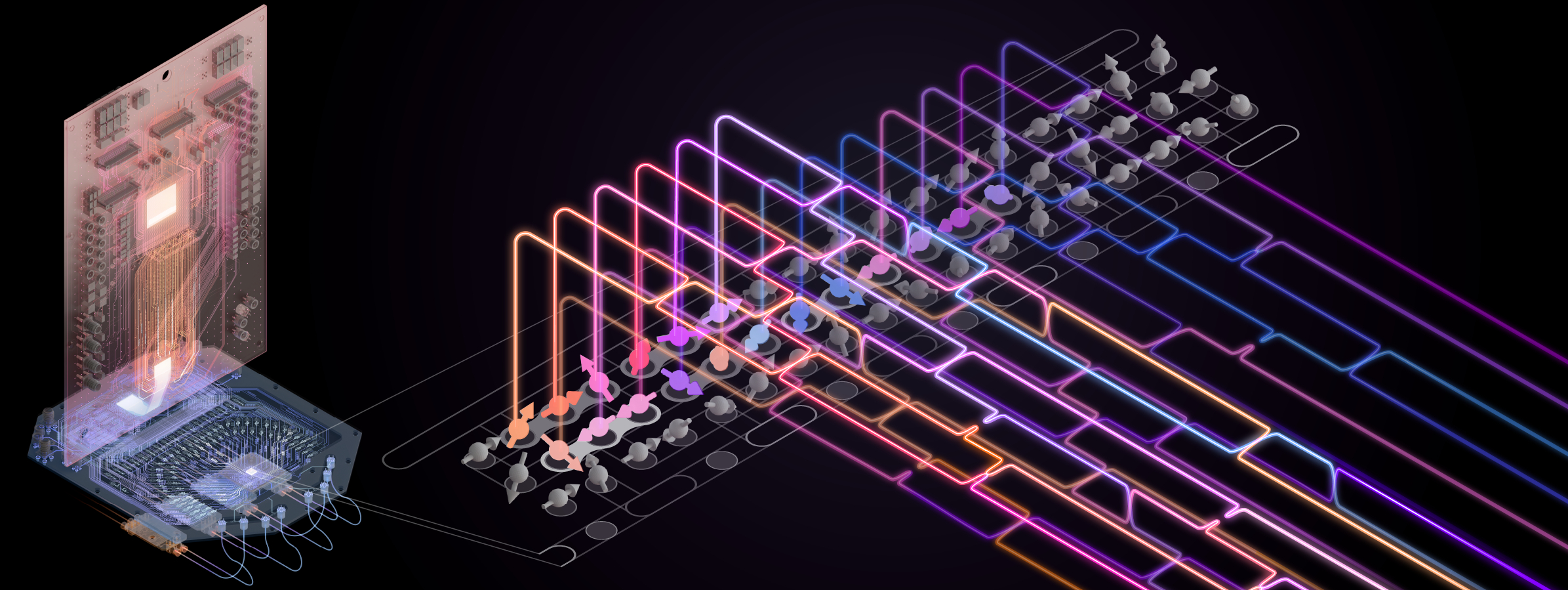
MALIBU, Calif.--(BUSINESS WIRE)--HRL Laboratories published a quantum computing milestone in Nature today: a quantum processor that runs itself. Quantum computers normally depend on racks of external electronics to generate every control signal. HRL replaced those racks with a custom control chip that sits near the qubits, in the extreme cold. The combined system autonomously ran error correction, an essential routine for any future quantum computer.
“The technologies that enabled conventional computing weren't just the highest-performing — they were the ones that could be manufactured cheaply and at scale,” said Rob Vasquez, CEO, HRL Laboratories.
Share
HRL’s approach addresses a central obstacle for all quantum computing platforms: how to control the enormous number of qubits that a useful machine will require without an unmanageable tangle of wiring and electronics.
- HRL developed a custom CMOS controller that operates at –450°F inside the cryostat, a specialized refrigerator that keeps the qubits near absolute zero. The controller generates every necessary signal for their 18-qubit devices, running error correction autonomously with no real-time input from room-temperature electronics.
- Placing warm electronics beside cold qubits would normally be self-defeating; even at –450°F, the controller is hot compared to the qubits. A new high-density superconducting ribbon cable is what makes the architecture work. The ribbon carries the hundreds of control signals down to the even-colder qubits, but not the heat, preserving the qubits’ fragile quantum states.
- The system achieves control errors ten times lower than any prior demonstration with this type of qubit, aided by a new qubit fabrication process with dramatically lower device noise and more reliable performance. It's also fast, with each operation taking less than a microsecond.
The results appear today in Nature as “A digitally controlled silicon quantum processing unit.” See video here.
Errors fell roughly fivefold when the team added more qubits to their error-correcting repetition code, demonstrating the property of error suppression that all quantum computers will rely on. The results matched the team's models, evidence that their approach should hold up as it scales. This is also the first time error correction has been executed entirely by a cryogenic controller, with no real-time involvement from room-temperature electronics.
Quantum computers are more than just qubits. To operate at scale, they require control systems that are just as manufacturable and precise as the qubits themselves. This publication reports a complete prototype of the architecture HRL believes will deliver full-scale quantum computers at practical cost. Read more detail here.
“The technologies that enabled conventional computing weren't just the highest-performing — they were the ones that could be manufactured cheaply and at scale,” said Rob Vasquez, President and Chief Executive Officer, HRL Laboratories. “We think quantum computing will follow a similar path. Our goal is to build these powerful computers using standard microchip production lines and fit each one inside a single refrigerator. This approach will keep production costs low and make the technology affordable enough to tackle a much wider variety of business and scientific problems.”
What’s Next
IBM recently announced that it has signed a definitive agreement to acquire HRL to strengthen and extend their world-leading quantum computing capabilities. By leveraging IBM’s industry leadership, HRL will accelerate its work in quantum science and engineering to unlock new possibilities for the future of computing.
About Nature
Nature is a weekly international journal publishing the finest peer-reviewed research in all fields of science and technology on the basis of its originality, importance, interdisciplinary interest, timeliness, accessibility, elegance and surprising conclusions. Nature also provides rapid, authoritative, insightful and arresting news and interpretation of topical and coming trends affecting science, scientists and the wider public.
HRL Laboratories, LLC, California (hrl.com) pioneers the next frontiers of physical and information science. Delivering transformative technologies in automotive, aerospace and defense, HRL advances the critical missions of its customers. As a private company owned jointly by Boeing and GM, HRL is a source of innovations that advance the state of the art in profound and far-reaching ways.
Contacts
Media Inquiries:
media@hrl.com
310-317-5000