Northwell’s Staten Island University Hospital Performs First U.S. Procedure With New BioHealx Device for Complex Anal Fistulas
Northwell’s Staten Island University Hospital Performs First U.S. Procedure With New BioHealx Device for Complex Anal Fistulas
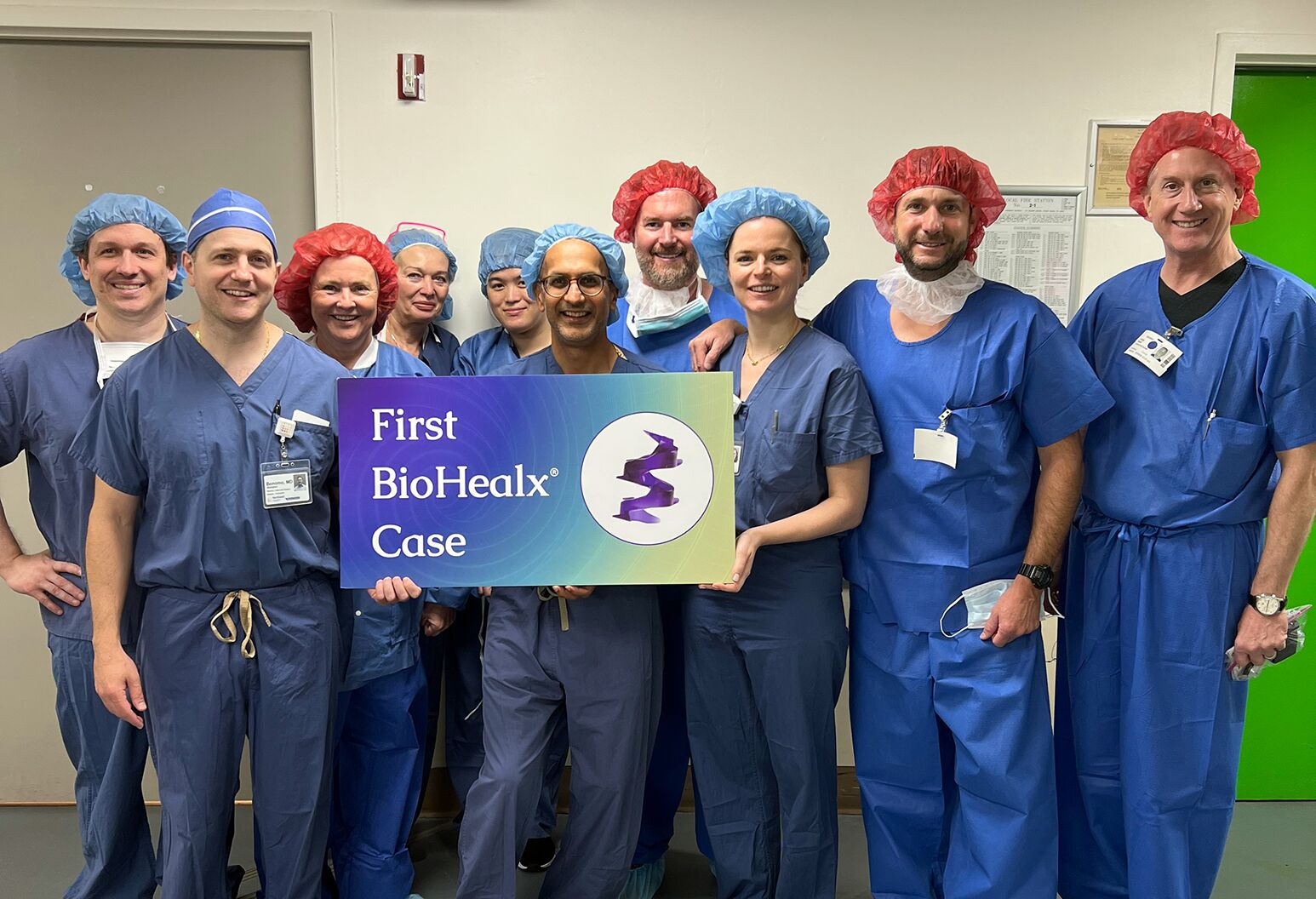
STATEN ISLAND, N.Y.--(BUSINESS WIRE)--Northwell’s Staten Island University Hospital (SIUH) is the first medical center in the United States to perform surgery using the newly FDA-cleared BioHealx ®Anal Fistula Device - offering new hope to patients suffering from complex and often debilitating anal fistulas. The procedures were performed by colorectal surgeons Poppy Addison, MD, and Giovanni Bonomo, MD, director of colorectal surgery.
The BioHealx device, developed by Irish-based Signum Surgical, represents a significant advancement in the treatment of complex anal fistulas, notoriously difficult to treat with current surgical options. The minimally invasive, absorbable implant is designed to close fistula tract as it traverses the anal sphincter complex, without involving any significant disruption of the anorectal anatomy. Early European data demonstrated an 84% success rate, far exceeding traditional approaches that often have success rates closer to 60% and are associated with the need for multiple procedures to finally achieve healing.
“Historically, these surgeries have been long, complex, traumatic to the anorectum and carried the risk of recurrence and incontinence,” said Dr. Bonomo. “The BioHealx device is intuitive, efficient, and minimizes surgical trauma. If we can replicate the European outcomes, this could set a new standard of care in fistula treatment.”
Approximately, 90,000 complex anal fistula procedures are performed yearly. These fistulas predominantly affect men between ages 18 and 50, and disrupts their quality of life due to anal pain, foul-smelling drainage, and recurrent infection. Fistulas can recur even after what appears to be healing at the skin level due to persistence of the transsphincteric fistula tract, and many patients undergo multiple interventions before finding relief.
“Rectal fistulas are under-researched and have lacked a reliable, standardized solution,” said Dr. Addison. “This device has the potential to optimize care, shorten recovery, and reduce recurrence, all while preserving continence, which is a critical concern for our patients.”
Before surgery, a seton drain is placed to help mature the fistula tract and to provide for clear identification of the internal fistula opening. During the BioHealx procedure, the seton is removed, the tract is brushed clean, and a small flap is created to expose the internal sphincter at the location of internal opening. The corkscrew-shaped BioHealx implant is then inserted to compress the tissue around the fistula tract as it traverses the width of the sphincter complex to deliver primary healing by direct tissue apposition. The flap is closed over the internal opening and internal anal sphincter, while the outer tract is partially opened for optimal drainage - all without damaging the sphincter muscle nor disrupting the anal canal. The implant itself is made from bioabsorbable polylactic glycolic acid and naturally dissolves in the body within six to twelve months, leaving no permanent material behind.
The inspiration for the BioHealx device dates back to 2013 when engineers Eoin Bambury and Moshe Zilversmit, co-founders of Signum Surgical, met during a government-sponsored fellowship in Ireland. After observing the repeated failure of traditional surgeries to treat anal fistulas, often requiring four or more operations, they launched Signum Surgical in 2016 to develop a better solution.
“The key was identifying the failure of primary healing of the transsphincteric portion of the fistula tract as the root cause of surgical failure,” said Bambury. “Our goal was to close it effectively without damaging the anal canal nor the anal sphincter. After years of research, clinical trials, and design refinement, we’re proud to see our work helping patients here in the U.S.”
SIUH’s successful completion of the first U.S. procedures using the BioHealx device represents a critical milestone in the adoption of innovative, patient-centered technology across Northwell Health.
“Northwell has always championed advanced technologies that improve outcomes and quality of life,” said Dr. Bonomo. “This is the kind of breakthrough that can change how we treat complex anal fistulas nationwide.”
Drs. Bonomo and Addison will continue evaluating patient outcomes to help guide future adoption and research of the BioHealx procedure. With a shorter learning curve than many other surgical techniques, the team believes the procedure can be easily adopted across the entire system.
“We’re incredibly optimistic,” said Dr. Addison. “This device doesn’t burn any bridges - it’s safe, effective, and easy to use. If it doesn’t work, patients still have all their future options with essentially normal anorectal anatomy. But if it does, it can spare them years of painful, frustrating treatments.”
Contacts
Jillian O’Hara
PR Advisor, Northwell
Johara1@northwell.edu
917-710-1970