Bioelectronic Medicine Summit Showcases Advances in Neurotechnology
Bioelectronic Medicine Summit Showcases Advances in Neurotechnology
Experts highlight breakthroughs and future directions in bioelectronic medicine; Feinstein Institutes CEO lauds field’s collaborative efforts and ‘remarkable growth’
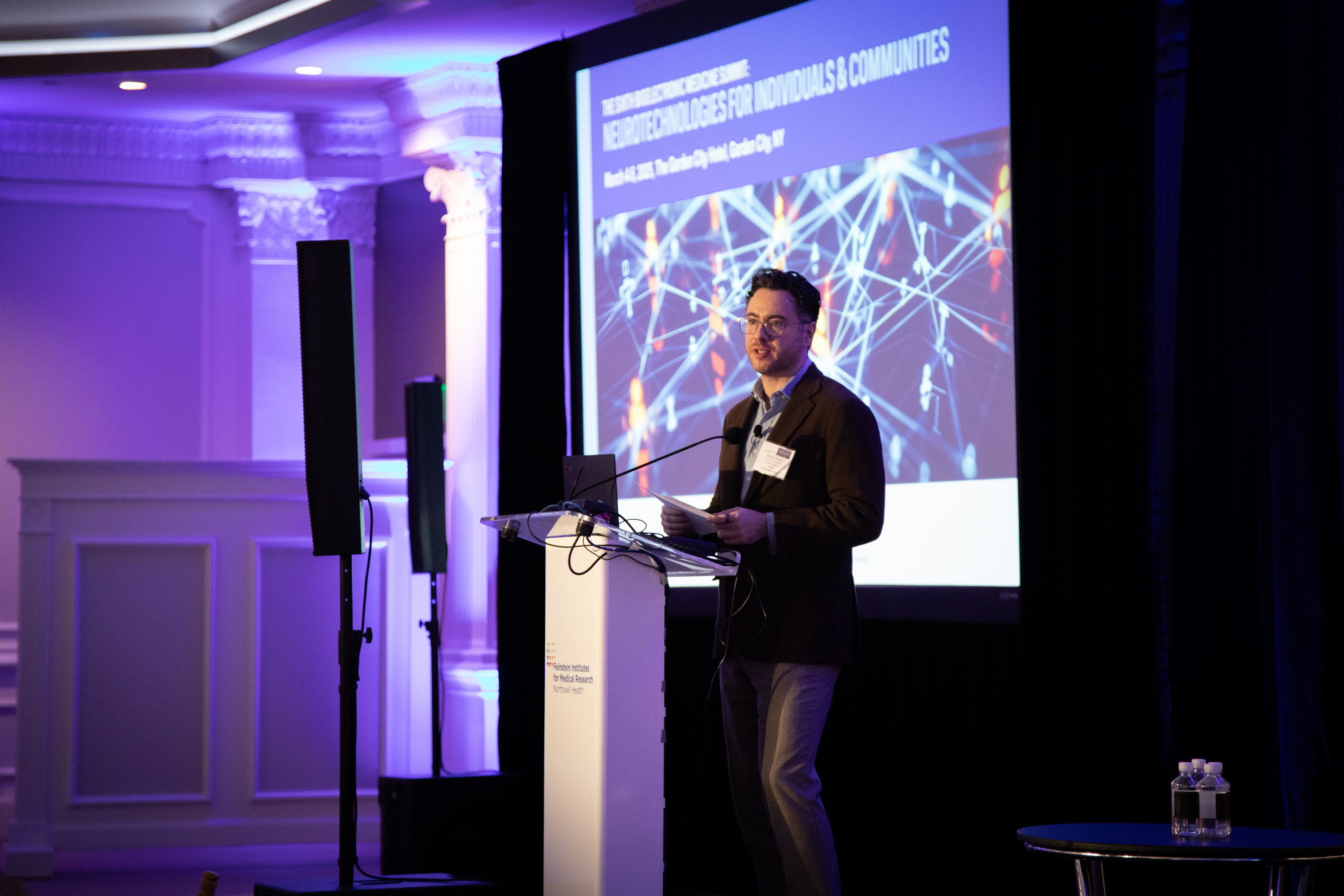
MANHASSET, N.Y.--(BUSINESS WIRE)--The sixth annual Bioelectronic Medicine Summit, hosted by Northwell Health’s Feinstein Institutes for Medical Research, brought together leading scientists, engineers, clinicians and innovators in the fields of translational medicine, neuromodulation and bioengineering. The Summit was co-chaired by Stavros Zanos, MD, PhD, associate professor in the Institute of Bioelectronic Medicine, and Hubert Lim, PhD, professor at the University of Minnesota, and focused on the transformative potential of neurotechnology to improve the lives of individuals and communities facing a range of health challenges rooted in chronic disease.
“The progress we've witnessed in bioelectronic medicine is a testament to the shared vision and commitment of our sponsors, collaborators and researchers,” said Yousef Al-Abed, PhD, co-director of, and professor in, the Institute of Bioelectronic Medicine. “We are deeply grateful for their support in advancing this field and bringing hope to patients who need better treatment options.”
The Summit, which was held March 4-5 at the Garden City Hotel in Garden City, NY, featured a diverse program of presentations, panel discussions and networking opportunities with more than 40 invited guests from academia, industry and research foundations from the United States, Canada and several European countries. Some topics of conversation included emerging bioelectronic applications of new biomaterials, applications of therapeutic ultrasound, precision medicine approaches to neuromodulation, the role of obesity and inflammation in cardiovascular diseases, neurostimulation therapies in spinal cord and pain disorders and 40 Hz sensory stimulation for Alzheimer's disease.
“Bioelectronic medicine is one of the fastest growing fields in all of science, and this growth is fueled by exciting collaborations between immunologists, neuroscientists, and biomedical engineers,” said Kevin J. Tracey, MD, president and CEO of the Feinstein Institutes and Karches Family Distinguished Chair in Medical Research. “Discoveries emerging from this field have already transformed lives for the better, launched new companies, and paved the way to surprising innovations to treat illness and disabilities with computer chips instead of drugs.”
The Feinstein Institutes for Medical Research is the global scientific home of bioelectronic medicine, which combines molecular medicine, neuroscience and biomedical engineering. At the Feinstein Institutes, medical researchers use modern technology to develop new device-based therapies to treat disease and injury.
Building upon years of research in molecular disease mechanisms and the link between the nervous and immune systems, Feinstein Institutes researchers have discovered neural targets that can be activated or inhibited with neuromodulation devices, like vagus nerve implants, to control the body's immune response and inflammation. If inflammation is successfully controlled, diseases – such as arthritis, pulmonary hypertension, Crohn's disease, inflammatory bowel diseases, diabetes, cancer and autoimmune diseases – can be treated more effectively.
Beyond inflammation, using novel brain-computer interfaces, Feinstein Institutes researchers developed techniques to bypass injuries of the nervous system so that people living with paralysis can regain sensation and use their limbs. By producing bioelectronic medicine knowledge, disease and injury could one day be treated with a patient’s own nerves without costly and potentially harmful pharmaceuticals.
About the Feinstein Institutes
The Feinstein Institutes for Medical Research is the home of the research institutes of Northwell Health, the largest health care provider and private employer in New York State. Encompassing 50+ research labs, 3,000 clinical research studies and 5,000 researchers and staff, the Feinstein Institutes raises the standard of medical innovation through its six institutes of behavioral science, bioelectronic medicine, cancer, health system science, molecular medicine, and translational research. We are the global scientific leader in bioelectronic medicine – an innovative field of science that has the potential to revolutionize medicine. The Feinstein Institutes publishes two open-access, international peer-reviewed journals Molecular Medicine and Bioelectronic Medicine. Through the Elmezzi Graduate School of Molecular Medicine, we offer an accelerated PhD program. For more information about how we produce knowledge to cure disease, visit http://feinstein.northwell.edu and follow us on LinkedIn.
Contacts
Julianne Mosher Allen
516-880-4824
jmosherallen@northwell.edu