Feinstein Institutes’ Dr. Ping Wang Receives 2023 Mentor Award From the Shock Society
Feinstein Institutes’ Dr. Ping Wang Receives 2023 Mentor Award From the Shock Society
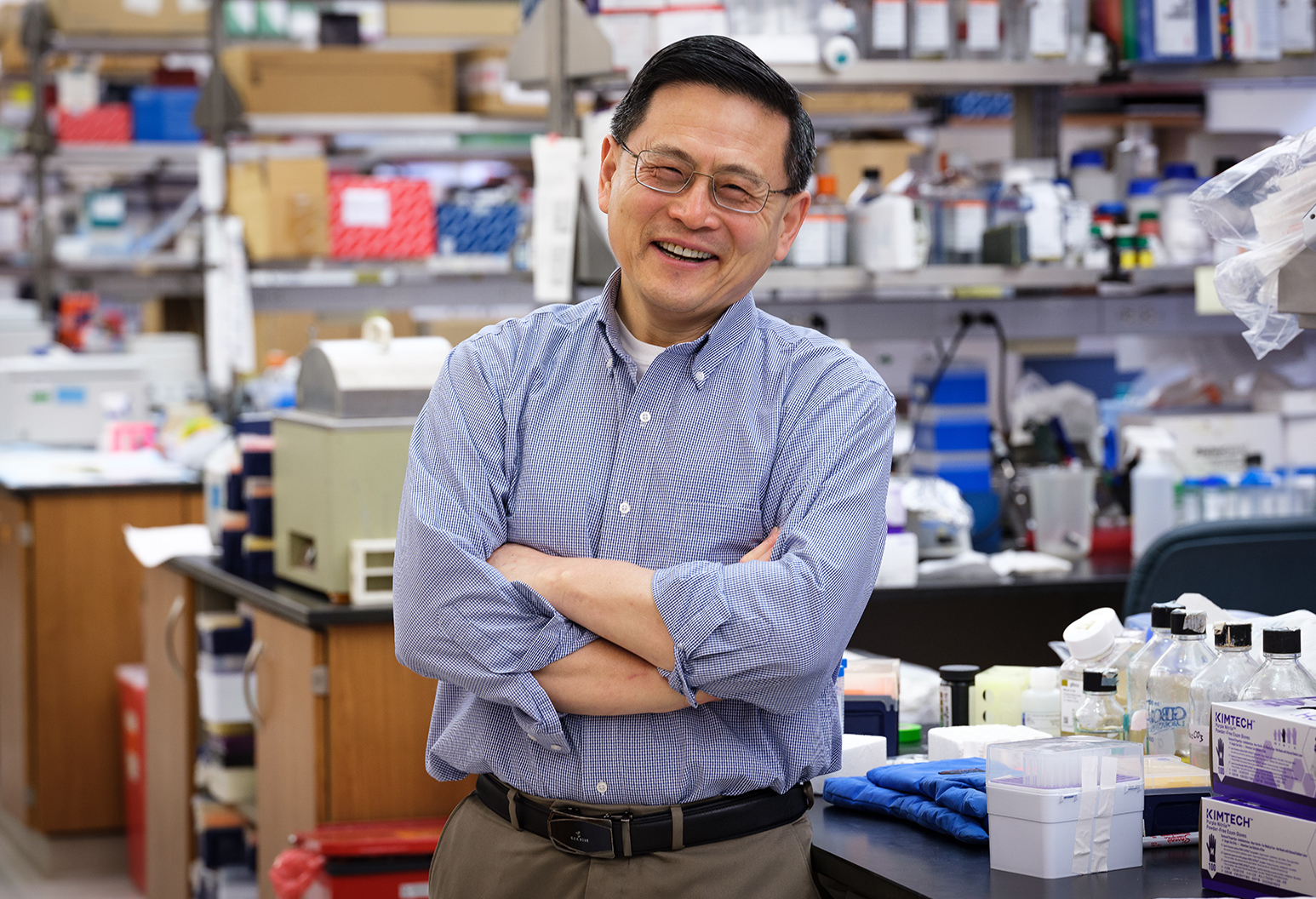
MANHASSET, N.Y.--(BUSINESS WIRE)--Sepsis makes up nearly a quarter of deaths worldwide, often leading to shock and multiple organ failure. Ping Wang, MD, an investigator at The Feinstein Institutes for Medical Research, has dedicated his career to sepsis research and is being rewarded with the Shock Society Mentor Award for his leadership and mentoring of young clinicians and basic researchers at the US Shock Society’s 46th annual Conference on Shock last month in Portland, OR.
The Shock Society Mentor Award annually honors a member of the Shock Society for excellence in mentoring trainees and junior faculty. This award is given to an individual who has had a significant impact as a mentor in promoting professional development and career advancement of the next generation of basic scientists and clinician-scientists in shock research.
Dr. Wang – chief scientific officer and senior vice president at the Feinstein Institutes – is also a professor and chairman of the Department of Molecular Medicine and vice chairman for research at the Department of Surgery at the Donald and Barbara Zucker School of Medicine at Hofstra/Northwell. He has dedicated his three-decade career to sepsis and shock research to identify its molecular mechanisms and potential therapeutic drug targets, while also mentoring more than 100 surgical residents, PhD students, postdoctoral researchers and research scientists.
As a mentor, he has helped students and trainees develop critical thinking skills, enhance their scientific knowledge and hone their research skills to make them highly competent professionals in shock research. His support and training have led to numerous successes that include publications, awards and grants from the National Institutes of Health.
“It is an honor to be recognized by the Shock Society for my passion, commitment and support of young researchers,” said Dr. Wang. “Sepsis and shock continue to challenge clinicians and scientists on how to best identify and treat the condition. It is our responsibility to educate, train and mentor the future generation of clinician-scientists who will advance our understanding of the often-fatal diseases.”
Dr. Wang is an internationally recognized leader in sepsis and shock research. He served as president of the Shock Society from 2016-2017 and was program chair at the 2013 Conference on Shock. The Shock Society is a collective group whose mission is to improve the care of victims of trauma, sepsis and shock by promoting clinically relevant research. His research goals and lab help us understand the pathobiological mechanisms contributing to organ dysfunction and to develop better therapies for inflammatory diseases such as sepsis, ischemia-reperfusion injury and shock.
Dr. Wang recently led new research that discovered a protein which inhibits the body’s ability to clear bacteria. The study explored how extracellular cold-inducible RNA-binding protein (eCIRP) causes immune dysfunction, and how it disrupts the cells within the immune system, which ingest bacteria and secrete both pro-inflammatory and antimicrobial mediators. Dr. Wang and co-principal investigators also recently received $3.8 million from the National Institute of Health to study sepsis and radiation exposure.
About the Feinstein Institutes
The Feinstein Institutes for Medical Research is the home of the research institutes of Northwell Health, the largest health care provider and private employer in New York State. Encompassing 50 research labs, 3,000 clinical research studies and 5,000 researchers and staff, the Feinstein Institutes raises the standard of medical innovation through its five institutes of behavioral science, bioelectronic medicine, cancer, health system science, and molecular medicine. We make breakthroughs in genetics, oncology, brain research, mental health, autoimmunity, and are the global scientific leader in bioelectronic medicine – a new field of science that has the potential to revolutionize medicine. For more information about how we produce knowledge to cure disease, visit http://feinstein.northwell.edu and follow us on LinkedIn
Contacts
Julianne Mosher Allen
516-880-4824
jmosherallen@northwell.edu