A novel azapeptide editing method provides potential for new drug development, Feinstein Institutes research shows
A novel azapeptide editing method provides potential for new drug development, Feinstein Institutes research shows

MANHASSET, N.Y.--(BUSINESS WIRE)--Peptides, short sections of proteins made up of chains of amino acids, are an important area of new drug development due to their potential for increased specificity and fewer side effects. Their main drawback is the rapid degradation by the body’s own enzymes, which has led to the need to develop longer-lasting peptide alternatives. Azapeptides are one type of peptide alternative that has shown great potential as therapeutics, exemplified by the HIV drug, Atazanavir (Reyataz).
A new paper published in the journal Nature Communications by researchers at The Feinstein Institutes for Medical Research details proprietary reagents and methods that can selectively replace only those amino acids known to be targeted by enzymes with more stable versions to create azapeptides.
The paper, authored by Yousef Al-Abed, PhD, co-director of the Institute of Bioelectronic Medicine at the Feinstein Institutes, describes the proprietary building blocks and method used to conduct systematic and robust peptide editing, replacing targeted amino acids with aza-amino acids to form more stable and efficient azapeptides. The azapeptides created could expedite the novel therapies to treat many diseases and conditions, including metabolic disease, influenza, pulmonary arterial hypertension, Crohn’s disease, arthritis, and irritable bowel diseases, among others.
The paper, titled “Thiocarbazate building blocks enable the construction of azapeptides for rapid development of therapeutic candidates,” provides multiple examples of azapeptide construction, screening, and selection using a known peptide inhibitor of inflammation (HMGB1 inhibitor-P5779) and bradykinin (a natural peptide with known biological function).
“Peptides as drug candidates are easy to discover yet difficult to develop as final drugs because of their fast degradation in our body. A technology that circumvents these problems inherent to native peptides will change the future landscape of drug discovery,” said Dr. Al-Abed. “Our technology provides a platform of tools that enable minimal modification of any peptide at highly prone degradation sites, thereby increasing its life span in our body, allowing it more time to find its target and neutralize it.”
Through peptide editing, going from peptide to azapeptide, using methods that Dr. Al-Abed and his team detail in the new paper, scientists can create potential therapies that have enhanced characteristics compared to natural peptides, like longer stabilities in a more efficient manner. Dr. Al-Abed and his team have precisely engineered thiocarbazates (a novel functional group) in the proprietary process to achieve an almost universal and more efficient means to selectively replace amino acids in a peptide chain.
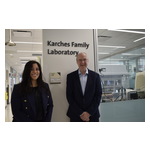
“Peptide drugs are a crucial resource for patients and the global pharmaceutical industry,” said Kevin J. Tracey, MD, president and CEO of the Feinstein Institutes and Karches Family Distinguished Chair in Medical Research. “Dr. Al-Abed and his team invented a fully automated chemical strategy using novel chemistry to make new peptide drugs which is an important new avenue for peptide drug discovery.”
About the Feinstein Institutes
The Feinstein Institutes for Medical Research is the research arm of Northwell Health, the largest health care provider and private employer in New York State. Home to 50 research labs, 3,000 clinical research studies and 5,000 researchers and staff, the Feinstein Institutes raises the standard of medical innovation through its five institutes of behavioral science, bioelectronic medicine, cancer, health innovations and outcomes, and molecular medicine. We make breakthroughs in genetics, oncology, brain research, mental health, autoimmunity, and are the global scientific leader in bioelectronic medicine – a new field of science that has the potential to revolutionize medicine. For more information about how we produce knowledge to cure disease, visit http://feinstein.northwell.edu and follow us on LinkedIn.
Contacts
Matthew Libassi
631-793-5325
mlibassi@northwell.edu