Bruker Announces Key Innovations for Highly Multiplexed Spatial Proteomics and Multiomic Tissue Imaging at Large Field-of-View
Bruker Announces Key Innovations for Highly Multiplexed Spatial Proteomics and Multiomic Tissue Imaging at Large Field-of-View
- Fast, large field-of-view MALDI HiPLEX-IHC imaging of targeted proteins, overlaid with unbiased small molecule MALDI Imaging on fresh frozen or FFPE tissues offers compelling innovation for spatial biology and cancer research
- New microGRID technology for timsTOF fleX platform for MALDI positioning provides virtually artifact-free images across entire slide down to 5 µm
- SCiLS™ Lab 2023a software demonstrates advanced imaging analysis with 4D Feature-Finder for CCS-enabled imaging and multiomics capabilities, combining, e.g., protein, glycan and lipid images from same tissue section

Images from a single fresh-frozen sagittal mouse brain section showing three representative lipids associated with neurological function, three of the 12plex targeted neurological proteins from the MALDI HiPLEX-IHC experiment on the same tissue section, and a true multiomic overlay of a representative lipid and two proteins. Images were rendered using the new multiomic module for SCiLS Lab 2023a. (Photo: Business Wire)
MINNEAPOLIS--(BUSINESS WIRE)--At the 70th ASMS Conference, Bruker Corporation (Nasdaq: BRKR) announced key innovations for spatial multiomics of tissue and tumor microenvironments (TME). Following Bruker’s strategic partnership with AmberGen1, key enhancements are introduced for MALDI HiPLEX-IHC mass spectrometry imaging.
MALDI HiPLEX-IHC represents a breakthrough in multiomics imaging by combining targeted protein expression spatial profiling with unbiased small molecule MALDI Imaging to co-localize proteins and small molecules such as glycans, lipids, metabolites, or xenobiotics. Using AmberGen’s MiralysTM antibody-based photocleavable peptide mass tags, highly multiplexed IHC staining and photocleavage of peptide markers fit seamlessly into Bruker’s IntelliSlide®-based automated workflows for MALDI imaging.
Novel multiomic imaging enhances spatial high-plex protein imaging with the ability to elucidate metabolic processes in the same tissue section. In addition to mapping tens to over one hundred targeted proteins with high-plex peptide tags, MALDI HiPLEX-IHC can track signaling pathways such as glycosylation, observe lipid spatial profiles for tumor microenvironment segmentation, or simultaneously observe how drugs affect both protein and metabolic states.
Dr. Peggi Angel, Professor of Cell and Molecular Pharmacology and Experimental Therapeutics at the Medical University of South Carolina commented: “From the perspective of a lab heavily invested in cellular signaling processes in cancer biology, MALDI HiPLEX-IHC is a game changer allowing integration of mass spectrometry imaging with cell biology. We will be using this technology for multiomic N-glycan and collagen imaging studies to understand aggressive breast cancers. I expect that researchers investigating the tissue microenvironment will quickly adopt this unique spatial multiomics technology.”
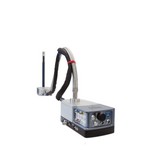
Bruker also announced its microGRID module for smartbeam 3D MALDI sources for timsTOF fleX systems. The microGRID improves the MALDI stage to sub-micron precision to correct laser positioning on tissue surfaces down to 5 micrometers (µm), virtually eliminating any visual artifacts or artifacts in co-registration of MALDI images with optical microscopy. As correction is effective for entire pathology slides, microGRID leverages a large field-of-view for MALDI HiPLEX-IHC protein expression profiling.
Dr. Ron Heeren, Distinguished Professor and Limburg co-chair of the Maastricht Multimodal Molecular Imaging (M4I) Institute, added: “At M4I, we develop workflows and techniques to contextualize the role of individual cells in disease, and determine how interactions between cells affects cellular states locally and across long distances.”
Dr. Heeren continued: “Since we work closely with pathologists and cancer researchers who are used to microscopes, we cannot afford artifacts in our mass spectrometry images, and need large fields-of-view. Bruker’s microGRID achieves this effortlessly without limiting the area of the slide we can process for multiomic, multimodal images of diseased and homeostatic pathology.”
Bruker also demonstrated key updates for MALDI Imaging data analysis using SCiLSTM Lab 2023a, including microGRID support and improvements in handling CCS (collisional cross section)-enabled imaging datasets acquired with timsTOF technology. SCiLSTM Lab 2023a introduces the novel 4D Feature-Finder for visualizing CCS-resolved features in intuitive mass-mobility diagrams. In addition, images produced from multimodal datasets were demonstrated with MALDI HiPLEX-IHC protein expression spatial profiling. This allows SCiLS Lab to leverage its auto-segmentation and statistical profiling tools using images that overlay protein and small molecule localization on the same tissue section.
About Bruker Corporation (Nasdaq: BRKR)
Bruker is enabling scientists to make breakthrough discoveries and develop new applications that improve the quality of human life. Bruker’s high performance scientific instruments and high value analytical and diagnostic solutions enable scientists to explore life and materials at molecular, cellular and microscopic levels. In close cooperation with our customers, Bruker is enabling innovation, improved productivity and customer success in life science molecular and cell biology research, in applied and pharma applications, in microscopy and nanoanalysis, as well as in industrial applications. Bruker offers differentiated, high-value life science and diagnostics systems and solutions in preclinical imaging, clinical phenomics research, proteomics and multiomics, spatial and single-cell biology, functional structural and condensate biology, as well as in clinical microbiology and molecular diagnostics. Please visit www.bruker.com.
______________________________________
1 https://www.businesswire.com/news/home/20220411005644/en/
Contacts
Media
Petra Scheffer
Bruker Daltonics Marketing Communications
T: +49 (421) 2205-2843
E: petra.scheffer@bruker.com
Investor Relations
Justin Ward
Sr. Director Investor Relations & Corp Development
T: +1 (978) 663–3660, ext. 1479
E: Investor.Relations@bruker.com