Neuromyelitis Optica Linked to Antibody Exposure During Fetal Development, Feinstein Institutes Study Finds
Neuromyelitis Optica Linked to Antibody Exposure During Fetal Development, Feinstein Institutes Study Finds
New research published in Science Translational Medicine suggests exposure to disease specific maternal autoantibody may affect blood brain barrier formation.
MANHASSET, N.Y.--(BUSINESS WIRE)--Neuromyelitis optica spectrum disorders (NMOSD) are inflammatory diseases of the central nervous system (CNS) leading to eye pain, blindness and even paralysis. NMOSD mostly affects women of childbearing age and may cause abnormal pregnancies. Research from scientists at The Feinstein Institutes for Medical Research shed new clues into why offspring of mothers with NMOSD might be affected and published their findings in Science Translational Medicine.
NMOSD is identified by the presence of a disease-specific autoantibody that binds to aquaporin-4 (AQP4) – the main water channel in the brain which provides fast water transportation across cell membranes. While most studies focus on the role of AQP4 antibodies in NMOSD, its long-term effect on the developing brain of children born to mothers with this autoimmune disease remains largely unknown, until now. The new study found that in utero exposure to maternal AQP4 antibodies could affect the development of the blood brain barrier (BBB) and alter specific brain cells in male offspring, but not females, in an animal model.
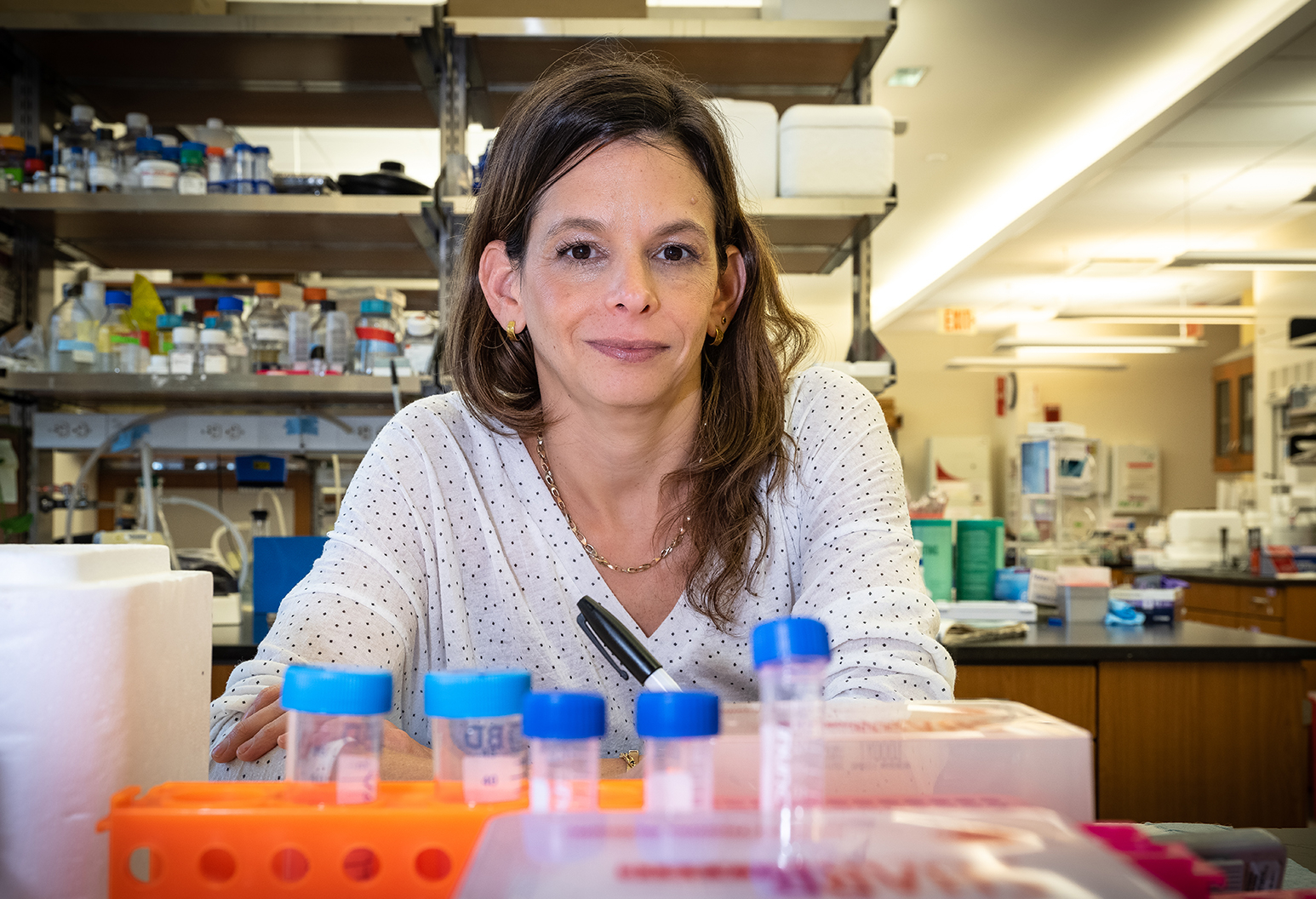
Building on decades of research, the recent preclinical paper led by the Feinstein Institutes’ Lior Brimberg, PhD, and Munich’s LMU Klinikum’s Simone Mader, PhD, suggests that when a fetus is exposed to AQP4-antibodies, it can impede development. That can result in a leaky BBB, which is meant to protect the brain, as well as neuronal and cognitive impairment. Recognizing the presence of this particular antibody may lead to an earlier diagnosis and treatment interventions to improve pregnancy outcomes.
“This is another example of how maternal antibodies can affect brain development resulting in serious, life-long cognitive effects. In this case, maternal antibodies affect the formation of the blood brain barrier, which is critical to the health of our brain,” said Dr. Brimberg, co-lead author of the paper. “Through this work, we have a better molecular understanding of the risks in fetal development and how we might be able to prevent the neurodevelopmental consequences following exposure to anti-AQP4 antibody.”
It is well documented that in utero exposure to maternal autoantibodies that bind fetal brain protein can alter development and lead to neurodevelopment disorders, including autism spectrum disorders. This new study shows that during embryonic development, exposure to AQP4 antibodies leads to the interrupted formation of the brain’s vascular system and functional and cognitive complications.
“We now learned that exposure in utero to AQP4 antibodies at a critical time may lead to long-term complications in the offspring, which we have yet to understand in humans,” said Simone Mader, PhD, co-first author of the paper and a former post-doctoral student in Betty Diamond’s, MD, lab who is senior author of the paper. “This is a building block for future clinical studies to assess at-risk pregnancies.”
The next step is to perform a follow-up of children who were born to mothers with NMOSD to assess the spectrum of effects of maternal AQP4 antibody. Researchers also need to investigate why males are more vulnerable to the impact of the AQP4 antibodies, the effects of antibody concentration levels, maternal medication or indirect consequences of maternal illness and genetics.
Drs. Brimberg and Mader credit the success of the study through their collaboration with Patricio Huerta, PhD, Bruce Volpe, PhD, David Eidelberg, MD, An Vo, PhD, Dr. Diamond and others.
“This work is an example of what years of dedicated scientific research and extraordinary teamwork can achieve,” said Dr. Diamond, director of the Institute of Molecular Medicine at the Feinstein Institutes. “This research into neuromyelitis optica spectrum disorders has now suggested new avenues of study; the implications of this disease which occurs in women of childbearing age for the health of their offspring.”
About the Feinstein Institutes
The Feinstein Institutes for Medical Research is the home of the research institutes of Northwell Health, the largest health care provider and private employer in New York State. Encompassing 50 research labs, 3,000 clinical research studies and 5,000 researchers and staff, the Feinstein Institutes raises the standard of medical innovation through its five institutes of behavioral science, bioelectronic medicine, cancer, health system science, and molecular medicine. We make breakthroughs in genetics, oncology, brain research, mental health, autoimmunity, and are the global scientific leader in bioelectronic medicine – a new field of science that has the potential to revolutionize medicine. For more information about how we produce knowledge to cure disease, visit http://feinstein.northwell.edu and follow us on LinkedIn
Contacts
Matthew Libassi
631-793-5325
mlibassi@northwell.edu