Race, Socioeconomic Factors Skew Skin Cancer Survival, Feinstein Institutes Study Finds
Race, Socioeconomic Factors Skew Skin Cancer Survival, Feinstein Institutes Study Finds
A retrospective study published in the Journal of the American Academy of Dermatology highlights socioeconomic health disparities in acral lentiginous melanoma survival rates
MANHASSET, N.Y.--(BUSINESS WIRE)--Acral lentiginous melanoma (ALM) is a form of skin cancer that disproportionately affects minority groups. Researchers at The Feinstein Institutes for Medical Research published a retrospective study in the Journal of the American Academy of Dermatology that examines how survival rates are reflected by race and economic status.
Researchers analyzed clinical and demographic information from 2,245 ALM patients from the Surveillance, Epidemiology and End Results program – a National Cancer Institute’s database that provides national cancer statistics – between 2000-2016. Results show that patients from lower socioeconomic groups had higher risks of death from ALM than those in the highest. Stage IV disease was approximately three times more common among those in the lowest socioeconomic category (4.6 percent) than those in the highest (1.5 percent). Regarding race, Hispanic white patients (69.7 percent) and Black patients (70 percent) had lower survival rates when compared to non-Hispanic white patients (80.4 percent).
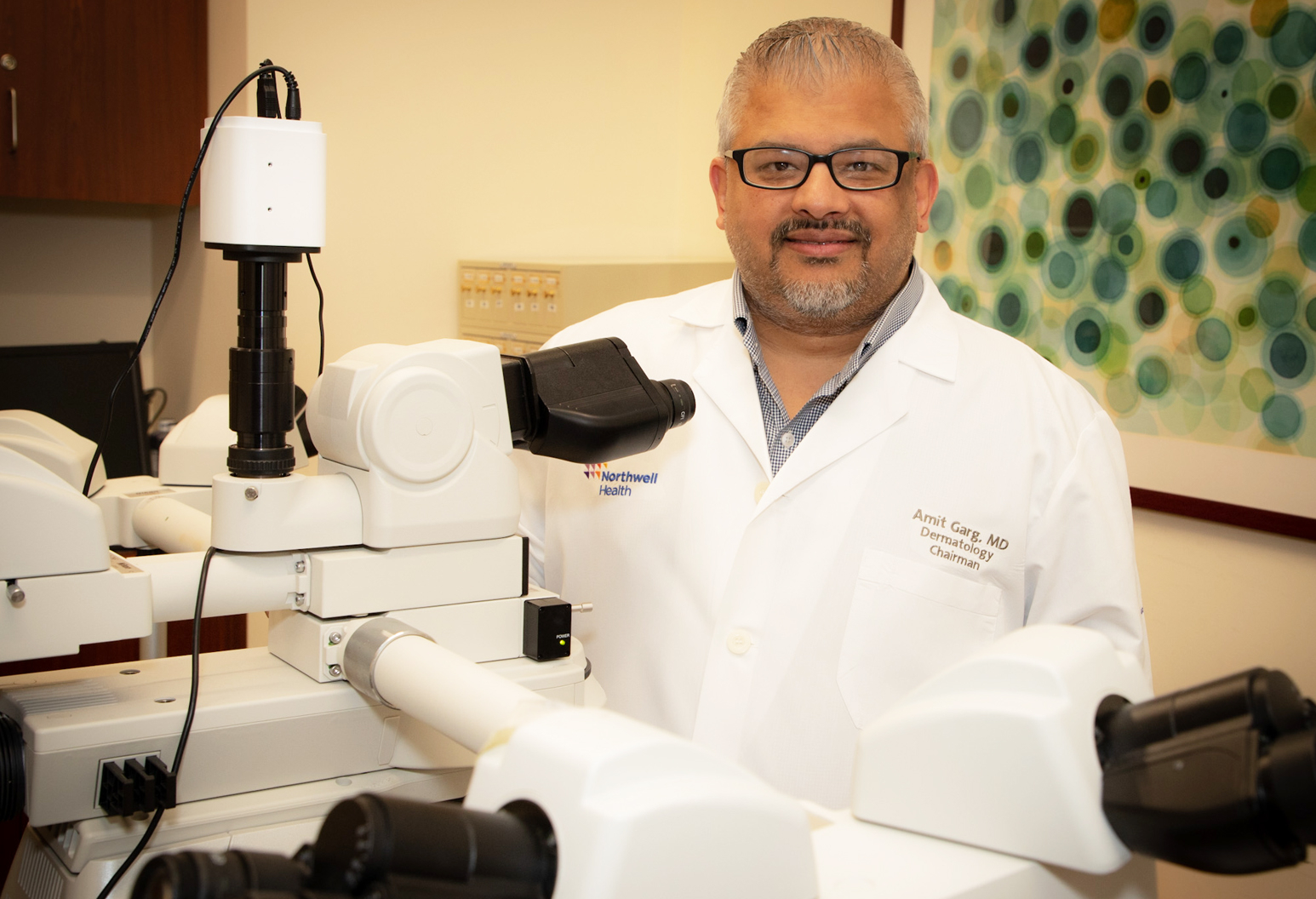
“While ALM is an uncommon type of skin cancer, it accounts for most of the melanomas in people of color. Even with this knowledge, survival is lower than it is for other types of melanoma; other factors, like economic status, appear to influence survival,” said Amit Garg, MD, professor in the Institute of Health System Science at the Feinstein Institutes and lead author on the paper. “We believe this is among the few large studies to spotlight those differences and hope it will spur the medical community to recognize socioeconomic risk factors better and improve outcomes.”
ALM begins when melanocytes, cells that produce the skin-darkening melanin pigment in the skin, grow out of control, leading to dark spots and tumor growth. The difference in survival rate has been associated with late detection, which may be related to poor awareness of the signs of melanoma and delays in care, resulting in a patient seeking help once the cancer has significantly progressed. By understanding the social barriers, patients and physicians can intervene sooner to increase survival rates.
“Social determinates of health affect a wide range of outcomes,” said Kevin J. Tracey, MD, president and CEO of the Feinstein Institutes. “Dr. Garg’s findings in acral lentiginous melanoma provide important awareness, a necessary step to begin addressing this disparity.”
About the Feinstein Institutes
The Feinstein Institutes for Medical Research is the home of the research institutes of Northwell Health, the largest health care provider and private employer in New York State. Encompassing 50 research labs, 3,000 clinical research studies and 5,000 researchers and staff, the Feinstein Institutes raises the standard of medical innovation through its five institutes of behavioral science, bioelectronic medicine, cancer, health system science, and molecular medicine. We make breakthroughs in genetics, oncology, brain research, mental health, autoimmunity, and are the global scientific leader in bioelectronic medicine – a new field of science that has the potential to revolutionize medicine. For more information about how we produce knowledge to cure disease, visit http://feinstein.northwell.edu and follow us on LinkedIn.
Contacts
Matthew Libassi
631-793-5325
mlibassi@northwell.edu