Large-Scale Study Shows Thrombotic Risk Factors and Anticoagulation Benefits in Discharged COVID-19 Patients
Large-Scale Study Shows Thrombotic Risk Factors and Anticoagulation Benefits in Discharged COVID-19 Patients
MANHASSET, N.Y.--(BUSINESS WIRE)--In the largest study of its kind, Feinstein Institutes for Medical Research and Northwell COVID-19 Research Consortium researchers reveal blood clot risk and anticoagulation benefits in hospitalized coronavirus disease 2019 (COVID-19) patients who have been recently discharged from the hospital. The report, recently published in the journal Blood, finds that prophylactic anticoagulants reduce the risk of major thromboembolic events and death by 46 percent.
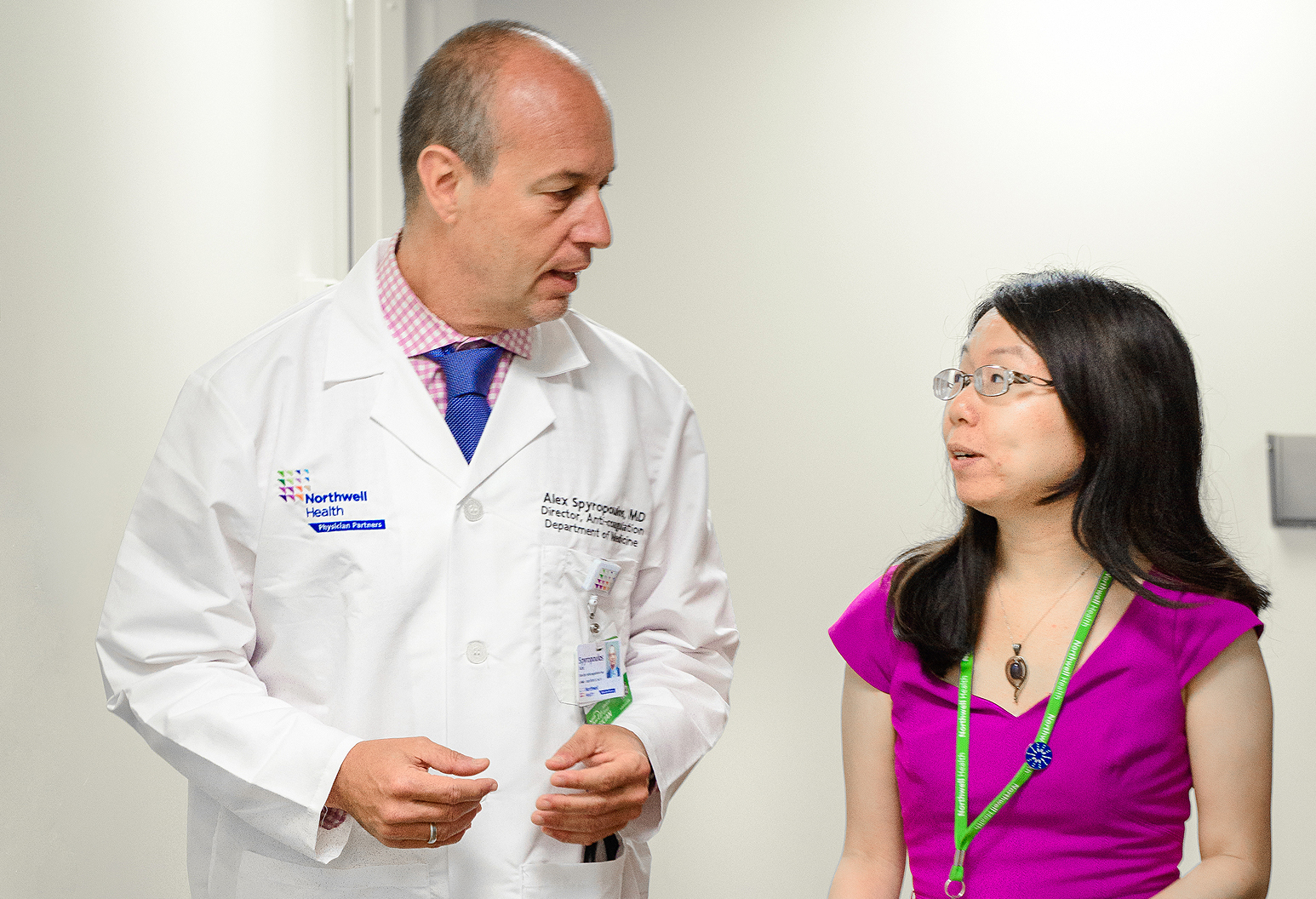
The prospective multicenter registry, named CORE-19, examined 4,906 adult patients with COVID-19 who were hospitalized at Northwell Health hospitals, New York’s largest health system, between March 1 through May 31, 2020, and was led by Alex C. Spyropoulos, MD, professor at the Feinstein Institutes.
While blood clots have been observed in COVID-19 patients during hospitalization, there has been very little data to assess thrombotic risk and death, as well as predictors in the post-discharge period. The research looked to identify venous thromboembolism (VTE), such as deep vein thrombosis (DVT) and pulmonary embolism (PE), and arterial thromboembolism (ATE), such as stroke and myocardial infarction (MI), in patients released from the hospital within 90 days.
There are three main takeaways from the CORE-19 study. First, results showed that VTE, ATE, and all-cause mortality (ACM) occurred more than previously thought by clinicians, in 7.13 percent (350/4906 patients) of cases. Second, key risk factors for major thromboembolic events and death include advanced age, cardiovascular risk factors (like coronary artery disease, carotid occlusive disease, peripheral arterial disease), personal history of VTE, chronic kidney disease CKD, an intensive care unit stay, and an elevated VTE risk score (using the IMPROVE risk tool that has been developed by Dr. Spyropoulos’ team and is being used nationally). Third, post-discharge anticoagulants, mostly at prophylactic dosages, reduce the risk of major thromboembolic events and death by 46 percent.
“Since the start of the pandemic, we have seen that blood clots pose a fatal risk to patients while being hospitalized with COVID-19, but for those discharged, the prevalence and risk factors associated with thromboembolic events were unknown,” said Dr. Spyropoulos, the study’s principal investigator. “This large dataset provides valuable insight and treatment options for recovering patients.”
The study showed the overall rate of 7.13 percent of post-discharge episodes, including:
- Αll cause mortality rate of nearly 5 percent;
- ATE rate of 1.71 percent (i.e. stroke, embolism);
- VTE rate of 1.55 percent (i.e. mostly pulmonary embolism).
“This study reveals it is important to monitor COVID-19 survivors for dangerous blood clots even after they leave the hospital,” said Kevin J. Tracey, MD, president and CEO of the Feinstein Institutes. “By studying the enormous patient population treated at Northwell Health, Dr. Spyropoulos and his team have laid a solid foundation guiding future clinical trials.”
Dr. Spyropoulos and Feinstein Institutes researchers have been leaders during the COVID-19 pandemic in efforts to prevent blood clots in patients. Since May 2020, the team enrolled hospitalized patients in a randomized controlled clinical trial named HEP-COVID, which aims to study the safety and efficacy of low-dose heparin as a blood clot prophylactic. Additionally, Dr. Spyropoulos is a member of the Executive Committee of the nationwide PREVENT-HD clinical trial looking to assess the benefits of anticoagulation in high-risk COVID-19 outpatients.
The Northwell Health Research Consortium began in early 2020 and has organized more than 500 clinicians, statisticians and scientists across the Feinstein Institutes and Northwell Health to conduct cutting-edge research about the COVID-19 pandemic. To date, more than 300 high-impact manuscripts have been written addressing the most pressing questions surrounding the virus.
The CORE-19 registry was funded in part by the Broxmeyer Fellowship in Clinical Thrombosis and Janssen Pharmaceuticals. Dimitri Giannis, MD, who is Dr. Spyropoulos’ fellow in Clinical Thrombosis, developed the database and is the first author on the Blood publication.
About the Feinstein Institutes
The Feinstein Institutes for Medical Research is the research arm of Northwell Health, the largest health care provider and private employer in New York State. Home to 50 research labs, 2,500 clinical research studies and 5,000 researchers and staff, the Feinstein Institutes raises the standard of medical innovation through its five institutes of behavioral science, bioelectronic medicine, cancer, health innovations and outcomes, and molecular medicine. We make breakthroughs in genetics, oncology, brain research, mental health, autoimmunity, and are the global scientific leader in bioelectronic medicine – a new field of science that has the potential to revolutionize medicine. For more information about how we produce knowledge to cure disease, visit feinstein.northwell.edu.
Contacts
Matthew Libassi
631-793-5325
mlibassi@northwell.edu