Bioelectronic Medicine Study Shows Potential to Redirect Effects of Vagus Nerve Stimulation
Bioelectronic Medicine Study Shows Potential to Redirect Effects of Vagus Nerve Stimulation
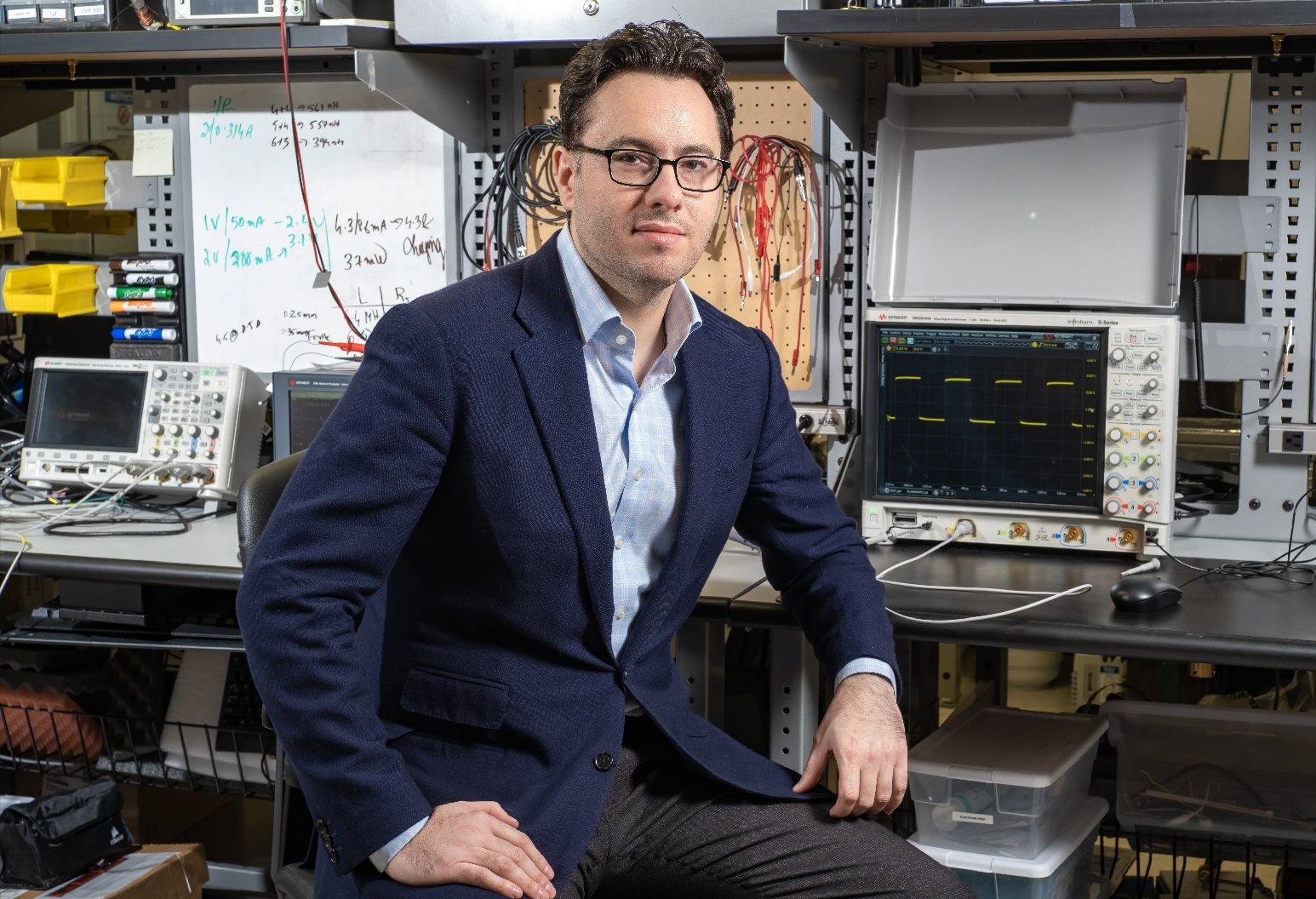
MANHASSET, N.Y.--(BUSINESS WIRE)--In an effort to learn how to reroute neurological stimulation to control the body’s function, a team led by Stavros Zanos, MD, PhD, assistant professor at the Feinstein Institutes for Medical Research, today published a bioelectronic medicine paper in Scientific Reports that shows that a specific method of electrical nerve stimulation called anodal block can be leveraged for directional vagus nerve stimulation (VNS).
Bioelectronic medicine is an emerging approach to treat and diagnose disease and injury using device technology to modulate the electrical activity within the body’s nervous system. In particular, VNS has been studied for the treatment of heart failure, rheumatoid arthritis, lupus, inflammatory bowel disease, pulmonary hypertension, arrhythmias, neurorehabilitation, among others conditions. Through this new study, Dr. Zanos and his team looked to better understand the electrical pathway and help redirect the stimulation of the cervical vagus nerve and control the body’s response.
The cervical vagus is an important clinical target for invasive neuromodulation – which involves stimulating the nervous system to excite, inhibit or otherwise modify neural activity – because it is easily accessible surgically and requires a minor operation for electrode implantation. The cervical vagus is also a powerful and practical physiological tool to study the peripheral and central neural circuits in which the vagus nerve is involved, especially in functions such as metabolism and neural regulation of cardiac function and breathing, among others.
Within the cervical vagus, nerve signals are sent through fibers in an afferent (toward the brain) or efferent (away from the brain, toward peripheral organs) direction. Selective activation of afferent or efferent vagal fibers can maximize efficacy and minimize off-target effects of VNS.
Anodal block (ABL) – a local block of nerve conduction caused by hyperpolarization of the nerve cell membrane under the electrical anode – has been used to achieve directional fiber activation in nerve stimulation. However, evidence for directional VNS with ABL has been scarce and inconsistent.
Dr. Zanos and his team examined if ABL permits directional fiber activation. They used recordings directly from the vagus nerve, as well as functional read-outs of afferent and efferent vagus nerve activation and found that ABL is in fact a mechanism that can be leveraged for directional VNS.
“We were pleased to establish that the mechanism of anodal block, that has been assumed to provide directional vagal activation in preclinical and clinical studies, does indeed produce the intended neurophysiological and functional effects,” said Dr. Zanos, lead and corresponding author of the paper. “We work to produce this knowledge in the hopes that it will one day benefit patients with conditions such as rheumatoid arthritis, lupus, inflammatory bowel disease, and pulmonary hypertension.”
Bioelectronic medicine is a new approach to treating and diagnosing disease and injury that has emerged from the Feinstein Institutes' labs. It represents a convergence of molecular medicine, neuroscience and bioengineering. Bioelectronic medicine uses device technology to read and modulate the electrical activity within the body’s nervous system, opening new doors to real-time diagnostics and treatment options for patients.
“The discovery by Dr. Zanos and his team gives us new understanding of the body’s neural signaling and produces knowledge that can be directly leveraged in bioelectronic medicine therapies,” said Kevin J. Tracey, MD, president and CEO of the Feinstein Institutes. “We have long known that the nervous system communicates with the body, and now that we are learning the language by which it communicates we have increased hope for disease management through bioelectronic medicine.”
About the Feinstein Institutes
The Feinstein Institutes for Medical Research is the research arm of Northwell Health, the largest health care provider and private employer in New York State. Home to 50 research labs, 2,500 clinical research studies and 5,000 researchers and staff, the Feinstein Institutes raises the standard of medical innovation through its five institutes of behavioral science, bioelectronic medicine, cancer, health innovations and outcomes, and molecular medicine. We make breakthroughs in genetics, oncology, brain research, mental health, autoimmunity, and are the global scientific leader in bioelectronic medicine – a new field of science that has the potential to revolutionize medicine. For more information about how we produce knowledge to cure disease, visit feinstein.northwell.edu.
Contacts
Matthew Libassi
516-465-8325
mlibassi@northwell.edu