Responsible Flushing Alliance Shares Thanksgiving Tips to Help Prevent Costly Plumbing Clogs
Responsible Flushing Alliance Shares Thanksgiving Tips to Help Prevent Costly Plumbing Clogs
Ahead of “Brown Friday,” RFA offers practical advice for holiday cooking, hosting & cleanup
SEATTLE--(BUSINESS WIRE)--The Responsible Flushing Alliance (RFA) urges households to keep fats, oils and grease out of drains and put wipes labeled Do Not Flush in the trash to help prevent costly plumbing clogs this Thanksgiving. Holiday cooking, extra guests and increased use of sinks and bathrooms can turn a developing clog into a backed-up drain or overflowing toilet.
“Families have enough pressure and expenses during the holidays without adding an emergency plumbing bill,” said Lara Wyss, president of the Responsible Flushing Alliance.
Share
The reminder comes ahead of “Brown Friday,” the plumbing industry’s nickname for the day after Thanksgiving.
“Families have enough pressure and expenses during the holidays without adding an emergency plumbing bill,” said Lara Wyss, president of the Responsible Flushing Alliance. “Before the cooking begins, set aside a container for cooled grease and make sure everyone helping with cleanup knows what belongs in the trash.”
RFA’s 2026 national consumer survey found that 45% of respondents reported flushing something they knew they should not, down from 53% in 2024. Checking packaging for disposal instructions was the most common way respondents determined flushability, cited by 54%.
Five Tips for Holiday Cooking and Cleanup
Fats, oils and grease (FOG), including turkey drippings, cooking oil and butter, can accumulate inside pipes and contribute to blockages.
RFA recommends these simple habits:
- Collect cooled grease. Place it in a suitable disposable container and put it in the trash. Never pour fats, oils or grease into a sink or toilet.
- Wipe before washing. Remove greasy residue from cooled cookware with a paper towel, then throw the towel in the trash before washing.
- Keep food scraps out of drains. Scrape plates and cookware into the trash or compost food scraps where accepted.
- Check disposal instructions. Baby wipes and household cleaning and disinfecting wipes belong in the trash. Look for the Do Not Flush symbol and follow package instructions.
- Make disposal easy for guests. Keep bathroom wastebaskets visible and show cleanup helpers where to put grease, food scraps and used wipes.
Free Resources for Families and Wastewater Professionals
RFA offers free materials for holiday preparation and community outreach:
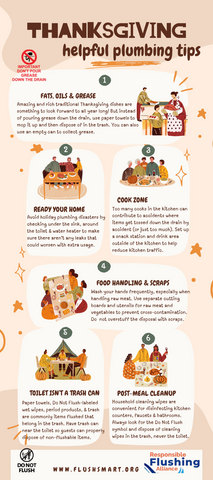
- Thanksgiving Plumbing Tips Infographic: Shareable guidance for holiday cooking, hosting and cleanup.
- FOG Activity Book: Activities to teach children about grease disposal during Thanksgiving break.
- Resources for Wastewater Professionals: Toolkits, infographics, videos and ready-to-share educational content.
- What Not to Flush Poster: A printable reminder for households and community outreach.
About the Responsible Flushing Alliance
The Responsible Flushing Alliance is a nonprofit association dedicated to consumer education and responsible disposal practices that help protect plumbing and wastewater infrastructure. Through its #FlushSmart initiative, RFA provides research and educational resources to support informed disposal decisions. Learn more at FlushSmart.org.
About the RFA Consumer Research
RFA commissioned Drive Research to conduct the 2026 Do Not Flush Awareness Study through an online survey panel. Fieldwork took place Aug. 21–Sept. 16, 2026, with 2,000 adult respondents nationally and 1,400 in California. The findings cited above reflect national respondents’ self-reported behavior and practices.
Frequently Asked Questions
Is it OK to pour a little cooking oil down the drain?
No. Even small amounts can contribute to buildup over time. Collect cooled fats, oils and grease in a suitable disposable container and put it in the trash. Wipe greasy cookware with a paper towel before washing and throw the towel away.
What does the Do Not Flush symbol mean?
It means the product should never be disposed of in a toilet. Wipes bearing the symbol belong in the trash, even if they are described as plant-based, biodegradable or plastic-free.
Is it safe to flush baby wipes?
No. Baby wipes are designed to remain durable during use and are not engineered to disperse in water like flushable wipes. Put baby wipes in the trash, including plastic-free varieties.
Are flushable wipes different from baby wipes and cleaning wipes?
Yes. Flushable wipes are designed for use with or in place of dry toilet paper and are engineered to break apart in water. Products designed and tested for flushability are intended for toilet disposal when used according to package instructions. Baby wipes and household cleaning wipes serve different purposes and belong in the trash.
Why does proper disposal matter beyond my home?
Items that pass through household plumbing can still create problems farther along the sewer system. Fats, oils and grease can combine with non-flushable materials and contribute to blockages, increasing maintenance demands on community wastewater infrastructure.
Find additional disposal guidance and free educational materials at FlushSmart.org.
Contacts
Media Contact
Lara Wyss
President, Responsible Flushing Alliance
lara@flushsmart.org