Great Sky’s High-Speed AI Chips Analyze Fusion Plasmas
Great Sky’s High-Speed AI Chips Analyze Fusion Plasmas
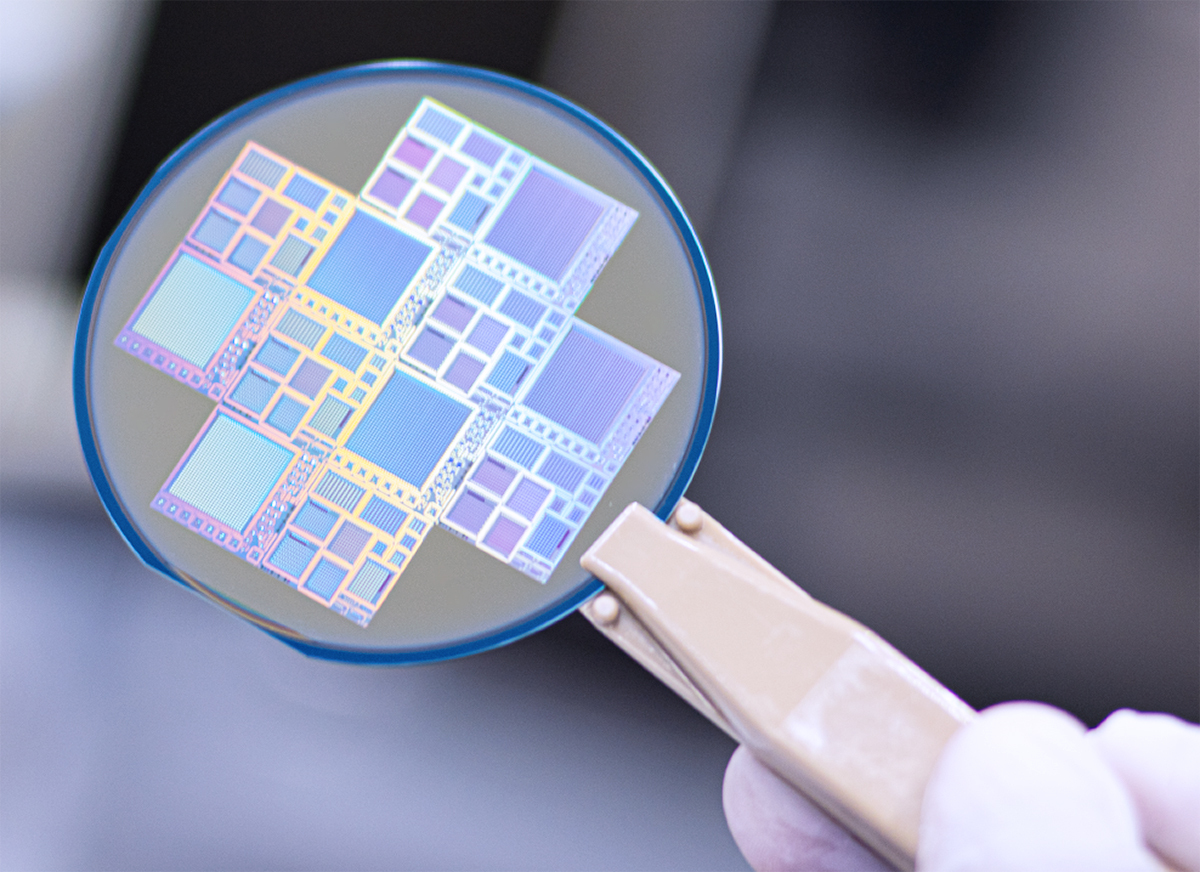
BOULDER, Colo.--(BUSINESS WIRE)--Great Sky, Brookhaven National Lab, Princeton Plasma Physics Laboratory, and the DIII-D National Fusion Facility partnered to develop a new kind of AI chip with the speed necessary to sense and respond to searing plasmas present in fusion reactors. The chips differ from conventional silicon chips — such as CPUs and GPUs — in fundamental ways. Instead of processing digital information using silicon transistors, Great Sky’s chips implement analog neural networks using superconducting circuitry with optical communication.
After developing this AI hardware technology for over a decade at NIST, Great Sky spun out to bring significant advantages in speed and energy efficiency, directly addressing the problems that hinder the economic foundations of AI and data-centers.
Share
The team designed and fabricated their latest superconducting neural-network chip and demonstrated the chip performing three tasks of relevance to fusion control. The tasks were selected due to their relevance to the operation of tokamaks — large reactors designed for producing fusion power. Two of the tasks injected data collected at the DIII-D tokamak into the chip for anomaly classification and disruption prediction. The data was collected with a very high sample rate of a million samples per second, and the team showed the chip had no problem keeping up with that speed. The third task processed simulated data generated by TORAX — a tokamak simulator developed by the Google DeepMind Fusion team. For this task, the chip was able to process simulated signals to predict sawtooth instabilities, an event that is critical to tokamak operation. This example illustrates the feasibility of using Great Sky’s chips as part of the real-time simulation of plasma state that is central to tokamak control and stabilization during operation.
“It’s incredible to see the team processing data from our tokamak,” said Richard Buttery, Director of DIII-D. “The folks here at DIII-D are very excited to see how this chip can impact diagnostics and control for the fusion industry.”
Superconducting neural networks sit at the intersection of several DOE priorities: advanced AI, quantum technologies, and transformative energy. This collaboration shows how expertise in scientific AI and advanced computing can help move promising hardware concepts toward real-time control challenges in fusion and other complex systems.
Fusion reactors demand control systems that can think at the speed of a rapidly evolving plasma. This demonstration showed a chip taking data straight from a tokamak at a million samples per second without missing a beat. It is a meaningful step toward the real-time control systems that practical fusion power will require.
The Great Sky team has been developing this technology for over a decade, first at the National Institute of Standards and Technology before spinning out to form Great Sky. Their approach to AI hardware brings significant advantages in speed and energy efficiency, directly addressing the problems that hinder the economic foundations of the AI and data-center industries. This demonstration represents a significant step forward for the field of superconducting neural networks. “This is our largest chip to date, and it’s great to see it processing high-speed data directly measured from a tokamak,” said Jeff Shainline, founder and CEO of Great Sky. “But this is just the beginning. This approach to AI hardware has so much to offer with regard to fusion, as well as other applications at the forefront of technology. Control and error correction of quantum systems, advanced cybersecurity, video intelligence with continual learning — these are all incredible opportunities as we scale up our systems.” The team will demonstrate their next-generation chip with a 10x larger neural network in December.
About Great Sky
Great Sky is building AI hardware, originally developed within the U.S. National Institute of Standards and Technology, to enable intelligence at the boundaries of physics. The company was founded by a renowned team of PhDs and researchers with decades of experience in photonics, physics, semiconductors, and superconductors. It’s backed by marquee investors like Bison Ventures, Olive Tree Capital, Matchstick Ventures, Range Ventures and Access Venture Partners.
Learn more at greatsky.ai.
Contacts
Media Contact
Alli Lesovoy, Great Sky
contact@greatsky.ai