Allianz: Companies Experience Sharp Increase in Business Interruption Losses
Allianz: Companies Experience Sharp Increase in Business Interruption Losses
- Average business interruption claim exceeds €850,000, around 70% higher than the average associated property damage claim.
- Fire and explosion accounts for more than 40% of the total value of claims analyzed.
- Non-natural catastrophe activity generates 74% of claims and 66% of total claim value, while natural catastrophe claims are becoming increasingly long-tailed.
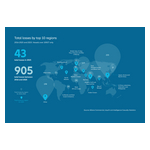
MUNICH--(BUSINESS WIRE)--Companies are increasingly at risk from surging business interruption losses due to concentrated production, fragile supply chains, geopolitical tensions, inflation, and growing technology dependencies. According to new analysis from Allianz Commercial, the average total value of a business interruption claim now exceeds €850,000. This is around 70% higher than the corresponding average property damage claim of close to €500,000, demonstrating that the financial consequences of being unable to operate can substantially exceed the cost of repairing the damage that caused the disruption. The report analyzes 7,888 business interruption insurance industry claims with a total value of approximately €6.74bn, or US$7.82bn, from January 1, 2021, to December 31, 2025. Although claims frequency has remained relatively stable, the average value of claims increased by over 30% annually during the past two years.
“Business interruption and supply chain risk remains elevated and volatile. The operating environment is challenging with geopolitical tensions, trade fragmentation, cyber-related incidents, and growing dependency on technology such as artificial intelligence (AI). The scale of physical damage alone no longer determines the ultimate cost of a business interruption. Even a relatively contained incident can have consequences across production networks, customers and markets. Businesses therefore need to identify and better understand not only their own critical assets, but also those of the suppliers, technologies and infrastructure on which their operations depend,” says Thomas Lillelund, CEO of Allianz Commercial.
Fire is the dominant cause of loss
Fire and explosion is the costliest cause of business interruption claims, accounting for more than 40% of the total value analyzed, equivalent to approximately €2.9bn, or US$3.3bn. Fire was responsible for nine of the 10 costliest man-made business interruption events in the dataset and was the most expensive cause of loss in markets including Germany, Singapore, the UK and the US. One case illustrates how losses can escalate beyond the original incident: a fire at a small manufacturing unit caused relatively limited physical damage but severely disrupted downstream operations, ultimately resulting in a nine-figure group-wide business interruption loss. Natural catastrophes are the second-costliest cause, representing 34% of the value of claims analyzed, and the most frequent, accounting for 26% of claims. Together, fire and explosion and natural catastrophe events generated more than 75% of total claim value.
However, events that do not involve natural catastrophe activity remain the principal overall business interruption loss driver, accounting for 74% of claims and 66% of their total value.
Recovery is taking longer and costing more
Some natural catastrophe claims are developing over increasingly long periods. Two years after Hurricane Helene in September 2024, many associated business interruption claims remained unresolved, not due to coverage issues, but because affected companies had not yet fully recovered. Supply chain delays, labor shortages, and volatile material costs can extend both recovery and settlement.
Concentrated production is also amplifying losses. Industries can depend on a limited number of specialist sites, suppliers or regions for critical materials and components, allowing a fire, cyber incident or extreme weather event at one location to cascade through global supply chains. The two costliest non-natural catastrophe events in the analysis involved fires at semiconductor factories.
Cyber disruption broadens the risk landscape
While ransomware remains the leading cyber-related cause of disruption, a growing share of loss activity is also being driven by cloud outages, software failures and incidents at third-party technology providers. More than 48,000 outages were tracked across cloud and software services in 2025 alone, highlighting businesses' rising dependence on digital supply chains. High-profile incidents, including attacks on software providers and logistics platforms, demonstrated how a single cyber event can disrupt thousands of organizations simultaneously. As companies become more reliant on cloud services, AI and third-party technology providers, cyber-related business interruption is becoming a more significant and complex source of loss.
“In today’s interconnected economy, preventing business interruption is no longer just about protecting individual sites. While companies have made progress in understanding their supply chain exposures, prevention remains the most effective form of risk management. Investments in fire protection, natural catastrophe resilience, cyber preparedness and business continuity planning can make a meaningful difference to both the duration and severity of a business interruption loss. Even relatively modest investments can significantly reduce the impact of disruption when it occurs,” explains Alberto Barani, Business Interruption Group Leader, Risk Consulting at Allianz Commercial.
About Allianz Commercial
Allianz Commercial is the center of expertise and global line of Allianz Group for insuring mid-sized businesses, large enterprises and specialist risks. Among our customers are the world’s largest consumer brands, financial institutions and industry players, the global aviation and shipping industry as well as family-owned and medium enterprises which are the backbone of the economy. We also cover unique risks such as offshore wind parks, infrastructure projects or film productions. Powered by the employees, financial strength, and network of the world’s #1 insurance brand, we work together to help our customers prepare for what’s ahead: They trust us in providing a wide range of traditional and alternative risk transfer solutions, outstanding risk consulting and Multinational services as well as seamless claims handling. Allianz Commercial brings together the large corporate insurance business of Allianz Global Corporate & Specialty (AGCS) and the commercial insurance business of national Allianz Property & Casualty entities serving mid-sized companies. We are present in over 200 countries and territories either through our own teams or the Allianz Group network and partners. In 2025, the integrated business of Allianz Commercial generated around €17.3 billion in gross premium globally. https://commercial.allianz.com/
These assessments are, as always, subject to the disclaimer provided here.
Contacts
Erin Burke
erin.burke@agcs.allianz.com