New Study: City of Hope Blood Test Shows Promise for Detecting Pancreatic Cancer at Its Earliest Stages
New Study: City of Hope Blood Test Shows Promise for Detecting Pancreatic Cancer at Its Earliest Stages
PANXEON, which combines multiple biomarkers, also identified a precancerous condition of the pancreas, potentially opening a path to intervention before invasive cancer develops
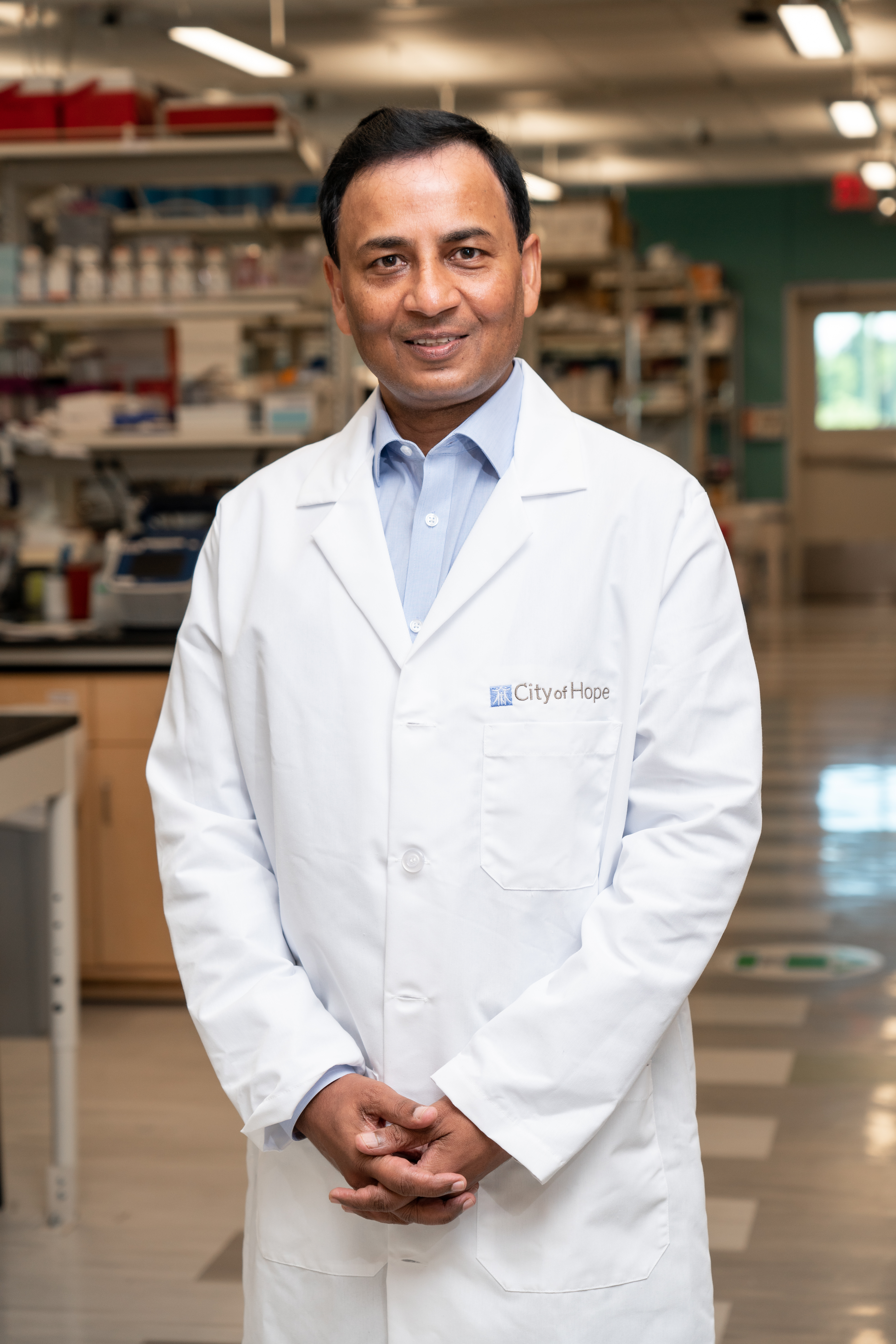
City of Hope researcher Ajay Goel, Ph.D., AGAF, led the development of a new, investigational blood test that could detect pancreatic cancer at its earliest stages, when the disease is more treatable and potentially curable. Called PANXEON, the liquid biopsy was highly sensitive in detecting stage 1 and 2 pancreatic cancer and had a low rate of false positives. The experimental test was also able to identify high-grade dysplasia, a precancerous condition of the pancreas, potentially enabling intervention before cancer develops. (Credit: City of Hope)
LOS ANGELES--(BUSINESS WIRE)--Researchers at City of Hope®, one of the largest and most advanced cancer research and treatment organizations in the country, led the development of a new, investigational blood test that could detect pancreatic cancer at its earliest stages, when the disease is more treatable and potentially curable.
One reason pancreatic cancer remains so deadly is because it’s usually discovered late, after it has spread. A large, international study, published in Nature Medicine today, found that this liquid biopsy, called PANXEON*, was highly sensitive in detecting stage 1 and 2 pancreatic cancer and had a low rate of false positives. The experimental test was also able to identify high-grade dysplasia, a precancerous condition of the pancreas, potentially enabling intervention before cancer develops.
“Pancreatic cancer remains so deadly largely because we find it after the window for cure has begun to close,” said senior author Ajay Goel, Ph.D., AGAF, chair of the Department of Molecular Diagnostics and Experimental Therapeutics at City of Hope. “For patients, these findings represent progress toward finding pancreatic cancer before symptoms appear and while more treatment options remain available.”
The Goal: Early Detection of Pancreatic Cancer
Pancreatic cancer has the lowest survival rates of any cancer, with just 14% of patients living five years after diagnosis. Some 90% of these individuals have their tumors detected at advanced stages when the malignancy has already spread. PANXEON takes a novel approach to testing and has the potential to dramatically change when pancreatic cancer is detected and treated.
PANXEON works by testing a blood sample for not just one but three markers of pancreatic cancer: circulating microRNAs, exosomal microRNAs and a protein called CA19-9. The test then uses artificial intelligence to combine all three measurements into a single score that estimates the patient’s risk. It is the first investigational test to combine these three biomarkers into a single test.
For the new study, published in Nature Medicine, researchers tested the liquid biopsy in nearly 1,800 patients across the United States, Europe and Asia to determine whether its previously reported promising results would hold up in diverse clinical settings.
Results were very encouraging. The blood test correctly identified stage 1 and 2 pancreatic cancer 87% of the time, while its false-positive rate was just 3% in low-risk groups, and 16% in high-risk groups. Rather than replacing imaging or other diagnostic tests, PANXEON could help identify high-risk patients who should undergo further evaluation, Dr. Goel said.
Notably, PANXEON also detected high-grade dysplasia, an advanced precancerous condition that is often considered “stage 0” pancreatic cancer, more than 64% of the time. This finding could help physicians better identify which pancreatic cysts require active monitoring or intervention before invasive cancer develops.
Using Three Biomarkers for Improved Accuracy
Early detection has been a major research goal for years, but previous blood-based tests have fallen short. Combining multiple biomarkers into a single test and then evaluating it in people with familial or inherited genetic risk, pancreatic cysts and chronic pancreatitis, rather than only healthy controls, is what sets PANXEON apart, Dr. Goel said.
“Most biomarkers tell you one part of the story. Combining multiple biological signals gives us a clearer picture of what may be happening in the pancreas,” he said.
Patients most likely to benefit include those with inherited risk, a family history of pancreatic cancer, pancreatic cysts or chronic pancreatitis. These individuals are often monitored through imaging and other tests, but current approaches are invasive, expensive and only somewhat helpful at detecting cancer at the earliest stages. A reliable blood test could help identify who needs further evaluation.
“A stage shift is not just a statistic,” Dr. Goel said. “The earlier we find pancreatic cancer, the greater the chance that meaningful intervention is still possible.”
A Leader in Pancreatic Cancer Research
City of Hope is advancing the next generation of pancreatic cancer care through early detection research, KRAS-targeted therapies, cancer vaccines and a national clinical trials network that helps bring promising new treatments to patients faster.
Through the Stephenson Global Pancreatic Cancer Research Institute, launched with a landmark $150 million gift, City of Hope is helping accelerate pancreatic cancer research worldwide while advancing new approaches in early detection, vaccines and targeted therapies.
The study titled “Liquid Biopsy for Early Detection of Pancreatic Ductal Adenocarcinoma” was supported by The National Institutes of Health / National Cancer Institute (CA72851, CA181572, CA184792, CA187956, CA202797, CA214254, CA271443), and the Italian Association for Cancer Research (start-up #32233).
* Dr. Ajay Goel is a paid consultant to Biocartis, which has an option to acquire the rights to PANXEON.
About City of Hope
City of Hope's mission is to make hope a reality for all touched by cancer and diabetes. Founded in 1913, City of Hope has grown into one of the largest and most advanced cancer research and treatment organizations in the United States, and one of the leading research centers for diabetes and other life-threatening illnesses. City of Hope research has been the basis for numerous breakthrough cancer medicines, as well as human synthetic insulin and monoclonal antibodies. With an independent, National Cancer Institute-designated comprehensive cancer center that is ranked among the nation's top cancer centers by U.S. News & World Report at its core, City of Hope’s uniquely integrated model spans cancer care, research and development, academics and training, and a broad philanthropy program that powers its work. City of Hope’s growing national system includes its Los Angeles campus, a network of clinical care locations across Southern California, a new cancer center in Orange County, California, and cancer treatment centers and outpatient facilities in the Atlanta, Chicago and Phoenix areas. City of Hope’s affiliated group of organizations includes Translational Genomics Research Institute and AccessHopeTM. For more information about City of Hope, follow us on Facebook, X, YouTube, Instagram and LinkedIn.
Contacts
Zen Logsdon
zlogsdon@coh.org
626-409-9367