Two Studies: Plumbing Manufacturing and Plumbing Industries Worth $442 Billion to U.S. Economy, Yet 550,000-Worker Shortage Looms
Two Studies: Plumbing Manufacturing and Plumbing Industries Worth $442 Billion to U.S. Economy, Yet 550,000-Worker Shortage Looms
Data can be sorted by state and by congressional, state house, or state senate district
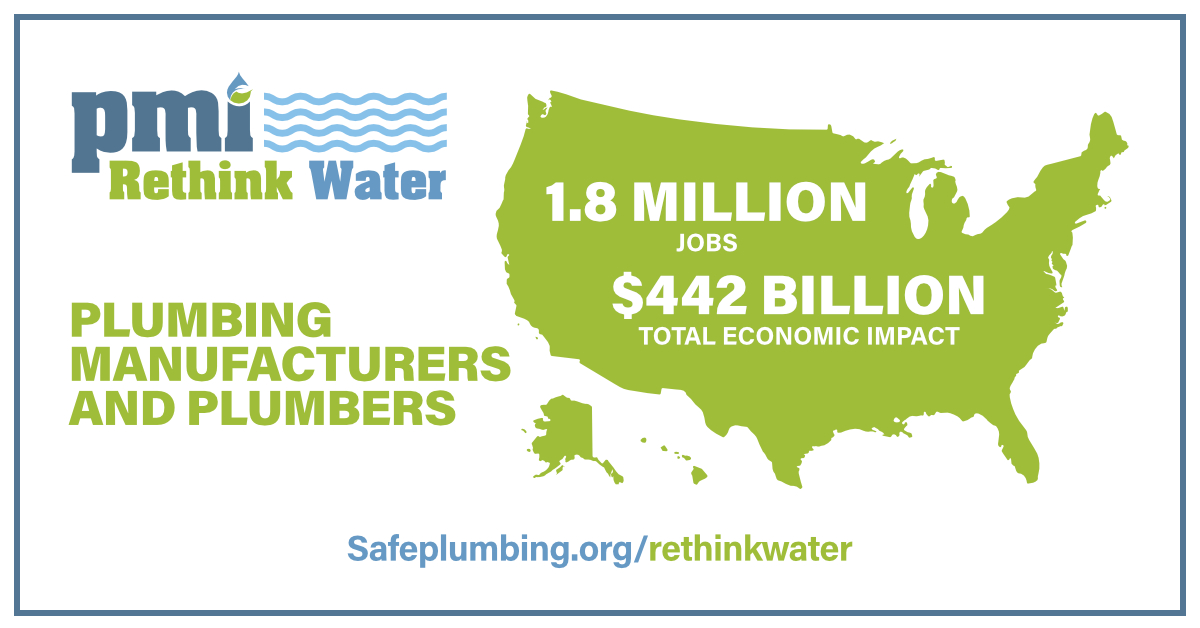
Plumbing Manufacturers International’s “Plumbing Manufacturing Industry Economic Impact Study” reveals the combined, total economic impact of plumbers and plumbing manufacturers to be more than $442 billion annually, with almost 1.8 million jobs, and over $142 billion in wages. A second study commissioned by PMI member LIXIL, “Blocked Pipes: The Economic Consequences of Skilled Worker Shortages,” reveals a projected shortfall of about 550,000 unfilled plumbing positions by 2027.
MCLEAN, Va.--(BUSINESS WIRE)--A pair of studies reveal the economic impact of plumbers and plumbing manufacturers while projecting a shortfall of about 550,000 plumbers by 2027.
“These economic impact data illustrate the vital symbiotic relationship between plumbing manufacturers and plumbers,” noted PMI CEO/Executive Director Kerry Stackpole.
Share
Plumbing Manufacturers International’s “Plumbing Manufacturing Industry Economic Impact Study” reveals the combined, total economic impact of plumbers and plumbing manufacturers to be more than $442 billion annually, with almost 1.8 million jobs, and over $142 billion in wages. Together, both industries generated almost $60 billion in tax revenue. For plumbing manufacturers alone, the total economic impact is $129 billion, 500,487 jobs, and $37 billion in wages. For plumbers, the total economic impact is $313.5 billion, 1,283,579 jobs, and $105.1 billion in wages. These data can be sorted by state and by congressional, state house, or state senate district.
The second study commissioned by PMI member LIXIL, “Blocked Pipes: The Economic Consequences of Skilled Worker Shortages,” reveals a projected shortfall of about 550,000 unfilled plumbing positions by 2027. This skilled labor deficit causes construction delays for builders and drives up costs for property owners, constraining economic output. The study found that the addition of only 16,400 plumbers would reduce plumbing costs by nearly $1.27 billion annually and save an additional $144.5 million on maintenance of plumbing infrastructure.
Both studies were conducted by economic research firm John Dunham & Associates, with the LIXIL study in collaboration with economist Michael Flaherty.
“These economic impact data illustrate the vital symbiotic relationship between plumbing manufacturers and plumbers,” noted PMI CEO/Executive Director Kerry Stackpole. “Our combined industries generate good-paying jobs, opportunities to learn in-demand technical skills, and a tax base that funds schools, infrastructure, and other public services.”
LIXIL study finds plumbing services essential to most U.S. industry sectors
The LIXIL study revealed that the true impact of plumbing extends far beyond construction jobsites. Plumbing services are essential to 519 of the 544 U.S. industry sectors, including healthcare, manufacturing, aerospace, and automotive industries. As skilled labor supply tightens, service costs rise and the risks of inefficiencies, quality issues, and missed deadlines increase—jeopardizing major projects, slowing innovation, and constraining economic output.
The study also found that about 90% of plumbing-related spending is directed toward new construction, drawing limited labor resources away from routine maintenance. This imbalance heightens the risk of system failures nationwide, threatening not only economic activity but also the resilience of critical infrastructure. Addressing the labor gap is a critical requirement to maintain safe, clean water infrastructure and to manage repair expenses for the broader housing market.
Addressing the gap: career pathways and second-career appeal
“Skilled trades are not just for young people entering the workforce—they can also be an exciting and viable second career,” remarked Troy Benavidez, leader of strategic partnerships, government relations and policy at LIXIL and a PMI Board of Directors member. “The study’s findings underscore the significant economic opportunity and long-term stability the plumbing trades offer, serving as pathways to innovation, business ownership, and economic mobility.”
Stackpole added that an expanded plumbing workforce supports faster housing delivery, more efficient water use, and safer buildings. “It creates upwardly mobile career paths that don’t involve excessive student debt. It strengthens domestic manufacturing by ensuring that innovative, high-performing products can be properly installed and maintained. And most importantly, it reinforces the systems that Americans rely on every day for safe, clean water,” he said.
Revitalized education and further collaboration required
Filling the plumbing workforce gap will require revitalized vocational education programs, increased apprenticeships, and further collaboration between the plumbing industry, policymakers and educators.
PMI recently supported legislation that allows Americans to use 529 education savings accounts to pay for costs related to learning the plumbing trade, taking certification exams, and maintaining certification credentials, allowing lifelong students to upskill and reskill throughout their careers. PMI also supports legislation and grant funding to increase student participation in work-based learning opportunities.
“At LIXIL, we’re taking action through our TradeUp and GIVE programs, working with educators, customers, and local communities to provide students with the training, tools, and inspiration needed to succeed in the trades,” Benavidez said. “We also partner with global organizations like WorldSkills and national groups such as Tools & Tiaras, while collaborating with state and local governments to support and advocate for policies that elevate the value of skilled trade careers. By valuing and investing in the trades today, the U.S. can secure the plumbing workforce it needs to build, maintain, and innovate for the future.”
About Plumbing Manufacturers International
Plumbing Manufacturers International (PMI) is the trade association of plumbing product manufacturers that produce more than 90% of the United States’ plumbing products, represent more than 150 iconic brands, and develop safe, reliable and innovative water-efficient plumbing technologies. PMI members contribute 500,487 jobs and $129 billion in economic impact to America's economy, according to the Plumbing Manufacturing Industry Economic Impact Study.
With a vision of safe, responsible plumbing – always, PMI advocates for plumbing product performance contributing to water efficiency and savings, sustainability, public health and safety, and consumer satisfaction through its Rethink Water initiative and other programs. PMI members manufacture water-efficient toilets, urinals, faucets, showerheads and other products at more than 70 locations across the country and market them online and in more than 26,000 home improvement stores, hardware stores and showrooms in all 50 states. For more information on PMI, contact the organization at 1750 Tysons Blvd., Ste. 1500, McLean, Va., 22102; tel.: 847-481-5500; fax: 847-481-5501. safeplumbing.org.
About LIXIL
LIXIL makes pioneering water and housing products that solve everyday, real-life challenges, making better homes a reality for everyone, everywhere. Drawing on our Japanese heritage, we create world-leading technology and innovate to make high quality products that transform homes. But the LIXIL difference is how we do this; through meaningful design, an entrepreneurial spirit, a dedication to improving accessibility for all, and responsible business growth. Our approach comes to life through industry leading brands, including American Standard, GROHE, DXV, INAX, and Basco. Approximately 53,000 colleagues operating in more than 150 countries are proud to make products that touch the lives of more than a billion people every day.
Learn more at lixil.com and LinkedIn.
Learn more about the LIXIL Water experience center at lixilwaterxnyc.com, Instagram, Facebook and LinkedIn.
Downloadable graphics
LinkedIn/Facebook
Plumbing Manufacturers (PM) Total Impact
Instagram/TikTok
Plumbing Manufacturers (PM) Total Impact
Contacts
Contact for PMI: Ray Valek, ray@valekco.com, 708-352-8695
Contact for LIXIL: Alexandra Zwicky, alexandra@novitapr.com