Virta Health’s Nutrition-Based Care Demonstrates Broad, Sustained Reductions in Chronic Inflammation
Virta Health’s Nutrition-Based Care Demonstrates Broad, Sustained Reductions in Chronic Inflammation
New peer-reviewed study shows significant improvements across inflammatory markers after one year, demonstrating broad, system-wide effects sustained through two years
DENVER--(BUSINESS WIRE)--Virta Health, the leader in reversing metabolic disease, today announced new peer-reviewed research published in Endocrine Research demonstrating that its nutrition-based metabolic care model delivers broad and sustained reductions in inflammatory markers in adults with type 2 diabetes (T2D). In the study, 19 of 21 inflammatory and immune markers significantly improved after one year of treatment, with improvements largely maintained through two years. This nutrition-based therapy demonstrated broad anti-inflammatory effects across multiple markers, without the known risks of serious side effects associated with some medications. No currently FDA-approved medication targets such a broad spectrum of inflammatory markers.
The findings come at a time when an estimated 125 million people in the US live with a chronic inflammatory condition1 – a key driver of insulin resistance, disease progression, and complications in T2D and related metabolic conditions. While conventional treatments often focus on managing blood sugar, they frequently leave underlying inflammation unaddressed.
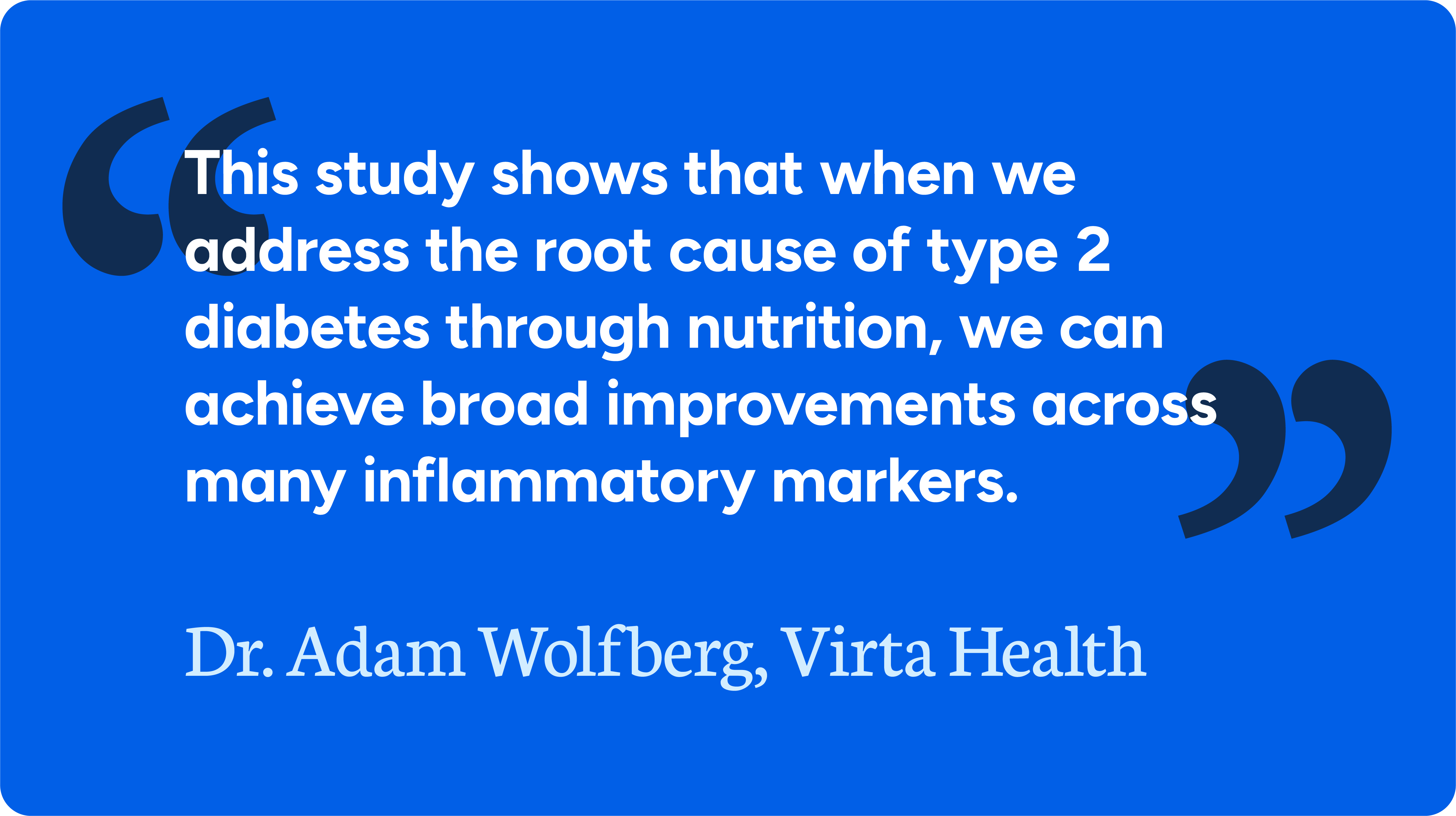
“Metabolic diseases are often treated in isolation, with a focus on symptoms like blood sugar rather than the underlying biology,” said Adam Wolfberg, MD, MPH, chief medical officer at Virta Health. “This study shows that when we address the root cause of type 2 diabetes through nutrition, we can achieve broad improvements across many inflammatory markers. The findings are also consistent with reduced activation of key inflammatory pathways, which may help explain the durable metabolic benefits we see in patients.”
The two-year clinical trial evaluated adults with T2D participating in Virta’s individualized, nutrition-focused remote care. Key findings include:
- Significant reductions in 19 of 21 inflammatory markers at one year, with improvements largely sustained at two years
- Higher levels of adherence to Virta protocol and greater weight loss were each independently associated with reductions in inflammation
- Improvements in several inflammatory markers were associated with better blood sugar control and insulin sensitivity
- No meaningful improvements observed in the usual care control group
Unlike pharmaceutical approaches that typically target a single inflammatory pathway, this study found improvements across a broad network of inflammatory markers, suggesting nutrition therapy may be a more comprehensive approach to addressing systemic inflammation.
Sami Inkinen, co-founder and chief executive officer of Virta Health, added, “These findings reinforce the growing body of evidence that metabolic disease can be addressed at its root. When we see simultaneous, sustained improvements in inflammation, insulin resistance, and blood sugar, it points to a fundamentally different approach to treating chronic disease and the potential to improve outcomes at scale.”
This study is among the first to demonstrate broad, multi-marker reductions in inflammation sustained over a two-year period, building on prior Virta research showing improvements in glycemic control and weight, liver disease, cardiovascular risk factors, and even pancreatic cancer treatment. The findings also highlight that reductions in inflammation may be driven by both nutritional ketosis and weight loss, each contributing through distinct biological mechanisms.
“This study presents exciting preliminary data using a novel approach involving lifestyle change without medication,” said Vivian Fonseca, MD, professor of medicine and pharmacology and chief of endocrinology at Tulane University School of Medicine and senior author of the study. “Future research should explore how anti-inflammatory effects translate into reduced rates of cardiovascular disease and other diabetes-related complications, as well as broader chronic inflammatory and metabolic conditions.”
With more than 90% of US adults in poor metabolic health2, driving an estimated $1-1.5 trillion of healthcare spending3 today, these findings have important implications for employers, health plans, and providers seeking scalable, evidence-based solutions. By addressing inflammation alongside key metabolic drivers, Virta’s nutrition-first approach helps reduce long-term complications and total cost of care while improving patient outcomes.
———
Broad-Spectrum Effects of Carbohydrate Reduction on Inflammatory and Immune Mediators in Type 2 Diabetes can be accessed at Endocrine Research at https://www.tandfonline.com/doi/full/10.1080/07435800.2026.2659579.
Citation notes:
Shaminie J Athinarayanan*, Stephen D. Phinney*, Rebecca N. Adams, Jeff S. Volek, Debbie C. Thurmond, Amy L. McKenzie, Caroline G P Roberts, Robert E. Ratner, Ronald M. Krauss, Vivian A. Fonseca. Broad-Spectrum Effects of Carbohydrate Reduction on Inflammatory and Immune Mediators in Type 2 Diabetes. Endocrine Research, 1–17. https://doi.org/10.1080/07435800.2026.2659579
*Contributed equally, shared first author
About Virta Health
Virta Health is the leader in reversing metabolic disease. Through their AI-powered individualized nutrition therapy, Virta combines the best of human care with the speed and precision of technology to empower members to build longer, healthier lives, while reducing or eliminating the need for medications. Virta partners with the nation’s largest employers, payers, and pharmacy benefit managers to improve the health of their members while reducing costs. Headquartered in Denver, Colorado, Virta is on a bold mission to reverse metabolic disease in one billion people. For more information, visit www.virtahealth.com.
1https://www.nih.gov/news-events/nih-research-matters/new-inflammatory-disease-discovered
2https://now.tufts.edu/2022/07/05/only-7-american-adults-have-good-cardiometabolic-health
3https://www.virtahealth.com/reversal-report
Contacts