Feinstein Institutes’ scientists uncover ‘paradigm-shifting’ drug discovery strategy for sepsis, rheumatoid arthritis
Feinstein Institutes’ scientists uncover ‘paradigm-shifting’ drug discovery strategy for sepsis, rheumatoid arthritis
The findings were published today in Military Medical Research and unveil the possibility of a new therapy for sepsis and RA
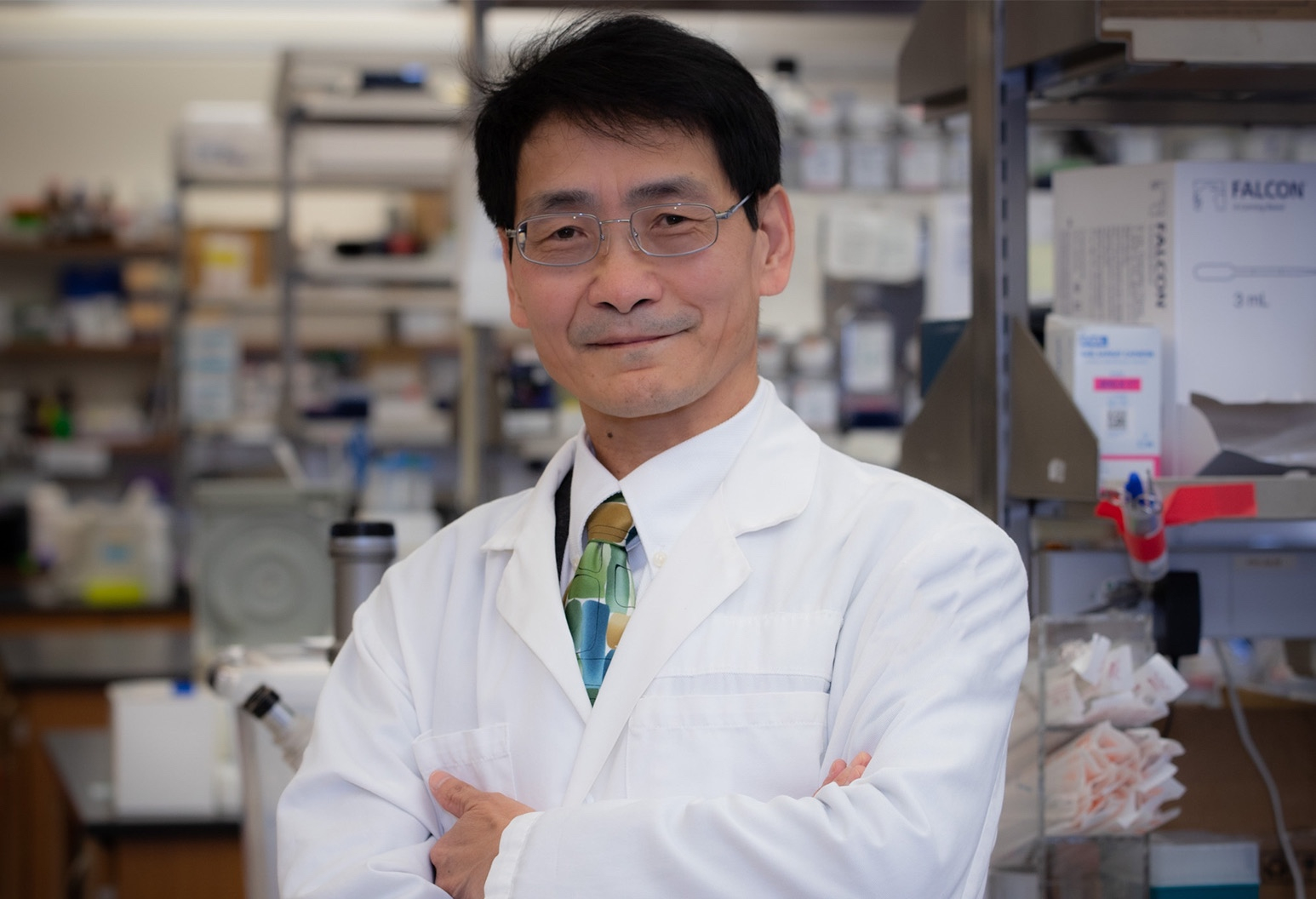
MANHASSET, N.Y.--(BUSINESS WIRE)--Scientists at Northwell Health’s Feinstein Institutes for Medical Research have unveiled a novel drug discovery strategy that transforms a previously identified “detrimental” immune element into a potent therapeutic for both sepsis and rheumatoid arthritis (RA). The research, published today in Military Medical Research and led by Haichao Wang, PhD, professor in the Institute of Translational Research at the Feinstein Institutes, demonstrates that a peptide called P2-1, derived from an antibody epitope, effectively targets a critical inflammatory pathway common to both serious and potentially life-threatening conditions.
Sepsis and RA are two distinct, but related inflammatory conditions commonly driven by the body’s dysregulated, overactive immune responses and excessive cytokine/chemokine production. Sepsis, a life-threatening condition where the body’s dysregulated response to infection damages its own tissues, accounts for nearly 20 percent of global deaths. Similarly, RA is a chronic autoimmune disease characterized by persistent inflammation and joint destruction. Despite extensive research, effective therapies for sepsis remain elusive, and existing RA treatments have limited efficacy and significant side effects.
Challenging conventional wisdom, the researchers pursued a counterintuitive hypothesis: that a specific epitope – the part of an antigen that the host’s immune system sees as foreign, thereby prompting an immune and inflammatory response – derived from an anti-tetranectin antibody previously linked to worsening sepsis outcomes, could be reengineered into a targeted therapeutic for both conditions.
“Despite the significant challenges in translating sepsis research, our motivation is energized by its proven potential to drive therapeutic options for other inflammatory disorders like RA,” said Dr. Wang. “This work is the culmination of over two decades of collaborative research, aiming to translate fundamental scientific insights into impactful clinical applications for these diseases, and others.”
The research team's new strategy is based on what they learned from anti-TNF drugs. These are powerful medicines that block the activities of certain inflammatory proteins – what often cause painful swelling and inflammation in the body. While anti-TNF drugs don't work for severe blood infections like sepsis, they are a primary treatment for RA and ultimately help by changing how the disease causes inflammation, whether it's all over the body or just in specific spots.
The team discovered that a specific epitope can be developed to create a treatment that precisely targets only the bad, overactive inflammatory pathways, while leaving the body's helpful immune signals alone. This new treatment is “activated by disease,” meaning it only starts working where the problem is. This characteristic makes it much safer than other medicines that broadly weaken the body's entire immune system.
“For decades Dr. Wang has been a leader in identifying molecular mediators of sepsis and systemic inflammation,” said Kevin J. Tracey, MD, president and CEO of the Feinstein Institutes and Karches Family Distinguished Chair in Medical Research and co-author of the paper. “Historically, early insights into sepsis have fostered the development of new therapies for inflammation, something now that this new work may well accomplish.”
Over the past decade, Dr. Wang, Dr. Tracey and Ping Wang, MD, chief scientific officer of the Feinstein Institutes and co-author of the paper, were each awarded the Scientific Achievement Award by the Shock Society, a leading organization of basic science and medical professionals dedicated to advancing the understanding of trauma, shock and sepsis.
About the Feinstein Institutes
The Feinstein Institutes for Medical Research is the home of the research institutes of Northwell Health, the largest health care provider and private employer in New York State. Encompassing 50+ research labs, 3,000 clinical research studies and 5,000 researchers and staff, the Feinstein Institutes raises the standard of medical innovation through its six institutes of behavioral science, bioelectronic medicine, cancer, health system science, molecular medicine, and translational research. We are the global scientific leader in bioelectronic medicine – an innovative field of science that has the potential to revolutionize medicine. The Feinstein Institutes publishes two open-access, international peer-reviewed journals Molecular Medicine and Bioelectronic Medicine. Through the Elmezzi Graduate School of Molecular Medicine, we offer an accelerated PhD program. For more information about how we produce knowledge to cure disease, visit http://feinstein.northwell.edu and follow us on LinkedIn.
Contacts
Julianne Mosher Allen
516-880-4824
jmosherallen@northwell.edu