Feinstein Institutes’ Researchers Develop Promising Therapeutic for Sepsis-Induced Acute Lung Injury
Feinstein Institutes’ Researchers Develop Promising Therapeutic for Sepsis-Induced Acute Lung Injury
Findings published in the Journal of Clinical Investigation reveals how rogue immune cells fuel deadly acute lung injury in sepsis, paving the way for life-saving treatment
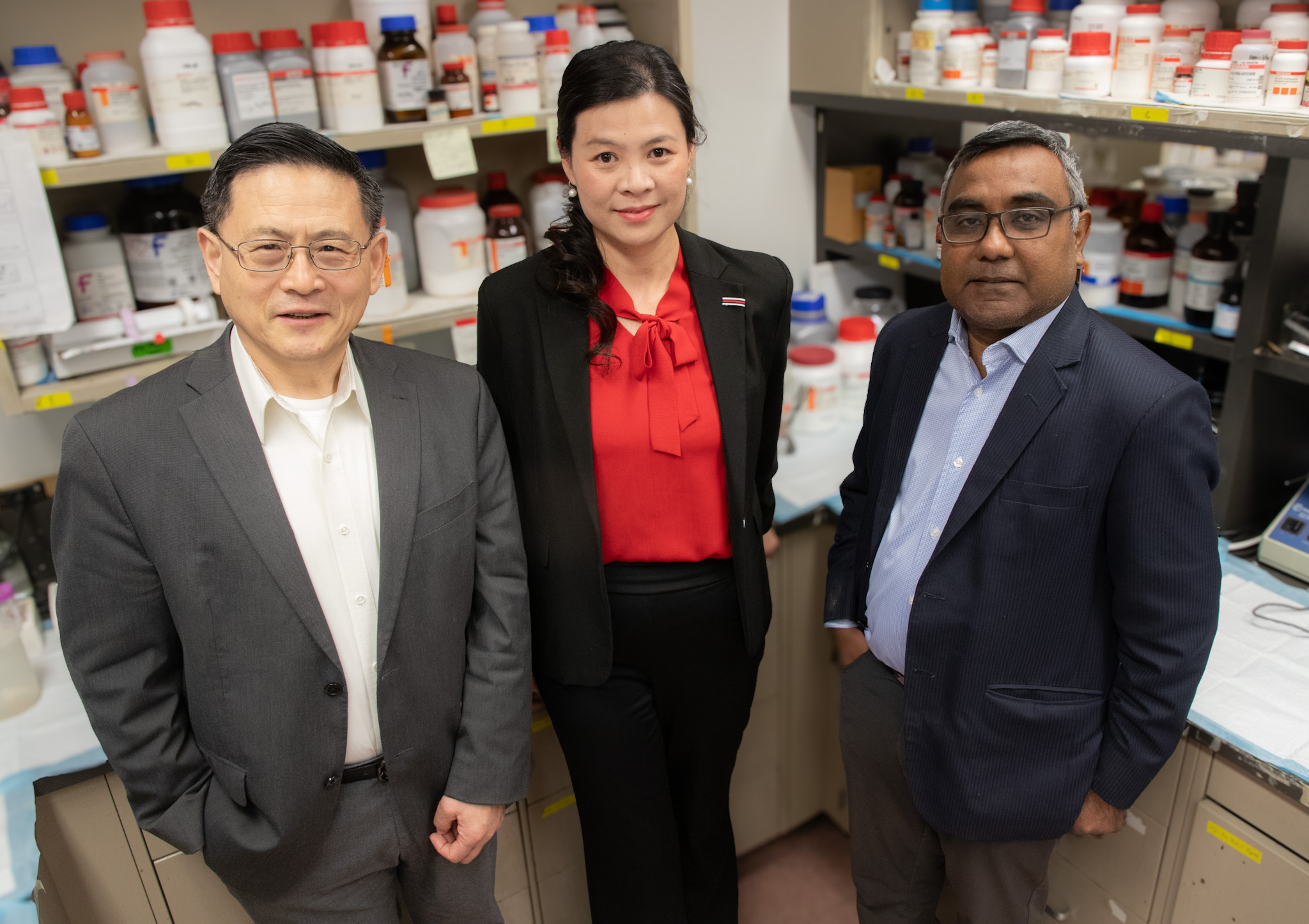
MANHASSET, N.Y.--(BUSINESS WIRE)--Scientists at Northwell Health’s Feinstein Institutes for Medical Research are making strides in controlling the severe inflammation that is the hallmark of sepsis. This severe condition occurs when the body’s immune system reaction to infection causes it to attack its own tissues and organs, often resulting in organ failure or death. Researchers have uncovered a critical mechanism driving acute lung injury (ALI) in sepsis, identifying a novel subset of neutrophils. The team also developed a peptide inhibitor that significantly improves survival in preclinical models of ALI. The findings shed new light on complex immune responses and reveal a potential treatment for this life-threatening disease.
The study, published today in the Journal of Clinical Investigation and co-led by Ping Wang, MD, professor and chief scientific officer at the Feinstein Institutes, and Monowar Aziz, PhD, associate professor at the Feinstein Institutes reveal that a specific subtype of white blood cells, called delta-like ligand 4 (DLL4)+ neutrophils, are generated in response to extracellular cold-inducible RNA-binding protein (eCIRP) – a damage-associated molecular pattern prevalent in sepsis. These DLL4+ neutrophils are significantly elevated in the blood and lungs of septic mice and human samples. Researchers found that these newly identified DLL4+ neutrophils interact directly with pulmonary vascular endothelial cells, triggering PANoptosis – a highly inflammatory form of programmed cell death.
“Sepsis-induced acute lung injury remains a major cause of mortality and understanding its underlying mechanisms is key to finding new treatment options,” said Dr. Wang. “Our discovery of DLL4+ neutrophils and their direct role in driving PANoptosis in lung endothelial cells allows us to better understand how exactly inflammation devastates organs in sepsis.”
Scientists first observed that the dangerous DLL4+ neutrophils were significantly more abundant in the blood and lungs during sepsis. They then performed detailed experiments, including transferring these specific immune cells into septic mice, confirming their direct role in causing severe lung damage. They uncovered that this destructive process occurred when a protein on the neutrophil, called DLL4, directly bound to a receptor on the lung’s endothelial cells, known as Notch1. This was the key trigger for the PANoptosis observed in the lungs.
Armed with this critical new knowledge, the research team went on to design a new therapy using a small peptide called the Notch1-DLL4 Inhibitor (NDI) specifically to block this harmful molecular connection between the immune cells and lung cells. In laboratory tests using animal models of sepsis, NDI proved highly effective. It successfully stopped the destructive PANoptosis in the lung lining, reduced inflammation throughout the body, alleviated ALI and dramatically improved survival in septic mice.
“Despite exhaustive efforts, specific therapies for sepsis have eluded investigators for decades,” said Kevin J. Tracey, MD, president and CEO of the Feinstein Institutes and Karches Family Distinguished Chair in Medical Research. “The new findings from Dr. Wang and his colleagues suggest a new therapeutic pathway to prevent organ damage during sepsis, laying the foundation for possible future clinical studies.”
Dr. Wang was recently recognized as the second-most-cited sepsis scientist globally. The analysis, published in Medicine, reviewed 26,896 articles on sepsis, citing a total of 354,516 other publications and covered publications from 1980 to 2020. It identified Dr. Wang with 154 published articles on the topic, solidifying his position as a leading expert in the field.
About the Feinstein Institutes
The Feinstein Institutes for Medical Research is the home of the research institutes of Northwell Health, the largest health care provider and private employer in New York State. Encompassing 50+ research labs, 3,000 clinical research studies and 5,000 researchers and staff, the Feinstein Institutes raises the standard of medical innovation through its six institutes of behavioral science, bioelectronic medicine, cancer, health system science, molecular medicine, and translational research. We are the global scientific leader in bioelectronic medicine – an innovative field of science that has the potential to revolutionize medicine. The Feinstein Institutes publishes two open-access, international peer-reviewed journals Molecular Medicine and Bioelectronic Medicine. Through the Elmezzi Graduate School of Molecular Medicine, we offer an accelerated PhD program. For more information about how we produce knowledge to cure disease, visit http://feinstein.northwell.edu and follow us on LinkedIn.
Contacts
Julianne Mosher Allen
516-880-4824
jmosherallen@northwell.edu