Researchers discover gut’s role in sepsis-induced liver damage, Feinstein Institutes study shows
Researchers discover gut’s role in sepsis-induced liver damage, Feinstein Institutes study shows
Findings published in Nature Communications reveal that neutrophils cause severe organ injury.
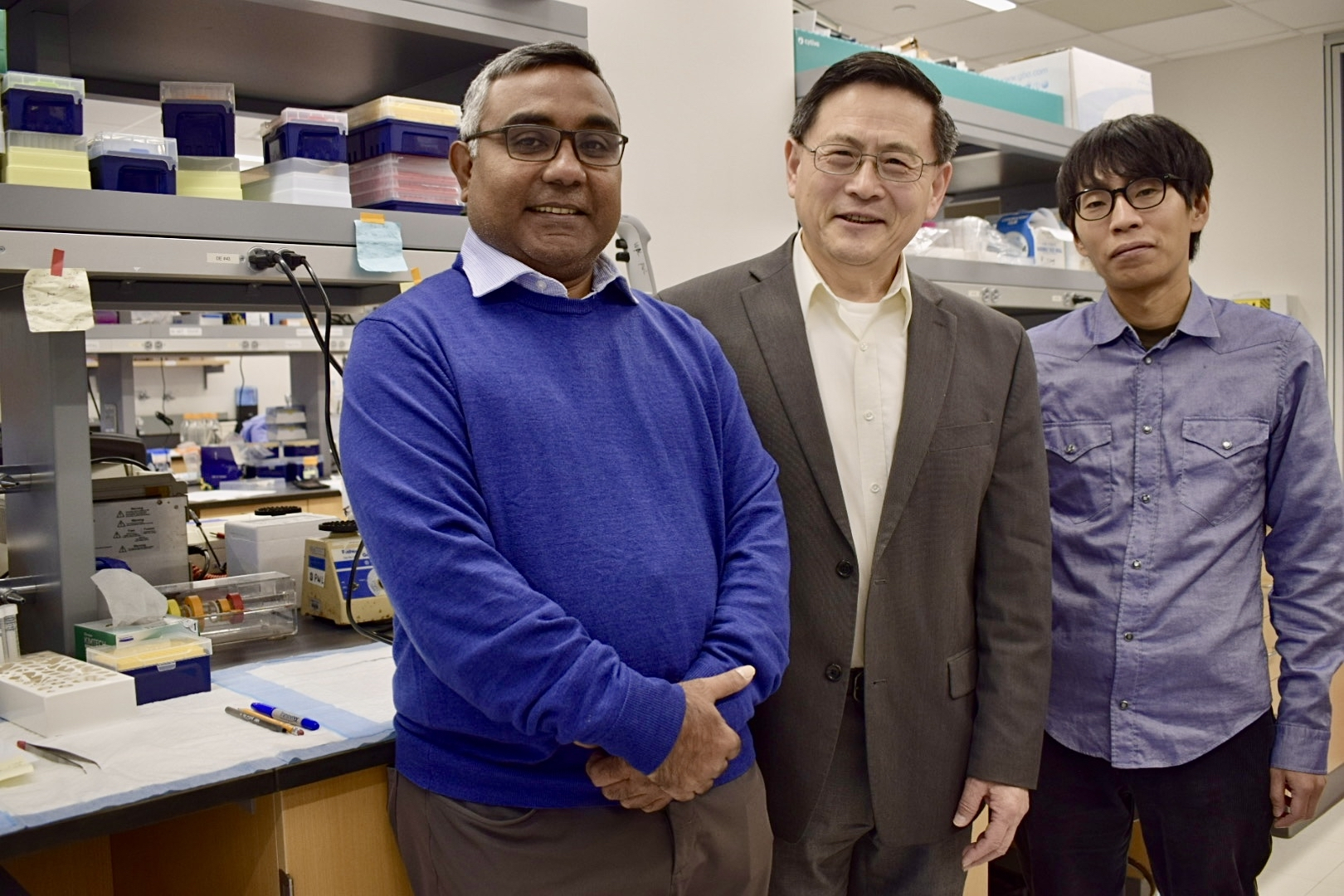
MANHASSET, N.Y.--(BUSINESS WIRE)--Scientists at Northwell Health’s Feinstein Institutes for Medical Research have uncovered a previously unknown mechanism contributing to severe liver injury during sepsis. The study, published today in Nature Communications co-led by Ping Wang, MD, professor and chief scientific officer at the Feinstein Institutes, and Monowar Aziz, PhD, associate professor at the Feinstein Institutes, reveals that neutrophils, a type of immune cell, become “trained” in the gut through interaction with a specific white blood cell, called intraepithelial lymphocytes (IELs). They then migrate to the liver via the portal vein, a large vein that carries blood from the gastrointestinal tract, pancreas and spleen to the liver, where they release harmful inflammatory mediators that activate other immune cells and drive liver damage.
“This research fundamentally changes our understanding of how distant organs like the gut can initiate and spread liver damage during sepsis,” said Ping Wang, MD, a senior author of the paper. “By identifying this intricate cellular crosstalk, we are opening new avenues for therapeutic intervention aimed at preventing or easing sepsis-induced organ failure.”
Sepsis is a life-threatening condition where the body’s response to infection damages its own tissues, and sepsis-induced liver injury is a common and often fatal complication, yet its cellular origins have remained elusive. This new research identifies a critical “gut-liver crosstalk” pathway. In preclinical animal models of sepsis, investigators observed an increased number of a previously unrecognized subpopulation of neutrophils within the gut lining. Crucially, these neutrophils interacted with gut IELs through a protein called CD112. This interaction “primes” the neutrophils, leading to the excessive production of neutrophil extracellular traps (NETs), web-like structures of DNA and proteins designed to trap pathogens, which can also cause significant tissue damage.
These hyper-NETotic neutrophils then travel from the gut directly to the liver via the portal vein. Once in the liver, the NETs activate resident liver macrophages, known as Kupffer cells, by stimulating a receptor called protease-activated receptor-1 (PAR-1). This activation triggers Kupffer cells to release a cascade of potent pro-inflammatory mediators, ultimately causing death of liver cells and driving hepatic failure. Blocking the CD112 interaction or PAR-1 activation lessened the severity of liver injury.
“Sepsis, with its devastating assault on vital organs – particularly the liver – has long remained an enigma,” said Kevin J. Tracey, MD, president and CEO of the Feinstein Institutes and Karches Family Distinguished Chair in Medical Research. “Dr. Wang and his colleagues have unveiled a critical cellular mechanism within the liver that drives this pathological progression, arming us with essential knowledge and pointing toward powerful new strategies to protect organs and re-engineer healing.”
The researchers suggest that targeting the CD112-mediated interaction between IELs and neutrophils, or the PAR-1 activation of Kupffer cells by NETs, could lead to novel therapeutic strategies to combat sepsis-induced liver injury.
Dr. Wang was recently recognized as the second-most-cited sepsis scientist globally. The analysis, published in Medicine, reviewed 26,896 articles on sepsis, citing a total of 354,516 other publications and covered publications from 1980 to 2020. It identified Dr. Wang with 154 published articles on the topic, solidifying his position as a leading expert in the field.
About the Feinstein Institutes
The Feinstein Institutes for Medical Research is the home of the research institutes of Northwell Health, the largest health care provider and private employer in New York State. Encompassing 50+ research labs, 3,000 clinical research studies and 5,000 researchers and staff, the Feinstein Institutes raises the standard of medical innovation through its six institutes of behavioral science, bioelectronic medicine, cancer, health system science, molecular medicine, and translational research. We are the global scientific leader in bioelectronic medicine – an innovative field of science that has the potential to revolutionize medicine. The Feinstein Institutes publishes two open-access, international peer-reviewed journals Molecular Medicine and Bioelectronic Medicine. Through the Elmezzi Graduate School of Molecular Medicine, we offer an accelerated PhD program. For more information about how we produce knowledge to cure disease, visit http://feinstein.northwell.edu and follow us on LinkedIn.
Contacts
Julianne Mosher Allen
516-880-4824
jmosherallen@northwell.edu