One A Day® Unveils Bold New Brand Identity and Platform: “The ONE for you”
One A Day® Unveils Bold New Brand Identity and Platform: “The ONE for you”
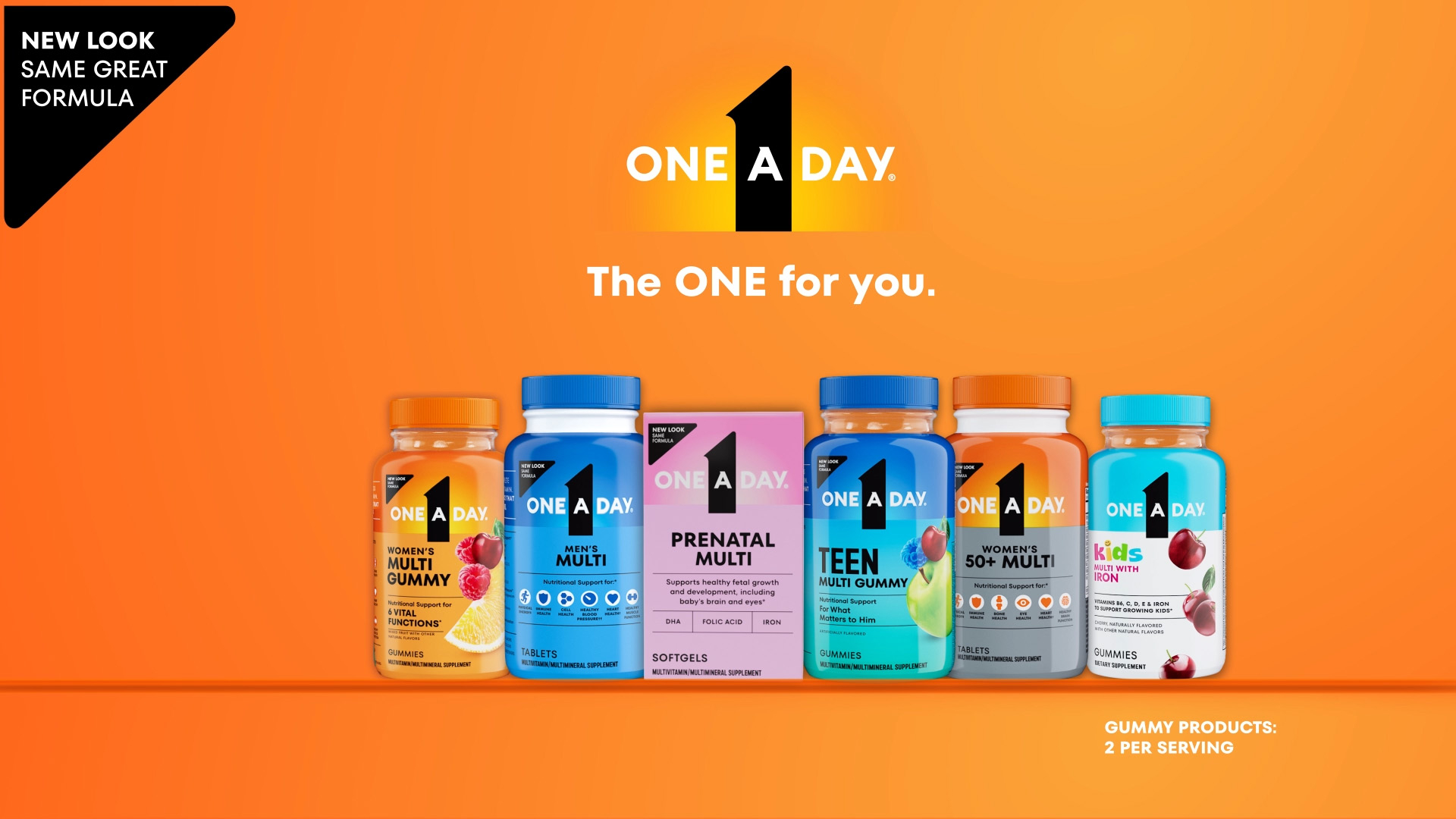
WHIPPANY, N.J.--(BUSINESS WIRE)--One A Day®, the multivitamin and supplement brand by Bayer rooted in 80+ years of nutritional science, today announced a bold new brand identity and positioning designed to better connect with today’s consumers and their evolving health needs. The rebrand, rolling out nationwide this fall, introduces a refreshed visual identity, packaging, and purpose-driven platform – “The ONE for you” – that reaffirms the brand’s commitment to make nutritional support achievable for everyone.
The new brand identity is grounded in a simple truth: health goals and nutritional needs aren’t one-size-fits-all. As life stages shift and lifestyles evolve, so do consumer needs. With the rebrand, One A Day® helps consumers take the guesswork out of finding the right multivitamin—meeting people exactly where they are across age, gender, and life stages.
“For generations, families have trusted One A Day®,” said Lisa Perez, General Manager, Nutritionals, Bayer Consumer Health North America. “But we also heard from consumers that navigating the vitamin aisle can feel overwhelming. Our new identity cuts through the clutter with a confident, intuitive, and vibrant approach — giving consumers the trust, clarity, and inspiration they need to own their health and make the right choice.”
The new visual identity includes:
- A refreshed logo and packaging with brighter, more vibrant colors
- Packaging icons and claims that quickly highlight key health benefits — such as immune and bone health support
- A distinctive design system featuring the new logo, tagline lockups, typography, and more that reflect the brand’s straightforward and energetic character
The new One A Day® packaging began appearing on shelves at major retailers including Walmart, Target, Walgreens, CVS, and Amazon starting September 2025, with national media — including a new TV campaign — debuting the same month. The transition across the entire portfolio will continue into early 2026.
For more information on One A Day® visit oneaday.com or follow the brand on Instagram, TikTok or X.
Benefit claims for One A Day® products have not been evaluated by the Food and Drug Administration. These products are not intended to diagnose, treat, cure, or prevent any disease.
About One A Day®
One A Day is a multivitamin and supplement brand offering specially formulated products for many members of the family. From prenatal to 65+, One A Day offers products for different ages, genders and health goals. The portfolio includes tablet, softgel, capsule, and gummy products. One A Day products are available at most major drug stores and retailers nationwide.
About Bayer
Bayer is a global enterprise with core competencies in the life science fields of health care and nutrition. In line with its mission, “Health for all, Hunger for none,” the company’s products and services are designed to help people and the planet thrive by supporting efforts to master the major challenges presented by a growing and aging global population. Bayer is committed to driving sustainable development and generating a positive impact with its businesses. At the same time, the Group aims to increase its earning power and create value through innovation and growth. The Bayer brand stands for trust, reliability and quality throughout the world. In fiscal 2024, the Group employed around 93,000 people and had sales of 46.6 billion euros. R&D expenses amounted to 6.2 billion euros. For more information, go to www.bayer.com.
Forward-Looking Statements
This release may contain forward-looking statements based on current assumptions and forecasts made by Bayer management. Various known and unknown risks, uncertainties and other factors could lead to material differences between the actual future results, financial situation, development or performance of the company and the estimates given here. These factors include those discussed in Bayer’s public reports which are available on the Bayer website at www.bayer.com. The company assumes no liability whatsoever to update these forward-looking statements or to conform them to future events or developments.
Contacts
Jan Schlegelmilch
Director, Integrated Communications, U.S. Consumer Health
jan.schlegelmilch@bayer.com