Northwell Study Finds Frequent Seizures, Mental Health History Predicts Epilepsy Drug Resistance
Northwell Study Finds Frequent Seizures, Mental Health History Predicts Epilepsy Drug Resistance
The findings are published in The Journal of the American Medical Association
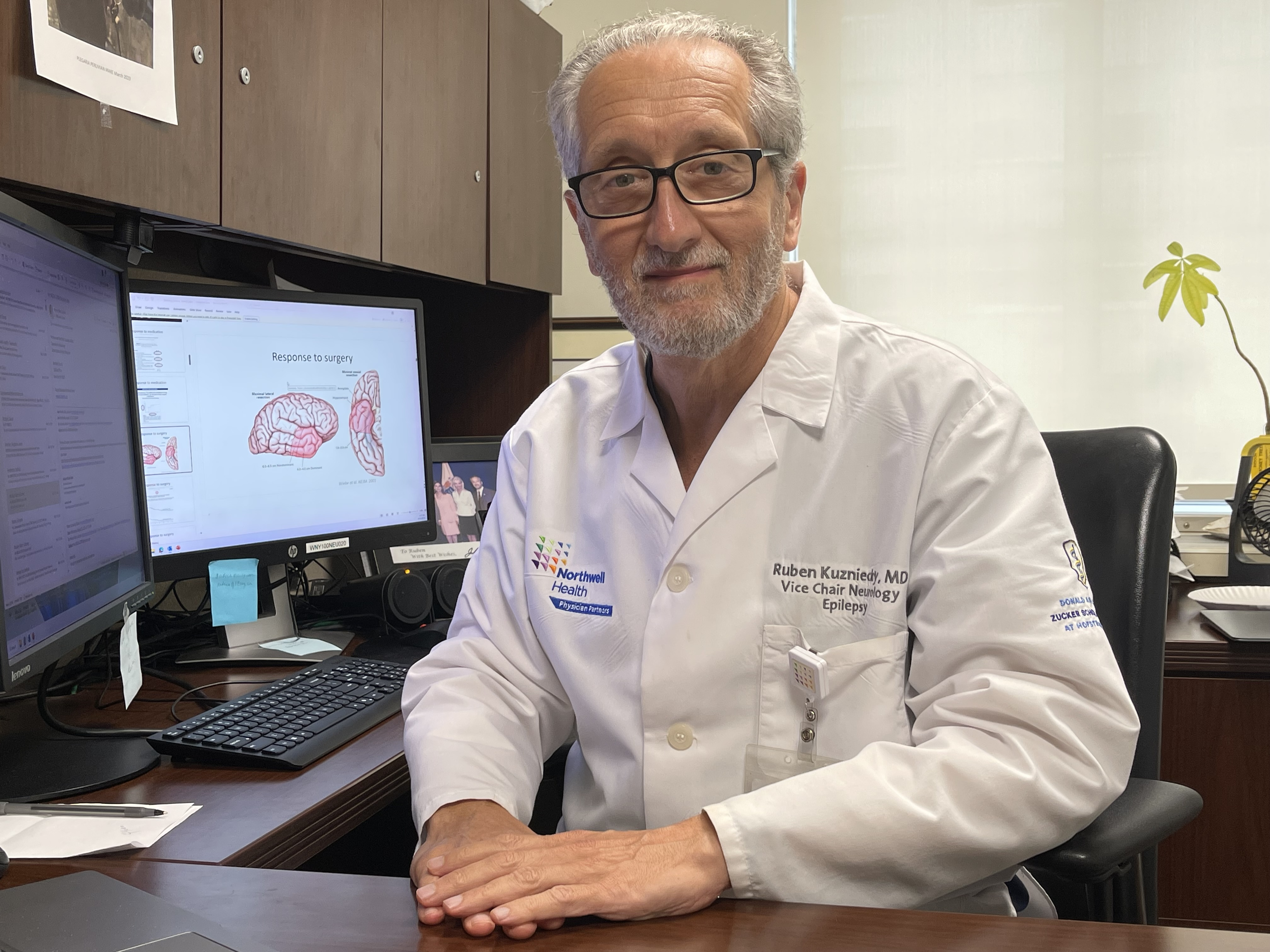
MANHASSET, N.Y.--(BUSINESS WIRE)--While drugs are often prescribed for the 65 million people worldwide living with epilepsy, many patients are resistant to these drugs, making it paramount for clinicians to identify epileptic risks and triggers because experiencing uncontrolled seizures can lead to injuries, accidents and even death. A new study, published today in Journal of the American Medical Association (JAMA) by Northwell Health clinicians and researchers, found that people with newly diagnosed epilepsy who have pre-existing psychological disorders and frequent seizures have a lesser chance of successfully treating their epilepsy within a year.
The study, co-led by Ruben Kuzniecky, MD, a neurologist at Northwell’s Lenox Hill Hospital in Manhattan and member of The Feinstein Institutes for Medical Research, stems from the Human Epilepsy Project (HEP), a large-scale, international observational study that followed 448 participants for up to six years with newly diagnosed focal epilepsy. Focal epilepsy, also known as partial epilepsy, refers to a condition in which seizures originate from a specific, localized area of the brain and can manifest in various ways depending on the affected brain region, ranging from subtle changes in awareness to more noticeable motor symptoms. The study used standardized International League Against Epilepsy (ILAE) definitions for seizure freedom and treatment resistance, providing a rigorous framework for assessing outcomes.
“This study underscores the complex journey faced by individuals and their doctors to identify and treat focal epilepsy,” said Dr. Kuzniecky, professor and vice chair of academic affairs at The Barbara and Donald Zucker School of Medicine at Hofstra/Northwell. “While most patients eventually achieve complete absence of seizures, the path is often lengthy and requires trying different medications. Our findings emphasize the need for improved strategies for predicting and managing treatment response to avoid cognitive decline and improve quality of life.”
Key findings of the study include:
- Delayed seizure freedom: Median time to first seizure freedom was 12.1 months, highlighting the extended period during which many patients experience ongoing seizures.
- Treatment failure: Only 27 percent of participants achieved seizure freedom on their first anti-seizure medications (ASMs), underscoring the need for readily accessible second-line options.
- Treatment resistance: Nearly a quarter of participants were deemed treatment-resistant, meaning they did not achieve seizure freedom after trying two adequate ASM clinical trials. This group often had more frequent seizures at the beginning of the study and half of them became resistant within the first year.
- Psychiatric comorbidities: A history of psychiatric disorders prior to epilepsy diagnosis significantly increased the risk of treatment resistance, emphasizing the importance of holistic care for individuals with epilepsy.
- Challenging outcomes: Participants (23 percent) fell into an “indeterminate” category due to insufficient follow-up time or inadequate ASM clinical trials. This highlights the challenges in conducting long-term epilepsy research and the need for strategies to improve patient retention and standardize treatment protocols.
“This research reveals key scientific insights into why some focal epilepsy patients respond to treatment better than others,” said Kevin J. Tracey, MD, president and CEO of the Feinstein Institutes and Karches Family Distinguished Chair in Medical Research. “This knowledge is critical for developing more personalized and effective treatment strategies.”
The study suggests that earlier identification of treatment failure and personalized treatment strategies based on individual risk factors, including psychiatric comorbidities, are crucial for improving the lives of people living with focal epilepsy.
About the Feinstein Institutes
The Feinstein Institutes for Medical Research is the home of the research institutes of Northwell Health, the largest health care provider and private employer in New York State. Encompassing 50+ research labs, 3,000 clinical research studies and 5,000 researchers and staff, the Feinstein Institutes raises the standard of medical innovation through its six institutes of behavioral science, bioelectronic medicine, cancer, health system science, molecular medicine, and translational research. We are the global scientific leader in bioelectronic medicine – an innovative field of science that has the potential to revolutionize medicine. The Feinstein Institutes publishes two open-access, international peer-reviewed journals Molecular Medicine and Bioelectronic Medicine. Through the Elmezzi Graduate School of Molecular Medicine, we offer an accelerated PhD program. For more information about how we produce knowledge to cure disease, visit http://feinstein.northwell.edu and follow us on LinkedIn.
Contacts
Julianne Mosher Allen
516-880-4824
jmosherallen@northwell.edu