Feinstein Institutes Explores Noninvasive Bioelectronic Medicine to Manage Insulin, Blood Sugar After Surgery
Feinstein Institutes Explores Noninvasive Bioelectronic Medicine to Manage Insulin, Blood Sugar After Surgery
MANHASSET, N.Y.--(BUSINESS WIRE)--Scientists and engineers at Northwell Health’s Feinstein Institutes for Medical Research conduct bioelectronic medicine research to treat disease and injury, and recently found that focused ultrasound (FUS) has potential to manage high blood sugar after surgery. Published recently in Bioelectronic Medicine, an open-access journal distributed by the Feinstein Institutes and BMC, part of Springer Nature, used FUS to target a bundle of nerves – including branches from the vagus nerve – that communicate with organs like the liver and pancreas, essential for regulating glucose levels. The high-frequency sound waves of FUS activate neurons in the abdomen and alter neuronal signals that regulate production of insulin and other hormones.
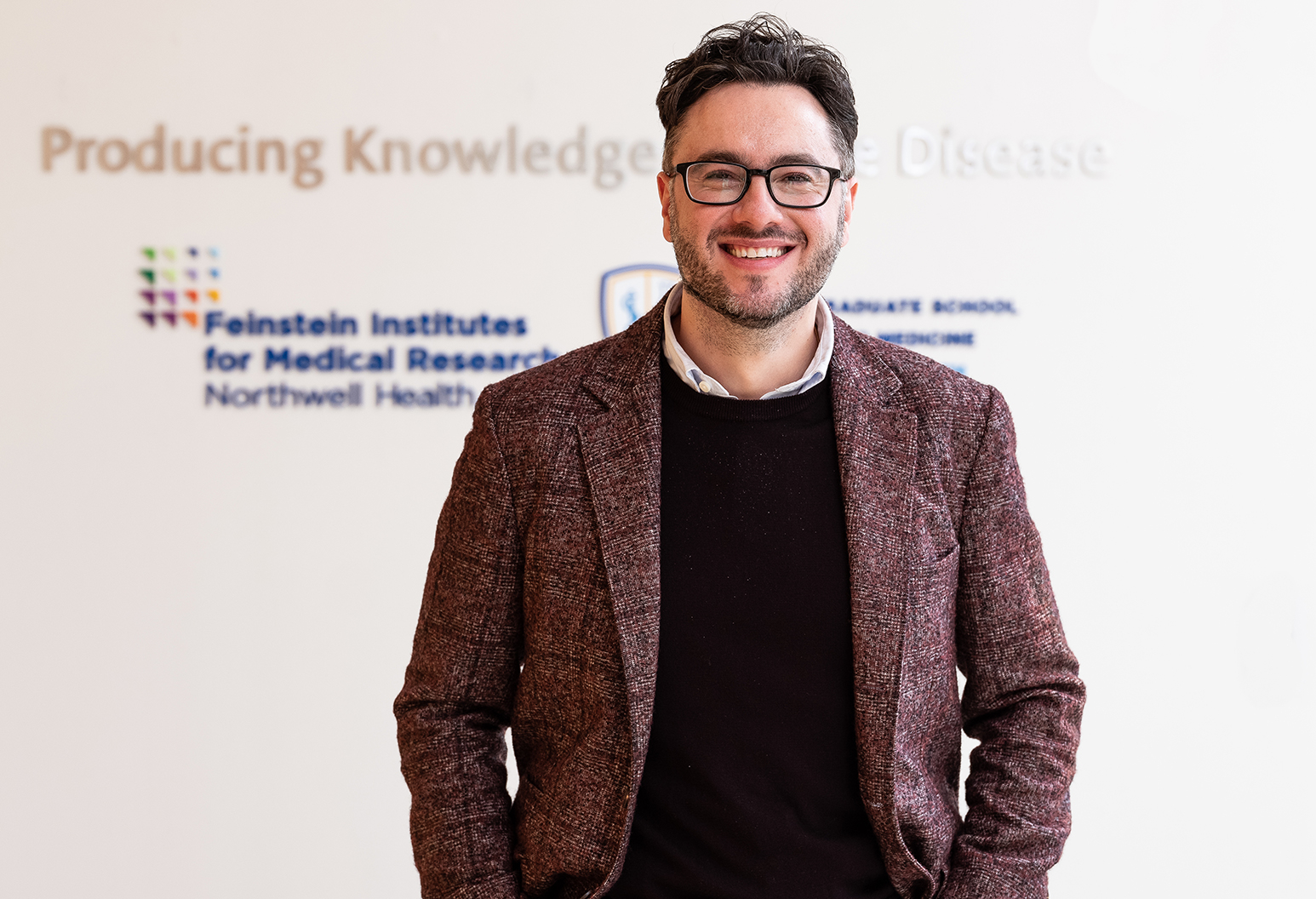
“Managing disorders associated with high blood sugar, including hyperglycemia after surgery, is a critical challenge and current methods often fall short,” said Stavros Zanos, MD, PhD, professor in the Institute of Bioelectronic Medicine at the Feinstein Institutes and corresponding author of the paper. “This research explores FUS, a new method for non-invasive neuromodulation, that may offer a potential pathway towards safer and more effective blood sugar control without the use of medications.”
Using animal models, researchers targeted a nerve bundle called the superior mesenteric plexus (SMP) with FUS and measured its effects on insulin sensitivity, a key factor in how the body processes sugar. They found that FUS initially improved insulin sensitivity during surgery, however, when they checked the animals’ blood sugar the day after, it was unexpectedly higher in the group that received FUS compared to the group that didn’t. This suggests that while FUS can have immediate positive effects on insulin sensitivity, it might interfere with the body’s natural ability to manage blood sugar in the hours following the stress of surgery. Next steps in this research will optimize the FUS treatment to attain long-lasting and beneficial effects on glucose metabolism after surgery and to better understand the biological mechanisms behind these effects.
“Dr. Zanos use of focused ultrasound is paving the way for new methods to stimulate the vagus nerve,” said Kevin J. Tracey, MD, president and CEO of the Feinstein Institutes and Karches Family Distinguished Chair in Medical Research. “Since vagus nerve reflexes control blood glucose and insulin levels, I expect these results will generate widespread interest from scientists, physicians, and future patients.”
Built on years of research in molecular mechanisms of disease and the link between the nervous and immune systems, researchers at the Feinstein Institutes discovered neural targets that can be activated or inhibited with neuromodulation devices, like vagus nerve implants, to control the body’s immune response and inflammation. If inflammation is successfully controlled, diseases – such as arthritis, pulmonary hypertension, Crohn’s disease, inflammatory bowel diseases, diabetes, cancer and autoimmune diseases – can be treated more effectively.
Beyond inflammation, using novel brain-computer interfaces, Feinstein Institutes researchers developed techniques to bypass injuries of the nervous system so that people living with paralysis can regain sensation and use their limbs. By producing bioelectronic medicine knowledge, disease and injury, could one day be treated with our own nerves without costly and potentially harmful pharmaceuticals.
Dr. Zanos, along with Sangeeta S. Chavan, PhD, professor in the Institute of Bioelectronic Medicine at the Feinstein Institutes, also led a successful first-in-human trial using FUS to reduce inflammation, targeting at the spleen in healthy participants and found it lowered levels of an inflammatory protein in the blood for over two hours
About the Feinstein Institutes
The Feinstein Institutes for Medical Research is the home of the research institutes of Northwell Health, the largest health care provider and private employer in New York State. Encompassing 50+ research labs, 3,000 clinical research studies and 5,000 researchers and staff, the Feinstein Institutes raises the standard of medical innovation through its six institutes of behavioral science, bioelectronic medicine, cancer, health system science, molecular medicine, and translational research. We are the global scientific leader in bioelectronic medicine – an innovative field of science that has the potential to revolutionize medicine. The Feinstein Institutes publishes two open-access, international peer-reviewed journals Molecular Medicine and Bioelectronic Medicine. Through the Elmezzi Graduate School of Molecular Medicine, we offer an accelerated PhD program. For more information about how we produce knowledge to cure disease, visit http://feinstein.northwell.edu and follow us on LinkedIn.
Contacts
Julianne Mosher Allen
516-880-4824
jmosherallen@northwell.edu