Feinstein Institutes Research Finds New Vagus Nerve Stimulation Method Targets Specific Fibers, Shows Promise for Improving Therapeutic Efficacy
Feinstein Institutes Research Finds New Vagus Nerve Stimulation Method Targets Specific Fibers, Shows Promise for Improving Therapeutic Efficacy
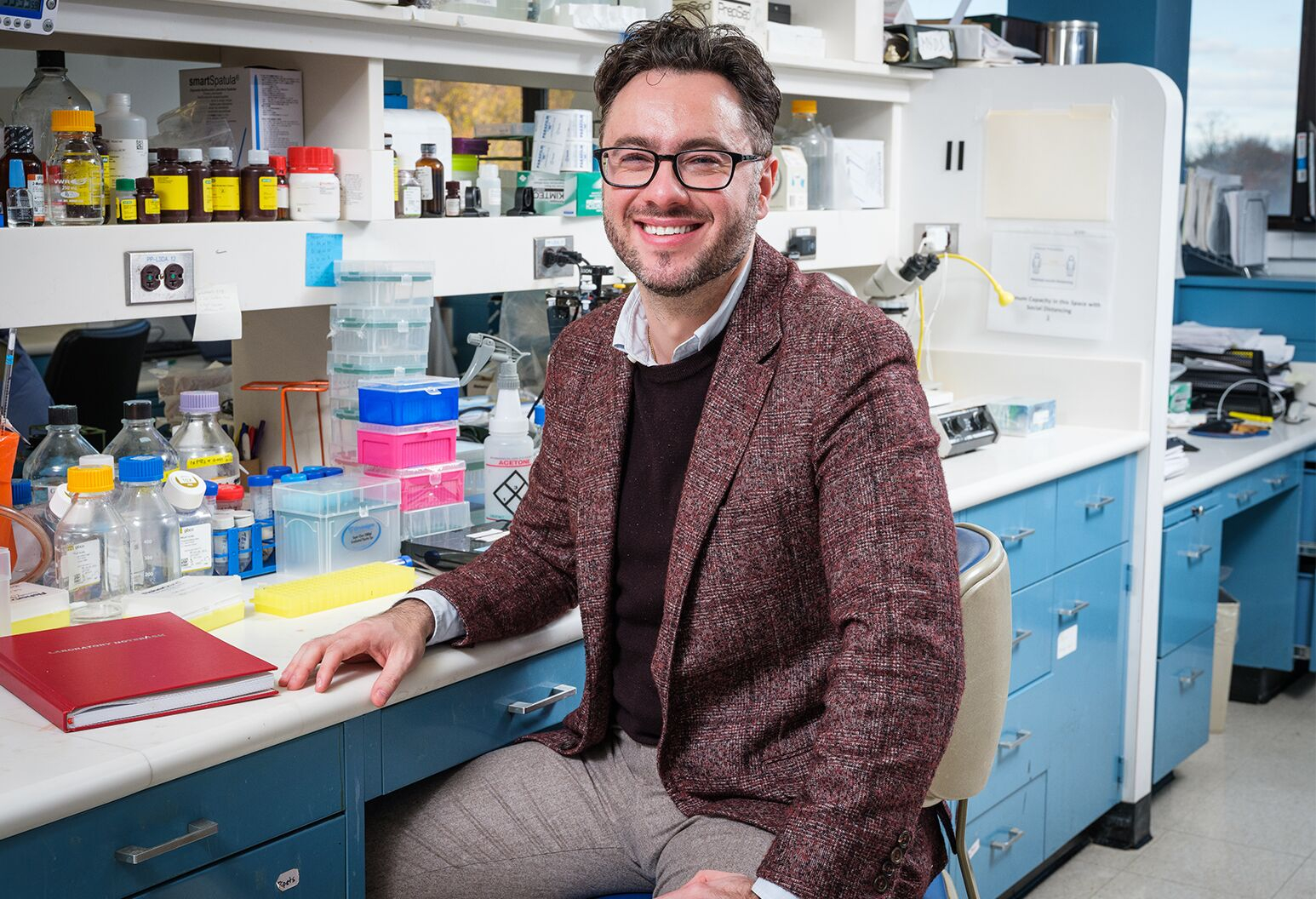
MANHASSET, N.Y.--(BUSINESS WIRE)--Researchers at the Feinstein Institutes for Medical Research have developed a groundbreaking new method for vagus nerve stimulation (VNS) that offers unprecedented control over nerve fiber activation, paving the way for more effective and personalized treatments for a wide range of chronic diseases.
The study, led by Stavros Zanos, MD, PhD, associate professor in the Institute of Bioelectronic Medicine at the Feinstein Institutes, and published this week in Nature Communications, introduces intermittent, interferential sinusoidal current stimulation (i2CS), a technique that uses short bursts of high-frequency electrical currents to activate specific nerve fibers within the vagus nerve. The study is in collaboration with imec, a research and innovation hub in nanoelectronics and digital technologies.
“This is a significant step towards personalized bioelectronic medicine,” said Dr. Zanos. “This i2CS treatment gives us the ability to fine-tune nerve stimulation, activating fibers that produce desired therapeutic effects from selected organs, while minimizing the activation of those fibers responsible for side effects. This could lead to new and more effective treatments, with fewer side effects for patients.”
VNS is a potential therapy for conditions including epilepsy, depression, heart failure and rheumatoid arthritis. Traditional VNS methods often activate a broad range of nerve fibers, which can lead to physical reactions like coughing or having a hoarse voice. This new i2CS method overcomes this limitation by allowing precise targeting of specific fiber populations within the nerve. i2CS uses the principle of temporal interference, where two slightly different high-frequency currents are delivered through separate contacts of a cuff placed around the nerve, enabling focal activation of specific fiber groups.
The research also involved detailed anatomical studies and computational modeling of the vagus nerve, revealing a complex fascicular organization and providing further insights into the mechanisms underlying i2CS selectivity. Dr. Zanos also leads a team of Feinstein Institutes engineers and scientists who are mapping the microscopic anatomy of 60 human vagus nerves.
“Dr. Zanos and his team are at the forefront of pioneering techniques like i2CS to precisely activate vagus nerve fibers,” said Kevin J. Tracey, MD, president and CEO of the Feinstein Institutes and Karches Family Distinguished Chair in Medical Research. “This level of precision opens up new opportunities for VNS systems to maximize their therapeutic potential.”
The Feinstein Institutes for Medical Research is the global scientific home of bioelectronic medicine, which combines molecular medicine, neuroscience and biomedical engineering. At the Feinstein Institutes, medical researchers use modern technology to develop new device-based therapies to treat disease and injury.
Building on years of research in molecular disease mechanisms and the link between the nervous and immune systems, Feinstein Institutes’ researchers discovered neural targets that can be activated or inhibited with neuromodulation devices, like vagus nerve implants, to control the body's immune response and inflammation. If inflammation is successfully controlled, diseases – such as arthritis, pulmonary hypertension, heart failure, inflammatory bowel diseases, diabetes, cancer and autoimmune diseases – can be treated more effectively.
Beyond inflammation, using novel brain-computer interfaces, Feinstein Institutes' researchers developed techniques to bypass injuries of the nervous system so that people living with paralysis can regain sensation and use their limbs. By producing bioelectronic medicine knowledge, disease and injury could one day be treated with our own nerves without costly and potentially harmful pharmaceuticals.
About the Feinstein Institutes
The Feinstein Institutes for Medical Research is the home of the research institutes of Northwell Health, the largest health care provider and private employer in New York State. Encompassing 50+ research labs, 3,000 clinical research studies and 5,000 researchers and staff, the Feinstein Institutes raises the standard of medical innovation through its six institutes of behavioral science, bioelectronic medicine, cancer, health system science, molecular medicine, and translational research. We are the global scientific leader in bioelectronic medicine – an innovative field of science that has the potential to revolutionize medicine. The Feinstein Institutes publishes two open-access, international peer-reviewed journals Molecular Medicine and Bioelectronic Medicine. Through the Elmezzi Graduate School of Molecular Medicine, we offer an accelerated PhD program. For more information about how we produce knowledge to cure disease, visit http://feinstein.northwell.edu and follow us on LinkedIn.
Contacts
Julianne Mosher Allen
516-880-4824
jmosherallen@northwell.edu