Artificial Intelligence Identifies Brain Network Predictive of Psychosis in Alzheimer’s Disease
Artificial Intelligence Identifies Brain Network Predictive of Psychosis in Alzheimer’s Disease
Findings published in Brain Communications
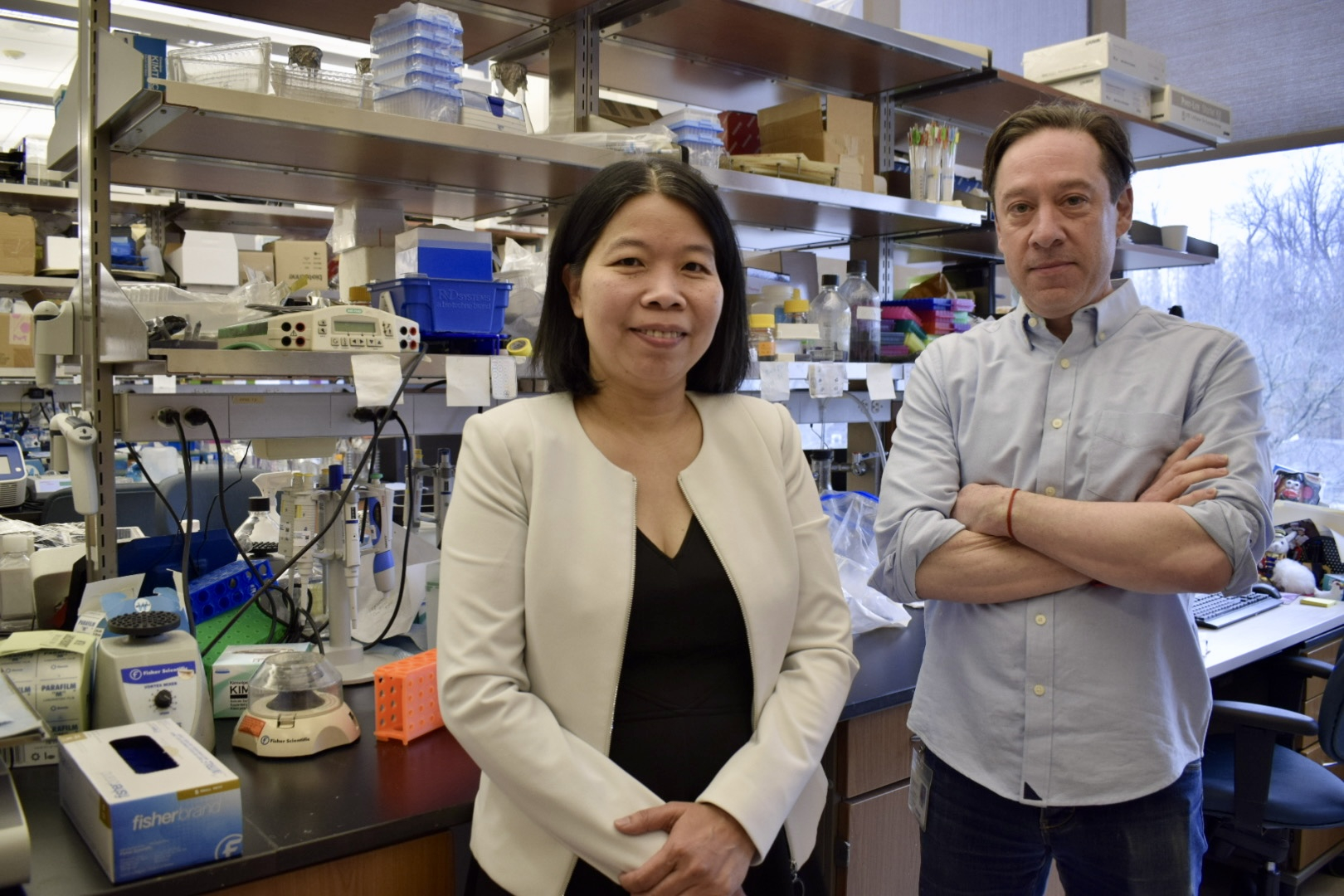
MANHASSET, N.Y.--(BUSINESS WIRE)--Researchers at Northwell Health’s Feinstein Institutes for Medical Research have developed an artificial intelligence (AI)-based tool that identifies a brain metabolic network capable of predicting psychosis in Alzheimer's disease (AD). This discovery, published this week in Brain Communications, offers a potential breakthrough for earlier diagnosis, treatment development and personalized medicine for individuals with AD.
The study, led by Jeremy L. Koppel, MD, associate professor at the Feinstein Institutes’ Institute of Molecular Medicine, and associate professor An Vo, PhD, used an AI-derived metabolic brain map that looks at FDG-PET scans of people with AD, including some who experienced psychosis (hallucinations and delusions) and some who did not. The AI identified a unique pattern of brain activity, like a fingerprint, in the brains of those with psychosis. They called this pattern the ADPN (Alzheimer's Disease Psychosis Network).
“This discovery of the ADPN provides a critical tool for advancing our understanding and management of psychosis in Alzheimer’s disease,” said Dr. Koppel. “This biomarker can potentially identify individuals at risk of developing psychosis, allowing for earlier and more targeted interventions.”
Psychosis, characterized by delusions and hallucinations, affects a significant portion of individuals with AD and is associated with accelerated cognitive decline, increased caregiver burden and premature mortality. Current treatments are limited and often carry significant risks. The ADPN, however, was helpful in distinguishing the difference in brain patterns between people with AD and psychosis, especially between the areas responsible for movement and the areas responsible for language and social understanding. It was also able to predict who would develop psychosis in the future. The stronger the ADPN “fingerprint,” the worse the person’s cognitive decline.
“The discovery of the ADPN exemplifies the power of AI and interdisciplinary collaboration in advancing our understanding of complex neurological disorders like Alzheimer’s disease,” said Kevin J. Tracey MD, president and CEO of the Feinstein Institutes and Karches Family Distinguished Chair in Medical Research. “This innovative approach, integrating neuroimaging with cutting-edge computational tools, offers a new path towards earlier diagnosis, personalized treatment strategies, and ultimately, improved outcomes for individuals affected by this devastating disease.”
Dr. Koppel is an internationally recognized clinical scientist who continues to identify AD’s potential causes and treatments. He recently received a National Institutes of Health grant for nearly $500,000 to look at ptau181 and other biomarkers in psychosis before AD begins as well as a $1 million grant from the Alzheimer's Foundation of America to expand research into developing new treatments to address the hallucinations, delusions and aggression that come with dementia.
Last year, he and his lab published in the Journal of the American Medical Association (JAMA) Psychiatry papers that showed an increase in specific tau proteins that indicated blood biomarkers could be used to detect psychotic symptoms in AD patients.
About the Feinstein Institutes
The Feinstein Institutes for Medical Research is the home of the research institutes of Northwell Health, the largest health care provider and private employer in New York State. Encompassing 50+ research labs, 3,000 clinical research studies and 5,000 researchers and staff, the Feinstein Institutes raises the standard of medical innovation through its six institutes of behavioral science, bioelectronic medicine, cancer, health system science, molecular medicine, and translational research. We are the global scientific leader in bioelectronic medicine – an innovative field of science that has the potential to revolutionize medicine. The Feinstein Institutes publishes two open-access, international peer-reviewed journals Molecular Medicine and Bioelectronic Medicine. Through the Elmezzi Graduate School of Molecular Medicine, we offer an accelerated PhD program. For more information about how we produce knowledge to cure disease, visit http://feinstein.northwell.edu and follow us on LinkedIn.
Contacts
Julianne Mosher Allen
516-880-4824
jmosherallen@northwell.edu