Tariff Dynamics May Shift US Market Share in Favor of South Korean TV Brands, Says Omdia
Tariff Dynamics May Shift US Market Share in Favor of South Korean TV Brands, Says Omdia

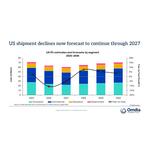
LONDON--(BUSINESS WIRE)--Omdia's TV Display & OEM Intelligence Service reveals that leading US TV brands were poised for aggressive shipment growth in 2025 (see Figure 1), however, shifting geopolitical tensions and tariff changes are set to dramatically alter the competitive landscape of the US TV market. With their expansive manufacturing capacities in Mexico, Samsung and LG are positioned to gain US market share from Chinese brands like Hisense and TCL, whose growth could be stymied by their limited manufacturing capacity in Mexico.
The April 2025 tariff announcements in spanning up to 145% tariffs on Chinese imports and additional tariffs on Vietnam and Thailand have caused severe disruptions in supply chain strategies across the US TV industry. While the US TV market was somewhat shielded by President Trump’s reciprocal tariff policies due to production shifts to Mexico since 2019, the latest moves have intensified the pressure. Mexico’s favorable tariff exemptions under the United States-Mexico-Canada Agreement (USMCA) continue to benefit TV makers, as long as they meet the required certificate of origin and at least 60% regional value content criteria. As a result, TV makers reconsidering moving production to Southeast Asia are now retaining operations in Mexico with 65% of all TVs sold in the US now coming from there.
Hisense and TCL, once set for aggressive global expansion, have put their investments in Vietnam on hold due to shifting tariff dynamics. Walmart’s Onn brand, partially assembled in the US, was expected to benefit if Mexico was targeted. However, with Mexico now exempt, TV brands with significant Mexican production (like Samsung and LG) are now primed to gain market share. Meanwhile, Vizio and Onn face the risk of losing ground, relying on Asian sourcing and having limited US production capacity.
In the TV product segment, Samsung and LG dominate the larger-size category (65-inch to 85-/86-inches) in the US, while Chinese brands lead the low-cost, small to mid-size models. With tariffs threatening the affordability of smaller TVs sourced from Asia, South Korean brands may see an opportunity to expand into this segment. Though these smaller TVs are less profitable, Samsung and LG can leverage their platforms like Tizen and webOS for additional value.
Despite the market turbulence, the broader display industry is adopting a cautious, wait-and-see approach, avoiding large-scale production changes until clearer policies are established. “Mexico’s supply chain resources are becoming a key differentiator in the US market. Samsung and LG are best positioned to capitalize on these resources, scale production, and protect margins amidst volatile tariff conditions,” said Deborah Yang, Chief Analyst in Omdia’s Display research practice.
ABOUT OMDIA
Omdia, part of Informa TechTarget, Inc. (Nasdaq: TTGT), is a technology research and advisory group. Our deep knowledge of tech markets combined with our actionable insights empower organizations to make smart growth decisions.
Contacts
Fasiha Khan: fasiha.khan@omdia.com