Bruker Announces Introduction of Revolutionary d-DNP Polarizer for MRI Research and for Dynamic Nuclear Polarization Liquids NMR
Bruker Announces Introduction of Revolutionary d-DNP Polarizer for MRI Research and for Dynamic Nuclear Polarization Liquids NMR
First successful customer installation of novel dissolution d-DNP Polarizer at UCSF
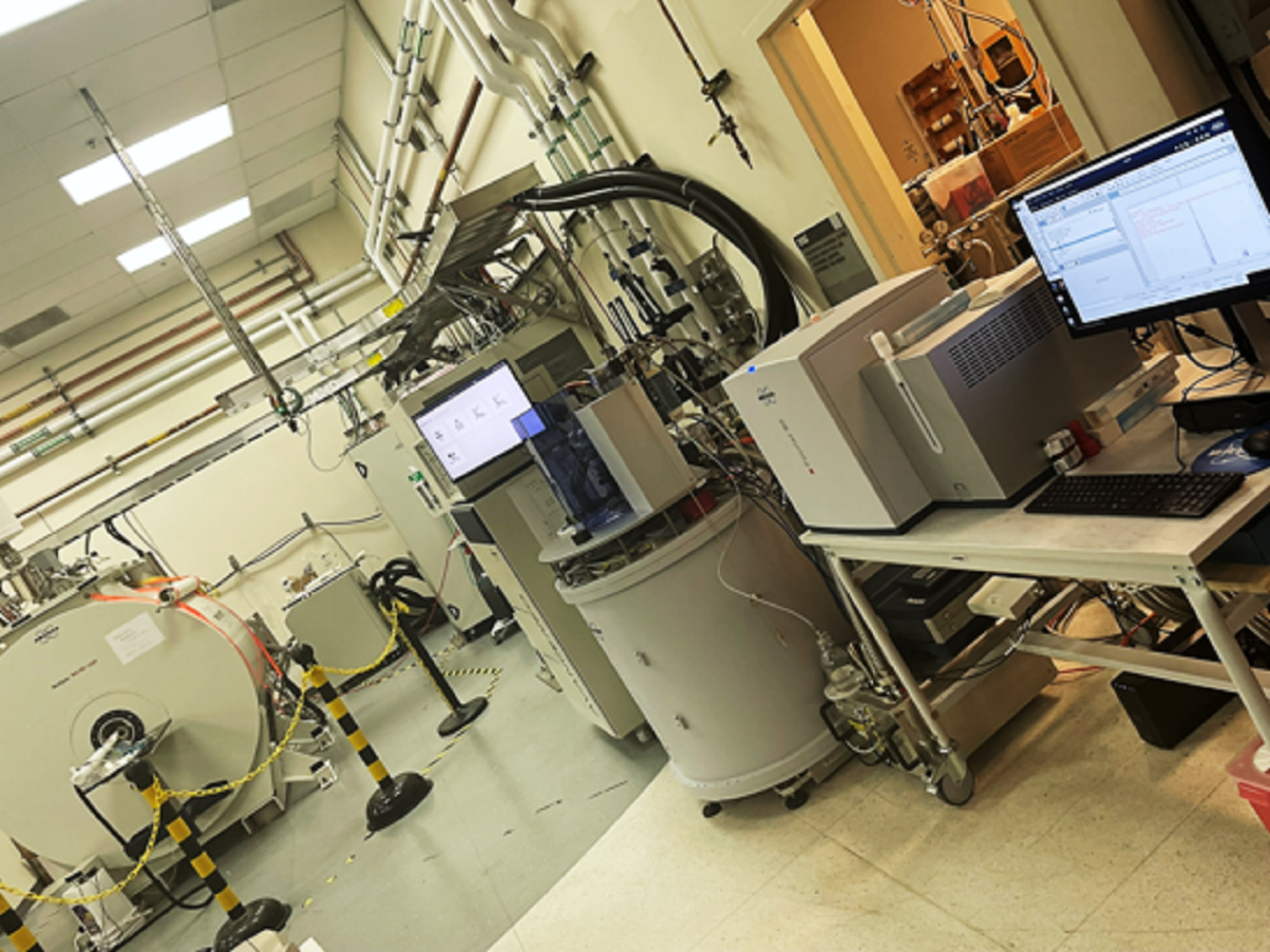
SAN FRANCISCO--(BUSINESS WIRE)--Bruker Corporation today announced the introduction of its groundbreaking dissolution Dynamic Nuclear Polarization (d-DNP) Polarizer at the 2025 Hyperpolarized Carbon-13 MRI Technology Development Workshop at the University of California San Francisco (UCSF) Hyperpolarized MRI Technology Resource Center. The first customer installation of this innovative technology has been successfully completed, marking a milestone in hyperpolarized MRI for preclinical research to improve cancer diagnostics and to assess response to treatment.
Dynamic Nuclear Polarization (DNP) can enhance the sensitivity of Nuclear Magnetic Resonance (NMR) and Magnetic Resonance Imaging (MRI) by transferring polarization from electron spins to nuclear spins. Dissolution DNP (d-DNP) extends the applicability of DNP to solution-state liquids NMR and to preclinical MRI research. Polarization occurs in a separate 7 Tesla polarizer magnet at temperatures below 1.4 Kelvin, accelerated by Bruker’s proprietary active cross-polarization technology.
Subsequently, the highly polarized frozen sample is ejected, melts and dissolves, achieving sensitivity gains of over 10,000-fold in solution samples near room or body temperatures, enabling the observation of low-abundance nuclei like 13C in real-time. Hyperpolarized MRI using d-DNP is particularly beneficial for in vivo studies of 13C-labelled metabolites, enabling live tracking of chemical conversion to downstream metabolites. This highlights metabolic differences between healthy and diseased tissues for conditions ranging from cancer to cardiac health. It can be used to assess response to treatment in animal models, contributing to understanding drug efficacy and disease mechanisms.
With the novel Bruker d-DNP Polarizer, scientists can conduct previously impossible experiments in chemical or metabolic analysis in NMR and preclinical MRI. Bruker provides a faster d-DNP approach using cross polarization (CP) of 1H and 13C. This patented CP provides 5-10x faster polarization compared to traditional d-DNP of 13C. This new CP technology is a testament to Bruker's commitment to pushing boundaries and empowering scientists to conduct groundbreaking research.
Professor Renuka Sriram, who leads the preclinical Hyperpolarized Magnetic Resonance Imaging group at UCSF, highlighted the significance: "The Bruker d-DNP Polarizer is a pivotal new tool for our research team. This will enable us to explore metabolic pathways that are only accessible with dissolution DNP. Bruker’s much faster CP-based d-DNP technology and automated d-DNP system further enhance our ability to develop diagnostics for cancers and other metabolic conditions."
Professor Dan Vigneron, Director of the Hyperpolarized Imaging Center at UCSF, elaborated: "With this advanced d-DNP system, we can accelerate our preclinical research efforts and contribute to the development of more effective diagnostic tools. Our collaboration with Bruker is instrumental in pushing the boundaries of what is possible in hyperpolarized MRI."
"At Bruker, we are committed to driving innovation in the field of hyperpolarization," stated Dr. James Kempf, Senior Manager DNP & Hyperpolarization at Bruker BioSpin. "The installation of our d-DNP Polarizer at UCSF exemplifies our dedication to advancing scientific research, and it also highlights our partnerships with leading institutions to develop cutting-edge technologies to transform healthcare."
As the research community begins to harness the capabilities of the Bruker d-DNP Polarizer, the potential for pioneering discoveries in metabolic imaging and disease diagnostics is immense. The collaboration between Bruker and UCSF is set to pave the way for future advancements in hyperpolarized MRI. Additional d-DNP customer installations are already planned in Europe and the US. The UCSF partnership aims to validate the d-DNP technology in oncology applications, including demonstrating the value of the unique higher-throughput cross-polarization d-DNP approach.
About Bruker Corporation – Leader of the Post-Genomic Era (Nasdaq: BRKR)
Bruker is enabling scientists and engineers to make breakthrough post-genomic discoveries and develop new applications that improve the quality of human life. Bruker’s high performance scientific instruments and high value analytical and diagnostic solutions enable scientists to explore life and materials at molecular, cellular, and microscopic levels. In close cooperation with our customers, Bruker is enabling innovation, improved productivity, and customer success in post-genomic life science molecular and cell biology research, in applied and biopharma applications, in microscopy and nanoanalysis, as well as in industrial and cleantech research, and next-gen semiconductor metrology in support of AI. Bruker offers differentiated, high-value life science and diagnostics systems and solutions in preclinical imaging, clinical phenomics research, proteomics and multiomics, spatial and single-cell biology, functional structural and condensate biology, as well as in clinical microbiology and molecular diagnostics. For more information, please visit www.bruker.com.
Contacts
Investor Contact:
Joe Kostka
Director - Investor Relations
Bruker Corporation
T: +1 (978) 313-5800
E: Investor.Relations@bruker.com
Media Contact:
Markus Ziegler
Sr. Director and Head of Group Marketing
Bruker BioSpin
T: +49 172 373-3531
E: pr@bruker.com