Feinstein Institutes Research Finds Hidden Genetic Clues May Explain HIV Resistance and Treatment
Feinstein Institutes Research Finds Hidden Genetic Clues May Explain HIV Resistance and Treatment
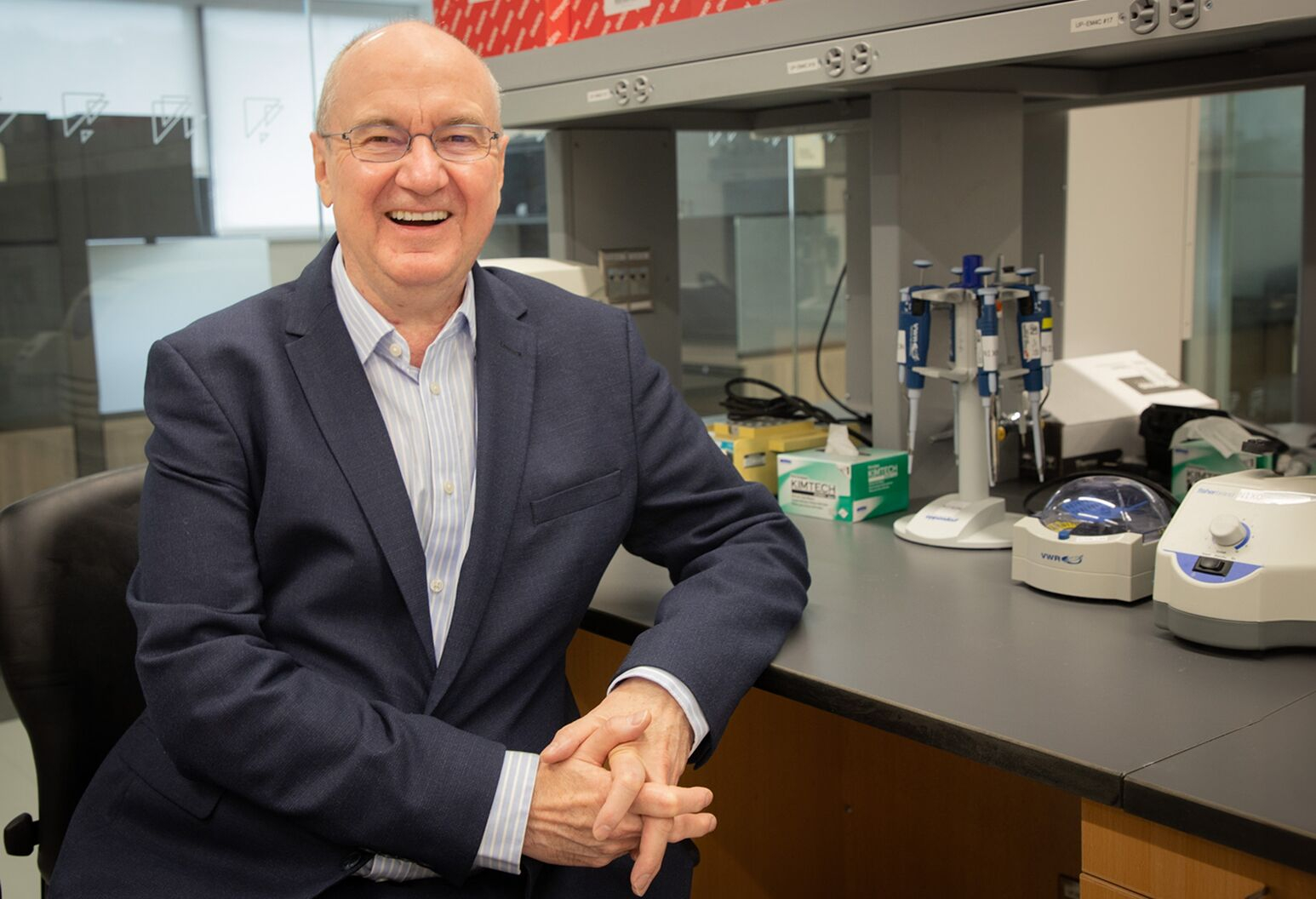
MANHASSET, N.Y.--(BUSINESS WIRE)--More than one million people in the U.S. live with Human Immunodeficiency Virus (HIV), less than one percent of whom are known as “elite controllers” who can suppress the virus to levels below detection without medication. New research from The Feinstein Institutes for Medical Research at Northwell Health has found that “human endogenous retroviruses (HERVs),” a subset of transposable elements (TEs) found in genomic dark matter, may play a crucial role in explaining how this group can naturally suppress the HIV virus, potentially leading to new avenues for HIV treatments.
The research, co-supervised by Douglas F. Nixon, MD, PhD, director of the Feinstein Institutes’ Institute of Translational Research, and Cedric Feschotte, PhD, of Cornell University, and led by Cornell University’s Manvendra Singh, PhD, and Sabrina Leddy published this week in Genome Biology, shows that these elite controllers have distinct patterns of HERV activity in their CD4+ T cells, immune cells targeted by HIV. These HERVs, derived from ancient retroviral infections that infected our ancestors hundreds of thousands to millions of years ago, are known as ancient deoxyribonucleic acid (DNA) sequences. While they are no longer able to replicate and infect new cells, HERVs can impact the activity of human genes, including those involved in immune responses. Heightened HERV activity has been correlated with increased expression of genes that contribute to combating HIV.
“This research is crucial because it offers a fresh perspective on HIV suppression,” said Dr. Nixon, who is co-corresponding author on the study. “By exploring the role of HERVs, we’ve uncovered a potential new pathway for developing future therapies that could mimic the natural resistance seen in elite controllers and provides critical insights into how these individuals, and others, could suppress the virus.”
Dr. Nixon and the team also identified a link between HERV activity and a group of proteins called KZFPs, which normally suppress HERVs. Elite controllers have lower levels of certain KZFPs, potentially explaining the increased HERV activity. Essentially, the “brakes” on these immune-boosting HERVs may be partially released in elite controllers.
“Dr. Nixon’s discoveries reshape our understanding of how the DNA residue deposited by ancient viruses into the human confers some people with natural resistance to HIV,” said Kevin J. Tracey, MD, president and CEO of the Feinstein Institutes and Karches Family Distinguished Chair in Medical Research. “These important findings open new research pathways to novel HIV therapies.”
Similar to the work related to HIV and these “elite controllers,” recent published HERV research from Dr. Nixon showed a new gene expression pattern that was linked to common mental health disorders including schizophrenia and depression.
About the Feinstein Institutes
The Feinstein Institutes for Medical Research is the home of the research institutes of Northwell Health, the largest health care provider and private employer in New York State. Encompassing 50+ research labs, 3,000 clinical research studies and 5,000 researchers and staff, the Feinstein Institutes raises the standard of medical innovation through its six institutes of behavioral science, bioelectronic medicine, cancer, health system science, molecular medicine, and translational research. We are the global scientific leader in bioelectronic medicine – an innovative field of science that has the potential to revolutionize medicine. The Feinstein Institutes publishes two open-access, international peer-reviewed journals Molecular Medicine and Bioelectronic Medicine. Through the Elmezzi Graduate School of Molecular Medicine, we offer an accelerated PhD program. For more information about how we produce knowledge to cure disease, visit http://feinstein.northwell.edu and follow us on LinkedIn.
Contacts
Julianne Mosher Allen
516-880-4824
jmosherallen@northwell.edu