Funding Supports Neuranics’ Groundbreaking AI Technology for Remote Heart Health Monitoring
Funding Supports Neuranics’ Groundbreaking AI Technology for Remote Heart Health Monitoring
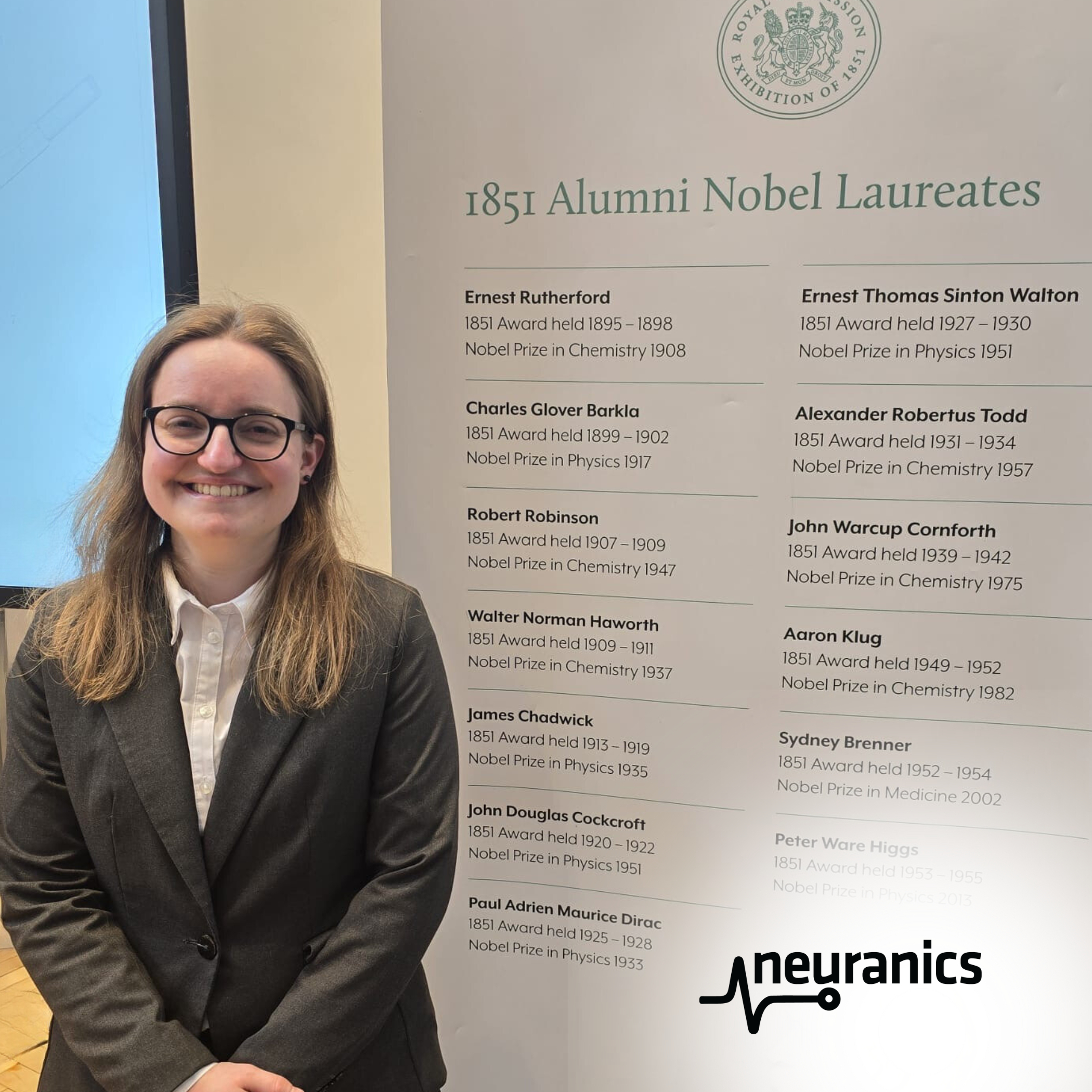
GLASGOW, Scotland--(BUSINESS WIRE)--Maja Schmidt, in collaboration with Neuranics Limited and the University of Edinburgh, has been awarded the highly coveted Royal Commission for the Exhibition of 1851 Industrial Fellowship for her innovative AI-driven remote heart health monitoring project. This initiative aims to enhance the early detection and diagnosis of heart conditions, potentially transforming healthcare.
Schmidt is one of 12 early-career innovators selected for the fellowship, which offers up to £125,000 in funding. Since 1851, the Royal Commission has been instrumental in fostering collaboration between academia and industry to tackle major challenges in healthcare, sustainability, and engineering.
Neuranics: Innovating Magnetic Sensor Technology
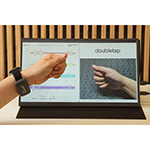
Neuranics has developed cutting-edge magnetic sensors using Tunnel Magnetoresistance (TMR) technology to detect muscle activity. Their MMG sensors provide precise and responsive gesture recognition, offering a more accurate and comfortable alternative to traditional Electromyography (EMG) sensors. These sensors are ideally suited for Human-Machine Interfaces (HMI) and can be seamlessly integrated into extended reality (XR) environments, including AR, VR and MR.
Schmidt’s research further advances Neuranics’ technology by integrating it with AI to create a remote heart health monitoring system. This AI-powered solution aims to deliver real-time, high-precision data, enabling earlier diagnosis and treatment.
Bridging Academia and Industry
The Industrial Fellowship programme bridges the gap between academia and industry by supporting research with real-world impact. Fellows conduct their research within a company while receiving robust academic backing from a university, providing a solid foundation for their work. The funding covers up to three years, including salary, university fees, and doctoral costs.
John Lavery, Secretary of the Royal Commission, stated: “This intersection of academia and industry fosters the development of innovative technologies. The Commission is proud to invest in these exceptional early-career scientists and engineers who are shaping our future.”
About Maja Schmidt and Neuranics Limited
Maja Schmidt is an early-career researcher using AI to address healthcare challenges. Her work at Neuranics, in collaboration with the University of Edinburgh, focuses on advancing heart monitoring with AI and Neuranics’ magnetic sensor technology. Neuranics specialises in high-precision magnetic sensors, transforming technology interactions through their advanced MMG sensors.
About the Royal Commission for the Exhibition of 1851
The Royal Commission has supported UK innovation for over 170 years, investing nearly £4 million annually to support early-career researchers addressing global challenges.
Contacts
Charlene Alcantar
Email: charlene@neuranics.com
www.neuranics.com