Alzheimer's Disease Blood Biomarkers Identified in New Feinstein Institutes Study
Alzheimer's Disease Blood Biomarkers Identified in New Feinstein Institutes Study
Research findings published in the Journal of the American Medical Association (JAMA) Psychiatry suggest the potential development of a blood test to help identify the risk of psychosis from the disease
MANHASSET, N.Y.--(BUSINESS WIRE)--By 2060, it’s estimated that 14 million people will be living with Alzheimer's disease (AD), 40 percent of whom will experience psychotic symptoms. Today, Feinstein Institutes for Medical Research researchers published findings in the Journal of the American Medical Association (JAMA) Psychiatry that show an increase in specific tau proteins throughout the disease, indicating that these blood biomarkers could be used to detect psychotic symptoms in AD patients.
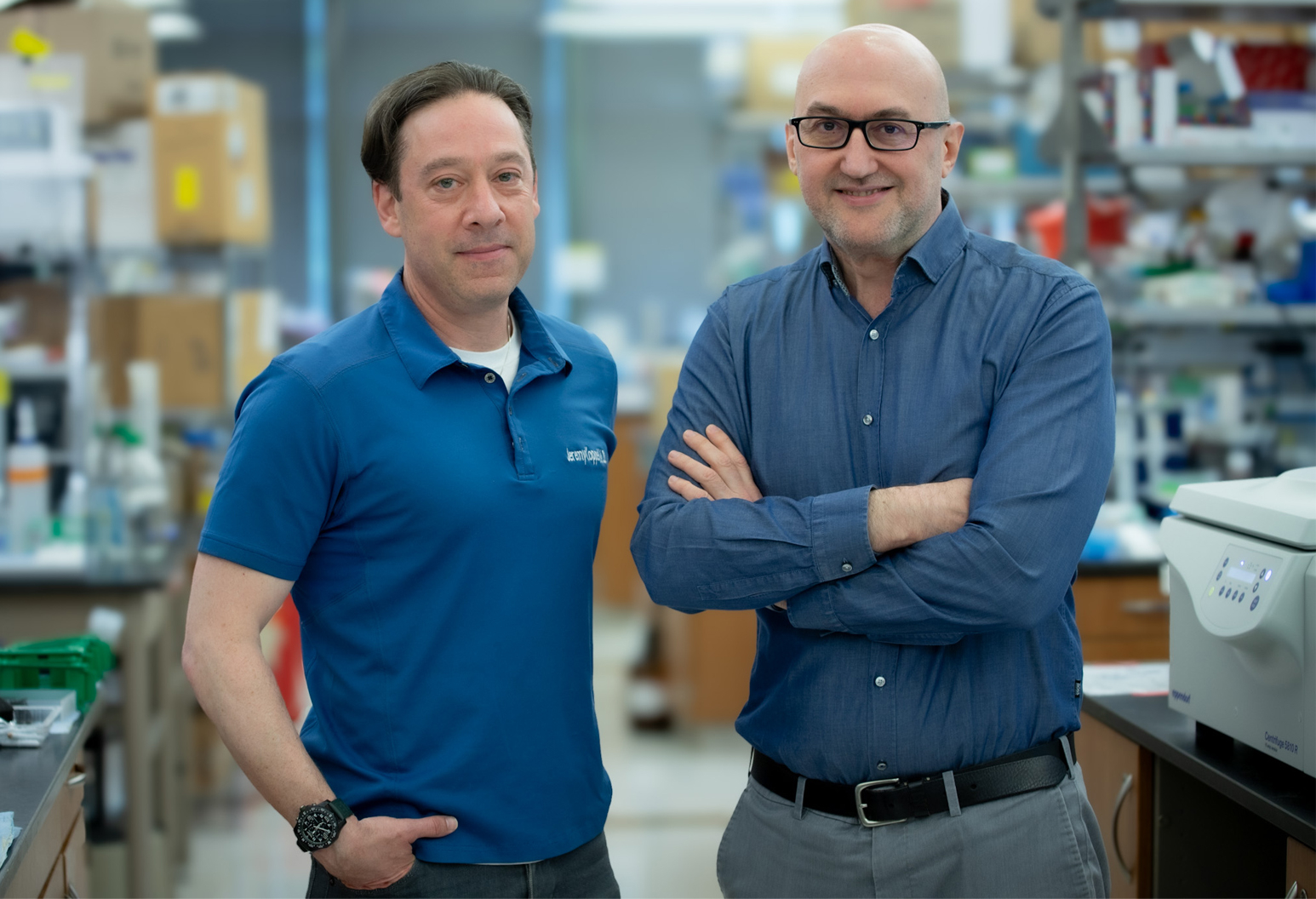
The research – led by Jeremy L. Koppel, MD, associate professor, and Jesus J. Gomar, PhD, assistant professor, in the Feinstein Institutes’ Institute of Molecular Medicine – looked at 752 participants with a diagnosis of AD or mild cognitive impairment. They looked at the presence of Plasma tau phosphorylated at threonine 181 (ptau181) and Neurofilament light chain (NfL), which have both been studied and proven to be molecular biomarkers associated with AD neurodegeneration. They studied the connection over time between plasma levels of ptau181 and NfL and the occurrence or development of delusions and hallucinations in people with AD and found that increased levels of both were present and can be used as biomarkers for psychotic symptoms in AD. The participants’ information was collected from the Alzheimer's Disease Neuroimaging Initiative (ADNI).
“Psychosis is exceptionally prevalent in people with Alzheimer's disease, and there is a need to easily detect a person's risk for developing those behaviors to intervene and improve care ultimately,” said Dr. Koppel, a geriatric psychiatrist. “This study’s results show that elevated plasma levels of specific tau proteins may serve as a biomarker and open up the doors to develop an easily accessible and accurate blood test to identity psychotic risk in these patients.”
This study found that individuals with AD who either had or would develop psychosis had higher plasma levels of ptau181 and NfL compared to those with AD without psychosis. The levels of plasma ptau181 rose before the onset of psychosis and then decreased. However, these effects were less pronounced when looking at individuals with other tau-related conditions like primary age-related tauopathy (PART), where ptau181 levels are lower than in AD.
“Millions of people with Alzheimer's disease need more targeted and effective diagnosis and treatments, as well as a deeper insight into its molecular mechanisms,” said Kevin J. Tracey, MD, president and CEO of the Feinstein Institutes and Karches Family Distinguished Chair in Medical Research. “Drs. Koppel and Gomar’s new research shows the potential for a blood diagnostic test to identify the condition and advance our understanding of this complex and debilitating disease.”
The research detailed clinical characterization and measurement of the plasma proteins over four years. This work helps set the foundation for even more longitudinal studies and the measurement of other related tau proteins, like ptau217.
Dr. Koppel is an internationally recognized clinical scientist who continues to identify AD's potential causes and treatments. He recently received a National Institutes of Health grant for nearly $500,000 to look at ptau181 and others biomarkers in psychosis before AD begins and a $1 million grant from the Alzheimer's Foundation of America to expand research into developing new treatments to address the hallucinations, delusions, and aggression that come with dementia that funded his work on the current study. In 2022, he published papers about the role of dopamine, tau, the increase in psychosis, and the formation of tau through positron emission tomography (PET) scans.
About the Feinstein Institutes
The Feinstein Institutes for Medical Research is the home of the research institutes of Northwell Health, the largest health care provider and private employer in New York State. Encompassing 50 research labs, 3,000 clinical research studies and 5,000 researchers and staff, the Feinstein Institutes raises the standard of medical innovation through its five institutes of behavioral science, bioelectronic medicine, cancer, health system science, and molecular medicine. We make breakthroughs in genetics, oncology, brain research, mental health, autoimmunity, and are the global scientific leader in bioelectronic medicine – a new field of science that has the potential to revolutionize medicine. For more information about how we produce knowledge to cure disease, visit http://feinstein.northwell.edu and follow us on LinkedIn.
Contacts
Matthew Libassi
631-793-5325
mlibassi@northwell.edu