Ultrasound Neuromodulation Shows Promise to Treat Pulmonary Hypertension, Feinstein Institutes Research
Ultrasound Neuromodulation Shows Promise to Treat Pulmonary Hypertension, Feinstein Institutes Research
Findings published in American Heart Association’s Circulation Research
MANHASSET, N.Y.--(BUSINESS WIRE)--Ultrasound could one day complement or even replace drugs to treat diseases. Bioelectronic medicine scientists at The Feinstein Institutes for Medical Research used noninvasive, splenic focused ultrasound stimulation (sFUS) and found they can reduce inflammation and improve symptoms of pulmonary arterial hypertension (PAH). This was done in preclinical models, but could apply to humans for whom PAH is rare but fatal and affects predominantly younger women.
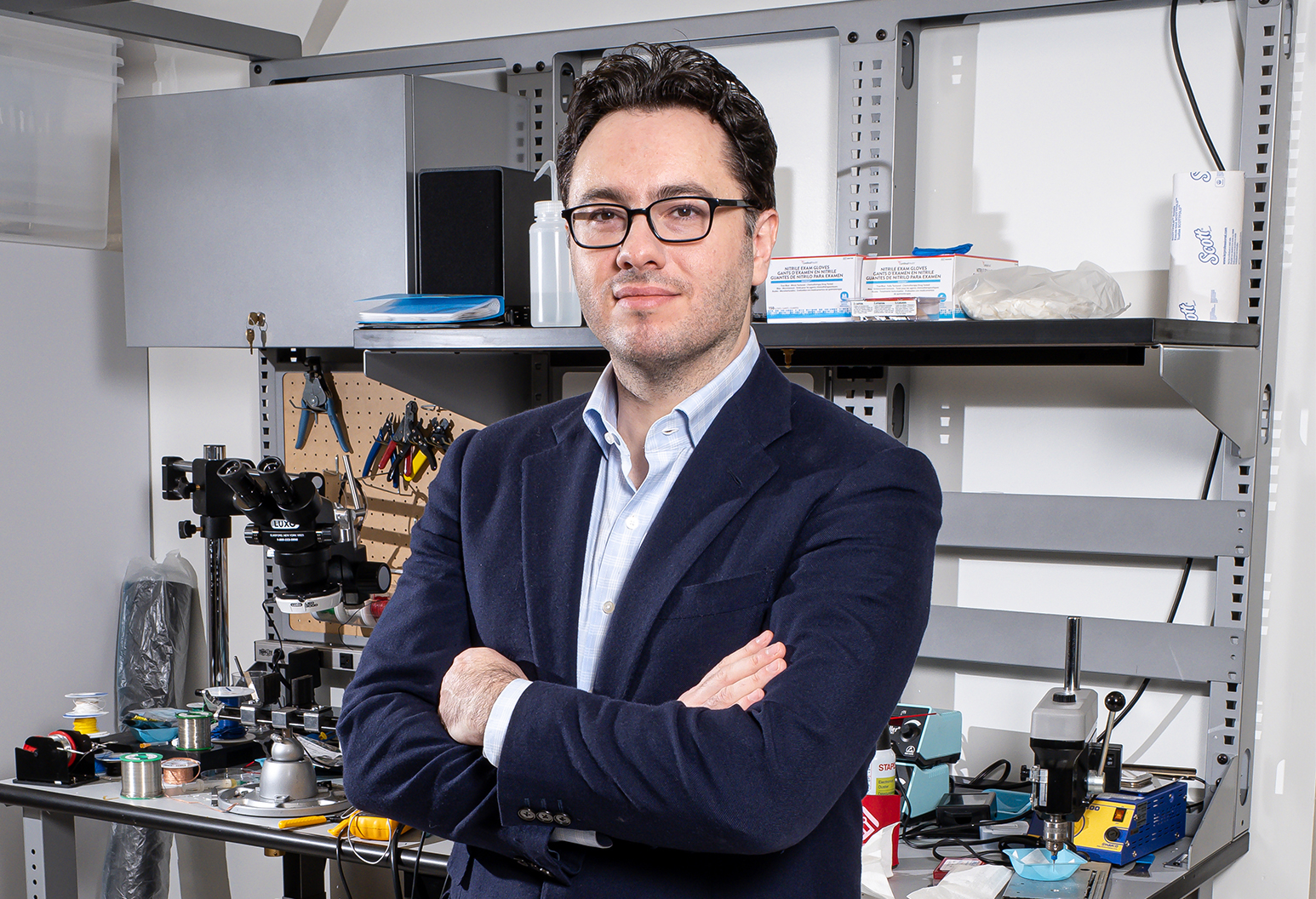
The study was published today in Circulation Research, an American Heart Association journal, with Stefanos Zafeiropoulos, MD PhD, as the lead author and Stavros Zanos, MD PhD, as the senior author. The research adds to the growing scientific evidence of bioelectronic medicine and neuromodulation as an effective therapy to treat diseases with an inflammatory component.
The study, titled “Ultrasound neuromodulation of an anti-inflammatory pathway at the spleen produces sustained improvement of experimental pulmonary hypertension,” is the first report of preclinical efficacy of a noninvasive, ultrasound-based neuromodulation therapy in any cardiopulmonary disease and, more specifically, in PAH, with translational relevance to the human disease.
“As we explore the therapeutic possibilities of bioelectronic medicine, our splenic-focused ultrasound stimulation research suggests a novel and promising approach for reducing inflammation and managing pulmonary hypertension,” said Dr. Zanos, associate professor in the Institute of Bioelectronic Medicine at the Feinstein Institutes. “With further preclinical investigations and clinical studies, focused ultrasound, alongside other bioelectronic medicine approaches, could become a viable treatment option for clinicians and patients."
PAH is caused by constriction and wall thickening of pulmonary arteries that carry blood from the heart to the lungs for oxygenation. This leads to increased pressure in the pulmonary vessels and eventually to heart failure and death. Presently, there is no cure for the condition, and currently approved medications primarily target constriction of the pulmonary vessels, offering symptomatic relief but without typically altering the progression of the disease. Inflammation is involved in the pathogenesis of PAH, but it has not been targeted therapeutically.
In pioneering research led by Kevin J. Tracey, MD, president and CEO of the Feinstein Institutes, it was discovered that the body's inflammatory reflex, a two-way communication, takes place between the brain and body via nerves. That reflex, which involves the vagus nerve and the splenic nerve, orchestrates the inflammatory response by regulating immune cells and signaling proteins in response to injury or disease. By modulating this neuroimmune pathway, for example, through vagus nerve stimulation (VNS), investigators have been able to suppress the harmful overabundance of inflammation. Dr. Zanos’ new research looks at an alternative way to stimulate and activate the pathway, using sFUS to stimulate the splenic nerve and reduce inflammation in an animal model of PAH.
“This is the first study showing the effectiveness of a noninvasive ultrasound treatment targeting the spleen as a possible therapy for pulmonary arterial hypertension,” said Dr. Tracey, Karches Family Distinguished Chair in Medical Research. “Dr. Zanos’s novel research highlights the importance to continue producing knowledge about bioelectronic medicine's potential to treat this condition and other inflammatory diseases."
The research team delivered sFUS to cohorts of preclinical models with the disease. It assessed pulmonary pressure, heart function, histological changes in pulmonary vessels, and various markers and cells responsible for inflammation. Results show that delivering sFUS improves pulmonary pressure, partially normalizes the function of the heart and the autonomic nervous system and reduces lung inflammation and pathological changes in pulmonary vessels. In those who received sFUS, the progression of the disease was significantly slowed down, even after stimulation was stopped, suggesting a sustained, possibly disease-modifying effect. The earlier and longer the treatment was delivered, the better the outcomes.
The Feinstein Institutes for Medical Research is the global scientific home of bioelectronic medicine, which combines molecular medicine, neuroscience, and biomedical engineering. At the Feinstein Institutes, medical researchers use modern technology to develop new device-based therapies to treat disease and injury.
Building on years of research in molecular disease mechanisms and the link between the nervous and immune systems, our researchers discover neural targets that can be activated or inhibited with neuromodulation devices, like vagus nerve implants, to control the body's immune response and inflammation. If inflammation is successfully controlled, diseases – such as arthritis, pulmonary hypertension, Crohn's disease, inflammatory bowel diseases, diabetes, cancer and autoimmune diseases – can be treated more effectively.
Beyond inflammation, using novel brain-computer interfaces, Feinstein Institutes' researchers developed techniques to bypass injuries of the nervous system so that people living with paralysis can regain sensation and use their limbs. By producing bioelectronic medicine knowledge, disease and injury could one day be treated with our own nerves without costly and potentially harmful pharmaceuticals.
Dr. Zanos has long looked at the role of ultrasound in treating disease; in 2023, he published a paper along with Sangeeta S. Chavan, PhD, professor in the Feinstein Institutes' Institute of Bioelectronic Medicine and a GE Research team that showed ultrasound’s ability to lower inflammatory biomarkers in healthy human participants. For years, Dr. Zanos has investigated bioelectronic medicine therapies to treat PAH. In 2019, he published in the journal Bioelectronic Medicine the potential bioelectronic medicine has to treat the condition.
About the Feinstein Institutes
The Feinstein Institutes for Medical Research is the home of the research institutes of Northwell Health, the largest health care provider and private employer in New York State. Encompassing 50 research labs, 3,000 clinical research studies and 5,000 researchers and staff, the Feinstein Institutes raises the standard of medical innovation through its five institutes of behavioral science, bioelectronic medicine, cancer, health system science, and molecular medicine. We make breakthroughs in genetics, oncology, brain research, mental health, autoimmunity, and are the global scientific leader in bioelectronic medicine – a new field of science that has the potential to revolutionize medicine. For more information about how we produce knowledge to cure disease, visit http://feinstein.northwell.edu and follow us on LinkedIn.
Contacts
Matthew Libassi
631-793-5325
mlibassi@northwell.edu