Bioelectronic medicine Feinstein Institutes researchers elected to AIMBE College of Fellows
Bioelectronic medicine Feinstein Institutes researchers elected to AIMBE College of Fellows
Drs. Sangeeta S. Chavan and Valentin Pavlov were recognized for advancing the fields of medical and biological engineering during the AIMBE Annual Event held in Washington D.C.
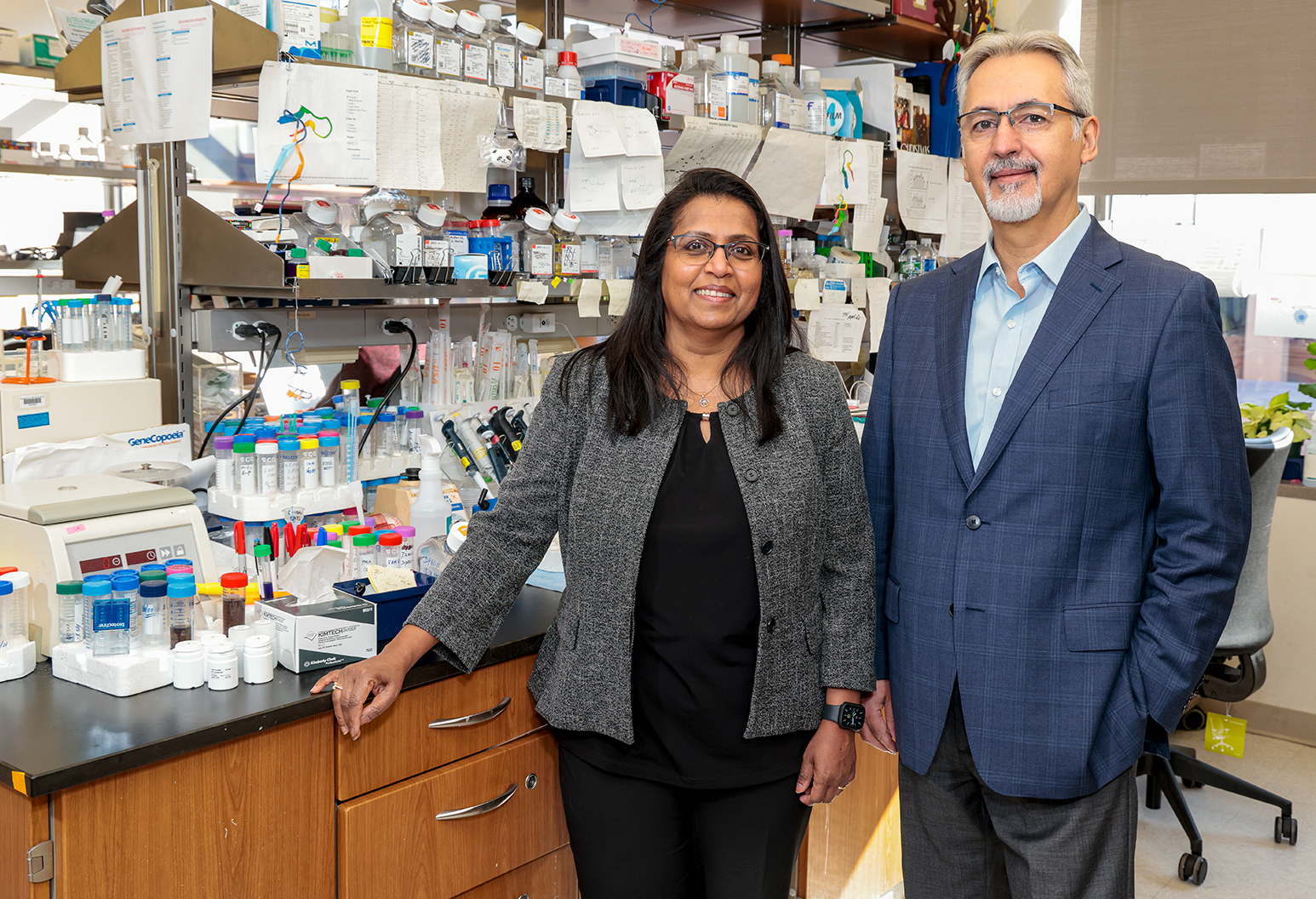
MANHASSET, N.Y.--(BUSINESS WIRE)--The American Institute for Medical and Biological Engineering (AIMBE) has announced the election of two researchers from The Feinstein Institutes for Medical Research to the AIMBE College of Fellows Class of 2024 for their contributions to the fields of medical and biological engineering, and particularly the field of bioelectronic medicine. Valentin Pavlov, PhD, and Sangeeta Chavan, PhD, both professors in the Institute of Bioelectronic Medicine, were recognized in-person during the AIMBE Annual Event in Washington D.C..
AIMBE is a nonprofit organization representing the most accomplished individuals in the fields of medical and biological engineering with the mission to provide leadership and advocacy in medical and biological engineering for the benefit of society. AIMBE Fellows represent the top two percent of medical and biological engineers, and they include the most accomplished scientific minds in academia, industry, education, clinical practice, and government.
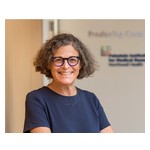
“It is a great honor be elected to the AIMBE Class of Fellows and be among so many esteemed colleagues who represent the brightest minds in biomedical science,” said Dr. Chavan. “This recognition underscores the importance of interdisciplinary research and motivates me to continue to advance science to cure disease.”
Dr. Chavan joined the Feinstein Institutes in 2004. Her research is rooted in progressing the field of bioelectronic medicine which combines molecular medicine, neuroscience, and biomedical engineering to regulate the immune system response. Her research explores the connections between the brain, the vagus nerve and the immune system, particularly focusing on how they collectively respond to infections or injuries. By understanding the molecular mechanisms of these neural pathways, Dr. Chavan aims to help pioneer innovative treatments for inflammatory diseases such as rheumatoid arthritis and inflammatory bowel disease. Dr. Chavan has written over 100 peer-reviewed publications and book chapters and holds numerous patents.
Last year, Dr. Chavan published results of a study that showed the effectiveness of using ultrasound technology to non-invasively reduce inflammation in the body – something that has traditionally only been done through the use of pharmaceutical drugs. In 2021, Dr. Chavan published a groundbreaking paper in the journal Proceedings of the National Academy of Sciences of the United States of America (PNAS), that demonstrated effective manipulation of neurons responsible for releasing molecular proteins to modulate inflammation levels.
“I am grateful to the AIMBE, and I am proud to be a part of this new class of fellows,” said Dr. Pavlov. “This acknowledgment emphasizes the importance of medical research, collaboration, and the exchange of ideas in shaping a brighter future.”
Dr. Pavlov joined the Feinstein Institutes in 2002 and has dedicated more than two decades to understanding the brain-body communication in the regulation of inflammation, studies that helped to pioneer the field of bioelectronic medicine. His current research focus is on the role of the brain and the vagus nerve in the regulation of inflammation and metabolism, and the use of new cholinergic therapeutic approaches in sepsis and obesity-driven disorders. He has published over 100 peer-reviewed papers and book chapters and is also a co-inventor of several patents. Dr. Pavlov is the executive editor of the journal Bioelectronic Medicine, an open-access journal and part of BMC Springer Nature. He is also president of the International Society for Autonomic Neuroscience (ISAN).
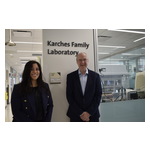
“Drs. Chavan and Pavlov are pioneers in the field of bioelectronic medicine whose dedicated research continues to advance our understanding of the brain-body connection,” said Kevin J. Tracey, MD, president and CEO of the Feinstein Institutes and Karches Family Distinguished Chair in Medical Research and Class of 2020 AIMBE fellow. "Their election to the AIMBE College of Fellows is a testament to their exceptional work. On behalf of the Feinstein Institutes and Northwell Health, we congratulate them.”
The Feinstein Institutes for Medical Research is the global scientific home of bioelectronic medicine where medical researchers use modern technology to develop new device-based therapies to treat disease and injury.
Built on years of research in molecular mechanisms of disease and the link between the nervous and immune systems, our researchers discover neural targets that can be activated or inhibited with neuromodulation devices, like vagus nerve implants, to control the body’s immune response and inflammation. If inflammation is successfully controlled, diseases – such as arthritis, pulmonary hypertension, Crohn’s disease, inflammatory bowel diseases, diabetes, cancer and autoimmune diseases – can be treated more effectively.
Beyond inflammation, using novel brain-computer interfaces, Feinstein Institutes researchers developed techniques to bypass injuries of the nervous system so that people living with paralysis can regain sensation and use their limbs. By producing bioelectronic medicine knowledge, disease and injury, could one day be treated with our own nerves without costly and potentially harmful pharmaceuticals.
About the Feinstein Institutes
The Feinstein Institutes for Medical Research is the home of the research institutes of Northwell Health, the largest health care provider and private employer in New York State. Encompassing 50 research labs, 3,000 clinical research studies and 5,000 researchers and staff, the Feinstein Institutes raises the standard of medical innovation through its five institutes of behavioral science, bioelectronic medicine, cancer, health system science, and molecular medicine. We make breakthroughs in genetics, oncology, brain research, mental health, autoimmunity, and are the global scientific leader in bioelectronic medicine – a new field of science that has the potential to revolutionize medicine. For more information about how we produce knowledge to cure disease, visit http://feinstein.northwell.edu and follow us on LinkedIn
Contacts
Julianne Mosher Allen
516-880-4824
jmosherallen@northwell.edu