Feinstein Institutes bioelectronic medicine researchers stimulate vagus nerve to reduce bleeding in hemophilia
Feinstein Institutes bioelectronic medicine researchers stimulate vagus nerve to reduce bleeding in hemophilia
Study results published in Nature Communications show vagus nerve stimulation triggers “neural tourniquet”
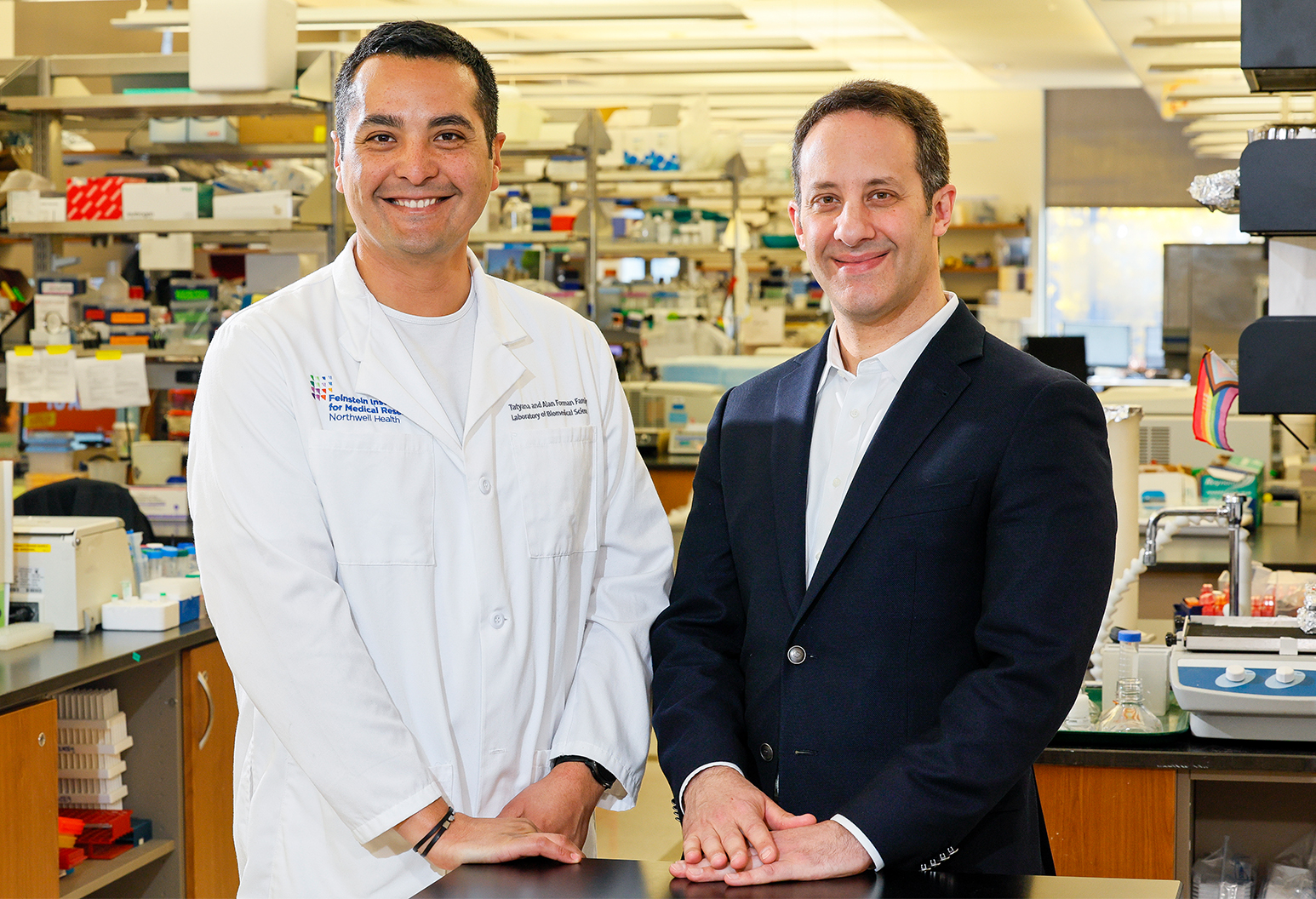
MANHASSET, N.Y.--(BUSINESS WIRE)--Hemophilia A, a bleeding disorder that prevents blood from clotting, affects more than 30,000 people in the United States and, in high-risk situations, can lead to death. Researchers at The Feinstein Institutes for Medical Research have shown that electrically stimulating the vagus nerve can reduce bleeding in preclinical hemophilic mice models – a finding that could translate into human patients. The study, published in Nature Communications, builds on years of research into harnessing the vagus nerve through electrical stimulation, a foundation of bioelectronic medicine.
Led by Jared Huston, MD, associate professor of surgery and science education at the Donald and Barbara Zucker School of Medicine at Hofstra/Northwell and the Institute of Bioelectronic Medicine at the Feinstein Institutes, the research shows that vagus nerve stimulation reduces bleeding in hemophilia A mice to the same degree as replacing missing clotting factor – the current gold-standard therapy for patients living with hemophilia. Dr. Huston and team have dubbed the effects a “neural tourniquet” to help curb excessive bleeding.
“From the delivery room to the operating room and the military battlefield, bleeding is too often fatal, and we do not have one universal therapy or technology to help reduce it, or even better, prevent it from occurring,” said Dr. Huston. “This research is an important step toward discovering improvements in patient care, not only for those living with hemophilia, but also for any patient or individual facing a high-bleeding risk scenario.”
The vagus nerve runs from the brain to the periphery and communicates with all major organs. It helps control essential functions, like heart rate and breathing, and is the main conduit for the body’s inflammatory immune response to disease, bacteria and viruses. By stimulating the nerve with electrical impulses, you can control inflammation and organ function. Dr. Huston’s research shows that the vagus nerve targets the spleen, which stores one-third of our platelets, the primary cell that controls bleeding throughout the body. The paper shows that after stimulation primed platelets travel in the bloodstream to sites of injury where they trigger more effective blood clotting, in some circumstances decreasing traumatic blood loss by 75 percent.
“To develop better treatments for complex disorders, like hemophilia, we must first understand its molecular mechanisms,” said Carlos E. Bravo-Iniguez, MD, an Elmezzi Graduate School of Molecular Medicine 2023 graduate, and the first author on the paper. “These results support future clinical research to help advance technology and bioelectronic medicine.”
As part of Dr. Huston’s research program investigating vagus nerve stimulation in post-traumatic hemorrhage, he was also a winner of Northwell Health’s 2021 Innovation Challenge. The challenge awards four employees from the health system funding that totals $1.3 million towards their driven projects that have the potential to transform the future of medicine.
“The vagus nerve is the main communication line between the brain and the body’s organs, but no one before suspected it can control blood clotting,” said Kevin J. Tracey, MD, president and CEO of the Feinstein Institutes, Karches Family Distinguished Chair in Medical Research. “Dr. Huston’s new findings indicate it may be possible to stop life-threatening bleeding by stimulating the vagus nerve.”
The Feinstein Institutes is known as the global scientific home of bioelectronic medicine because of early discoveries in its labs. Decades ago, Dr. Tracey and his colleagues identified the role the vagus nerve plays in controlling our body’s immune response, defining it as the inflammatory reflex. Researchers continue to build off that work worldwide to develop devices to cure disease.
Built on years of research in molecular mechanisms of disease and the link between the nervous and immune systems, our researchers have uncovered neural targets that can be activated or inhibited with neuromodulation devices like vagus nerve implants to regulate the body’s immune response and inflammation. If inflammation is successfully controlled, diseases – such as arthritis, pulmonary hypertension, Crohn's disease, inflammatory bowel diseases, diabetes, cancer and autoimmune diseases – can be treated more effectively. By producing bioelectronic medicine knowledge, disease and injury could one day be treated with our own nerves without costly and potentially harmful pharmaceuticals.
About the Feinstein Institutes
The Feinstein Institutes for Medical Research is the home of the research institutes of Northwell Health, the largest health care provider and private employer in New York State. Encompassing 50 research labs, 3,000 clinical research studies and 5,000 researchers and staff, the Feinstein Institutes raises the standard of medical innovation through its five institutes of behavioral science, bioelectronic medicine, cancer, health system science, and molecular medicine. We make breakthroughs in genetics, oncology, brain research, mental health, autoimmunity, and are the global scientific leader in bioelectronic medicine – a new field of science that has the potential to revolutionize medicine. For more information about how we produce knowledge to cure disease, visit http://feinstein.northwell.edu and follow us on LinkedIn.
Contacts
Julianne Mosher Allen
516-880-4824
jmosherallen@northwell.edu