Power2Drive Europe: Mobile Electricity Storage Systems for Private Homes and Businesses – and for a Stable Power Grid
Power2Drive Europe: Mobile Electricity Storage Systems for Private Homes and Businesses – and for a Stable Power Grid
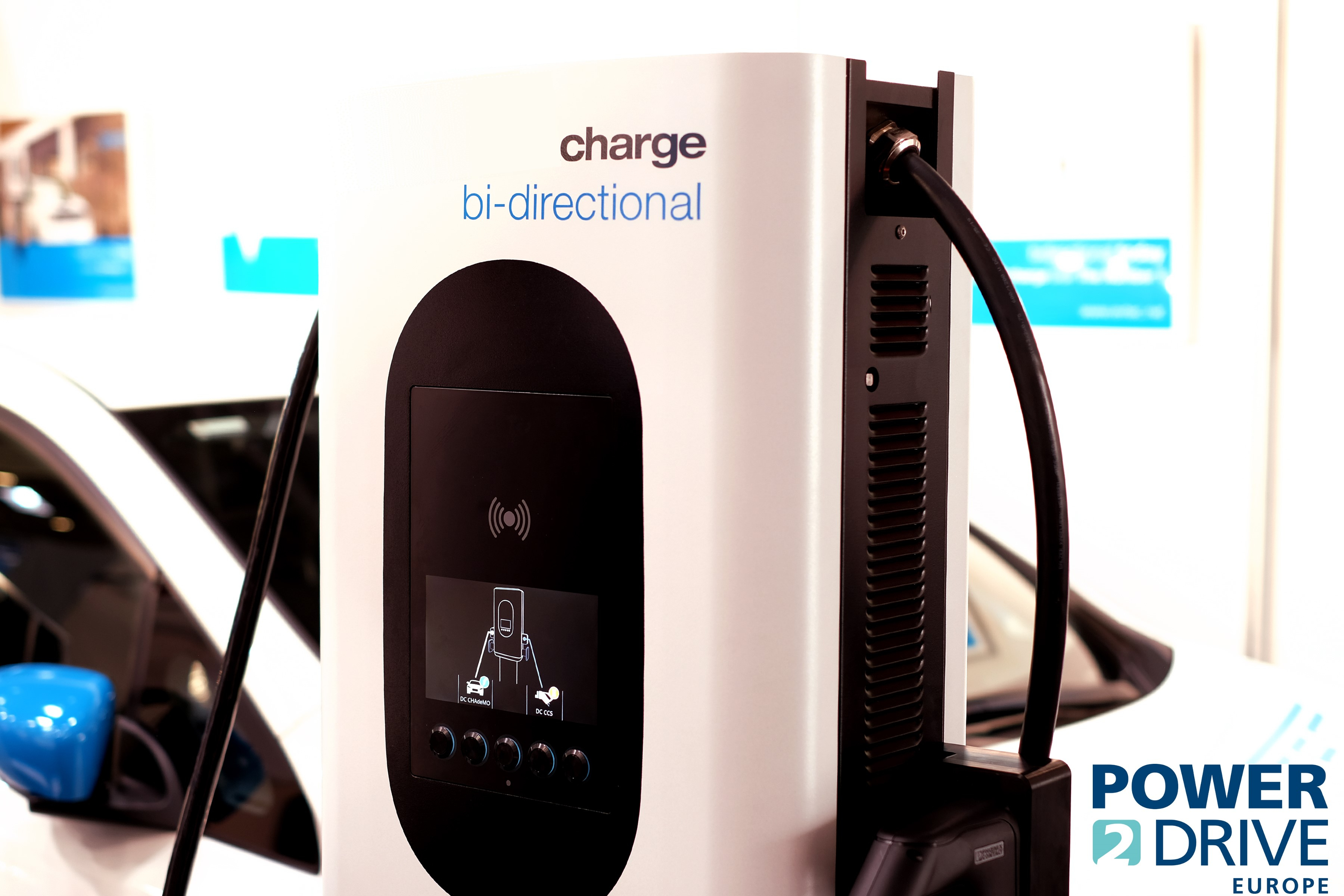
MUNICH & PFORZHEIM, Germany--(BUSINESS WIRE)--According to statistics from the European Alternative Fuels Observatory, over six million electric and hybrid cars were on Europe’s roads in 2022. From 2035 onward, all cars will have to be electric in the EU. With e-mobility booming, there is more and more potential for e-cars to be used as mobile energy storage systems. They can supply electricity to private homes and offices, stabilizing the public power grid in the process. Using vehicle batteries as flexible storage systems in a smart grid in the future will be a crucial step in guaranteeing a stable energy supply and a cost-effective way of achieving climate targets. Visitors at this year’s Power2Drive Europe, the international exhibition for charging infrastructure and e-mobility being held at Messe München on June 14–16, will be able to discover innovations in bidirectional charging. Experts will also be discussing this topic at the accompanying Power2Drive Europe Conference 2023 at the International Congress Center München (ICM).
Electric cars are as environmentally friendly as the electricity that powers them. When doubled up as mobile storage systems, they can also supply private homes with clean energy. With bidirectional charging, for example with Vehicle2Home (V2H), it is possible to optimize the self-consumption of solar power and the costs associated with charging and discharging e-cars when electricity rates are variable.
Vehicle2Building (V2B) takes this concept one step further. Multiple vehicles supply electricity to residential buildings or commercial properties, ensuring that the energy required during peak loads doesn’t have to be sourced from the grid. Both V2H and V2B are behind-the-meter applications. This means that vehicles only feed the electricity back into the residential building or commercial property. “This generally makes Vehicle2Home much easier to implement than Vehicle2Grid. And users can already expect decent margins,” says Timo Kern, Head of Energy System and Markets at the Research Center for Energy Economics (FfE) in Munich.
“So many vehicles and homes are suitable for Vehicle2Home”
With e-mobility booming, there is growing potential for V2H. Vehicles sitting at home during the week because their owners are working from home, work part-time or have a flexible working agreement are ideal – as are cars belonging to commuters, which can be used to store surplus energy over the weekend. When they are parked at home in the evening after work, they can supply electricity to the home. The difference between the domestic electricity price and the photovoltaic feed-in tariff is another major factor: “Since this difference has become much greater with energy prices on the rise, lots of vehicles and homes are now suitable for Vehicle2Home,” says Kern.
Vehicle2Grid (V2G) also has the potential to mobilize the immense power reserves in millions of electric cars in a matter of seconds, helping to secure a stable power supply in the process. In this context, vehicle batteries are used as flexible storage systems in a smart grid, playing a crucial role in guaranteeing a stable energy supply and providing a cost-effective way of achieving climate targets. Think tank Agora Energiewende (German Energy Transformation Initiative) ran the calculations in its study Climate-Neutral Power System 2035. If a quarter of all electric cars use V2G in 2035 and 40 percent of those vehicles are made available to the electricity market on average, the usable output will amount to 28 gigawatts in Germany. V2G also has the potential to reduce dependence on battery storage systems in private homes and on large-scale battery storage systems. And there are benefits for car owners too... They have the opportunity to earn money when they offer some of their vehicle’s battery capacity as a power reserve.
Only a modest number of e-cars are used for bidirectional charging as it stands. As demand grows, however, there will be more and more opportunities for vehicles to be used as electricity storage systems – whether that’s for V2H, V2B, V2G or V2L (Vehicle2Load). Bidirectional wallboxes are still relatively rare for now too. But demand is on the rise here too, so it’s only a matter of time before the relevant charging solutions are readily available in the market. The European Union’s three-year SCALE (Smart Charging Alignment for Europe) project is helping to lay the foundations here, with smart charging solutions for electric vehicles being researched and tested in real-life scenarios. Another aim of the project is to clarify technical, organizational, economic and political uncertainties surrounding the introduction of smart charging, inter-operability and V2X (Vehicle2Everything) solutions. The ultimate goal is to create a new energy ecosystem that benefits from the flexibility of batteries in electric vehicles on a large scale.
Bidirectional charging at the exhibition and Power2Drive Europe Conference
Visitors at Power2Drive Europe 2023 will be able to discover innovations in bidirectional charging. As part of The smarter E Europe, the international exhibition for charging infrastructure and e-mobility will be showcasing products, innovations and business models relating to charging infrastructure and electromobility at Messe München from June 14–16. Over 300 suppliers of charging infrastructure solutions are set to attend The smarter E Europe. The Mobility House, KEBA Group, Alfen and EnerCharge are just some of the exhibitors who will be presenting their solutions for bidirectional charging in Hall B6.
The Power2Drive Europe Conference 2023 will start on the day before the exhibition at the International Congress Center München (ICM). Bidirectional charging will be in the spotlight alongside market trends, analysis and research findings, and innovative projects for electromobility and charging infrastructure. For example, the session called Bidirectional Charging: Energy Supply Challenges organized by consulting and engineering firm umlaut will be discussing the latest developments in bidirectional charging, presenting results from pilot projects and looking at potential barriers to scaling bidirectional charging.
The most recent episode on Vehicle2Grid – How Close Are We to V2G Becoming a Daily Reality? with Dr. Stefan Perras & Thomas Gereke from Siemens – offers an in-depth look at the role of V2G in the decentralized grid of the future.
Contacts
Press:
Peggy Zilay
Spokesperson
The smarter E Europe
+49 7231 58598-240
zilay@solarpromotion.com
Juliane Heermeier
Account Manager
+49 151 41482446
juliane.heermeier@fischerappelt.de