Feinstein Institutes Names Lopa Mishra Co-Director of the Institute of Bioelectronic Medicine
Feinstein Institutes Names Lopa Mishra Co-Director of the Institute of Bioelectronic Medicine

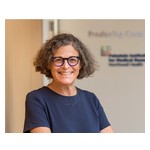
MANHASSET, N.Y.--(BUSINESS WIRE)--The Feinstein Institutes for Medical Research, the science arm of Northwell Health, has named Lopa Mishra, MD, co-director for the Institute of Bioelectronic Medicine. Dr. Mishra is also the inaugural Susan and Herman Merinoff Distinguished Chair in Translational Medicine, an endowed position made possible through the generosity of Susan Merinoff and her late husband Herman.
Dr. Mishra will leverage her background in translational medicine and cancer to develop novel therapies and clinical trials centered on the emerging field of bioelectronic medicine – a confluence of molecular medicine, neuroscience and biomedical engineering to target and stimulate nerves. Dr. Mishra will co-lead the Institute with Yousef Al-Abed, PhD, who has been director since 2015.
Dr. Mishra joins the Feinstein Institutes from George Washington University (GW), where she served as director of the Center for Translational Medicine and established clinical and scientific programs, including liver and gastrointestinal diseases and cancer. Prior to GW, Dr. Mishra was chair of the Department of Gastroenterology at MD Anderson Cancer Center from 2009 to 2016, and led its GI Cancer Program.
Among many accomplishments at both GW and MD Anderson Cancer Center, she was able to cultivate a strong educational and mentoring program that developed a pipeline of physician-scientists – something she hopes to continue to implement in her role at the Feinstein Institutes. Over this past academic year, she has built six multidisciplinary collaborative programs, given eight invited talks, chaired five sessions at national and international meetings, and co-authored/senior authored seven publications. She serves on five advisory boards, including UCLA, Mayo Clinic, VCU, Cincinnati and Georgetown University and is currently working on two new studies focusing on the intersection of obesity/fibrosis and cancer.
“The field of bioelectronic medicine is at a pivotal moment – a moment that may soon turn the tide for how we treat some of the most serious diseases without traditional pharmaceuticals,” said Dr. Mishra. “I am eager to bring my experience, roll up my sleeves and begin working to amplify and advance the great research being done in the Institute and across Northwell Health.”
At the Feinstein Institutes, Dr. Mishra will focus on the continuum of science-driven clinical care by working on novel therapies and improved clinical outcomes, honing liver disease, metabolism/alcohol, obesity/addiction gastrointestinal cancers, inflammatory bowel disease, neural regulation of disease and cancer.
Dr. Mishra continues her research as she transitions to the Feinstein Institutes and just recently published a paper in the highly-esteemed peer-reviewed journal Gastroenterology (impact factor: 20.8), which explores the role genetic alterations of the signaling protein transforming growth factor β (TGF-β) plays in the development of disease and cancers in the liver, pancreas and gastrointestinal system. Her research suggests the need to explore blocking specific TGF-β signals to ultimately prevent or slow the spread of cancer.
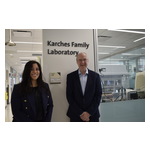
“We are fortunate to welcome Dr. Mishra to the Feinstein Institutes,” said Kevin J Tracey, MD, president and CEO of the Feinstein Institutes and the Karches Family Distinguished Chair in Medical Research. “Her clinical and research excellence will further advance Northwell Health’s leadership in bioelectronic medicine and oncology.”
About the Feinstein Institutes
The Feinstein Institutes for Medical Research is the research arm of Northwell Health, the largest health care provider and private employer in New York State. Home to 50 research labs, 3,000 clinical research studies and 5,000 researchers and staff, the Feinstein Institutes raises the standard of medical innovation through its five institutes of behavioral science, bioelectronic medicine, cancer, health innovations and outcomes, and molecular medicine. We make breakthroughs in genetics, oncology, brain research, mental health, autoimmunity, and are the global scientific leader in bioelectronic medicine – a new field of science that has the potential to revolutionize medicine. For more information about how we produce knowledge to cure disease, visit http://feinstein.northwell.edu and follow us on LinkedIn.
Contacts
Matthew Libassi
631-793-5325
mlibassi@northwell.edu