Feinstein Institutes Receives $1.7M NIH Grant to Study Origins of Hereditary Blood Disorder
Feinstein Institutes Receives $1.7M NIH Grant to Study Origins of Hereditary Blood Disorder
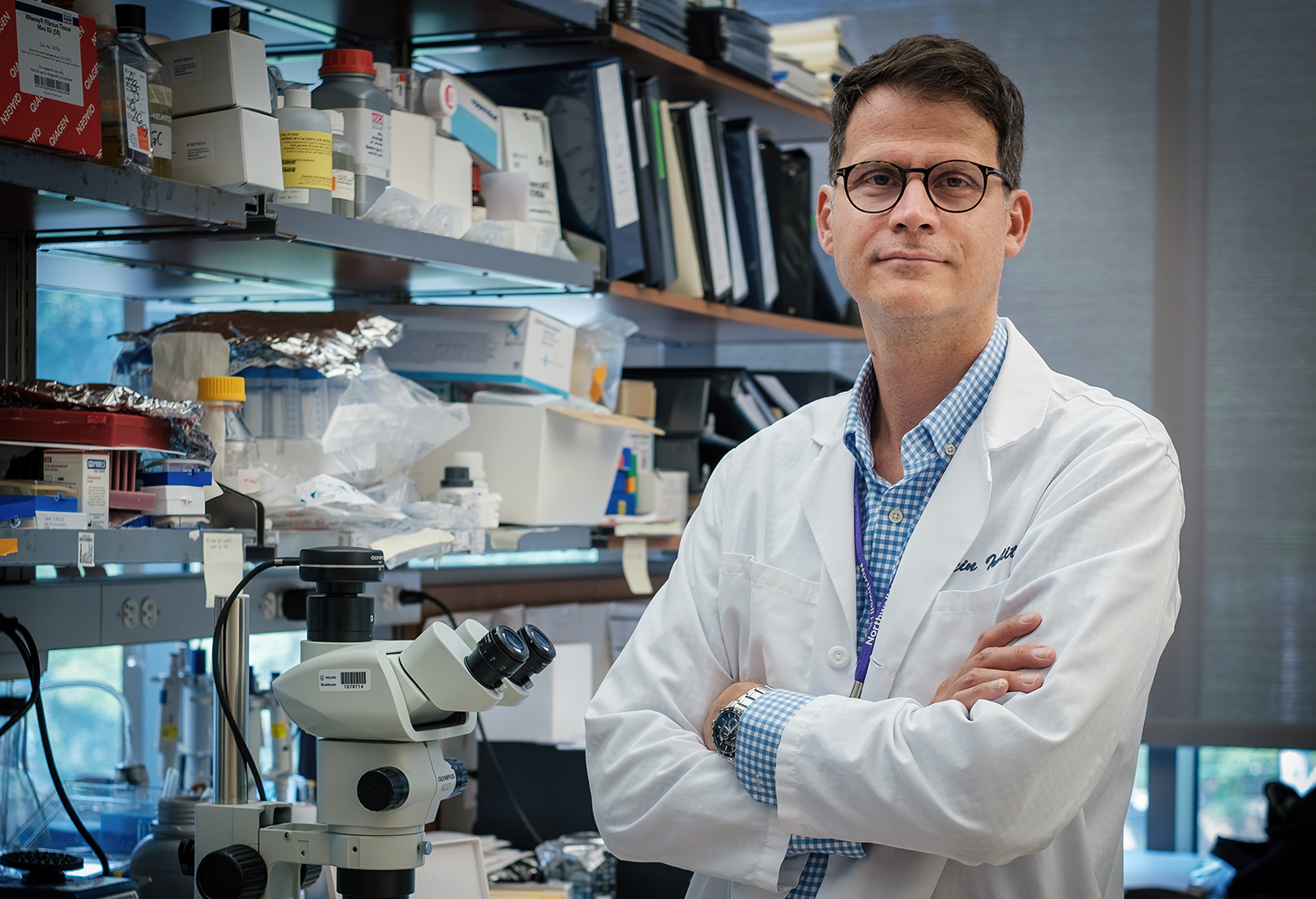
MANHASSET, N.Y.--(BUSINESS WIRE)--To research new treatments for Hereditary hemorrhagic telangiectasia (HHT) – a genetic bleeding disorder in which blood vessels do not form properly– the National Institutes of Health (NIH) has awarded Philippe Marambaud, PhD, professor in the Institute of Molecular Medicine at the Feinstein Institutes for Medical Research, a four-year, $1.675 million grant.
HHT, also known as Osler-Weber-Rendu syndrome, is often misdiagnosed with more than 1.4 million people worldwide suffering from the disorder. Nosebleeds are the most common sign of HHT, along with abnormal blood vessels in the skin that can appear on the hands, fingertips, lips, lining of the mouth and nose as red or purplish spots. Bleeding within the stomach or intestines is another possible indicator, as well as arteriovenous malformations (AVMs) occurring in the brain, lungs and liver, which often do not display any warning signs before rupturing. Currently, the only available treatments for HHT is to control bleeding and prevent complications from AVMs.
“HHT is a life-threatening disorder, often misdiagnosed and with no treatment options for patients,” said Dr. Marambaud. “I am hopeful that with the NIH’s support we will better understand HHT from the molecular level and continue our efforts to identify potential remedies for the blood disorder.”
Dr. Marambaud will research endothelial cells, the main type of cell found inside the lining of blood vessels, lymph vessels and the heart. He will investigate the over-activation of the endothelial mTOR, which regulates cell processes including metabolism, growth, proliferation and survival as well as the VEGFR2 pathway which activates the growth of blood vessels.
Building off his previous discoveries that HHT is caused by defective mTOR and VEGFR2 pathways, Dr. Marambaud and his team will continue to assess endothelial mTOR and VEGFR2 activation. Specifically, the team will examine whether they are both required for arteriovenous malformations to develop in HHT mouse models by using pharmacological and gene deletion procedures. The interventions targeting defects in the pathways may provide researchers with disease-modifying properties for HHT, driving hope for future treatment therapies.
“Dr. Marambaud is leading important research on the molecular causes of HHT,” said Kevin J. Tracey, MD, president and CEO of the Feinstein Institutes. “This NIH support will advance his progress on developing new therapies.”
About the Feinstein Institutes
The Feinstein Institutes for Medical Research is the research arm of Northwell Health, the largest health care provider and private employer in New York State. Home to 50 research labs, 3,000 clinical research studies and 5,000 researchers and staff, the Feinstein Institutes raises the standard of medical innovation through its five institutes of behavioral science, bioelectronic medicine, cancer, health innovations and outcomes, and molecular medicine. We make breakthroughs in genetics, oncology, brain research, mental health, autoimmunity, and are the global scientific leader in bioelectronic medicine – a new field of science that has the potential to revolutionize medicine. For more information about how we produce knowledge to cure disease, visit http://feinstein.northwell.edu and follow us on LinkedIn.
Contacts
Matthew Libassi
516-465-8325
mlibassi@northwell.edu