Bruker Supports International Covid19-NMR Consortium for Structure-Function and Inhibitor Binding Investigations of SARS-CoV-2 RNA and Proteins
Bruker Supports International Covid19-NMR Consortium for Structure-Function and Inhibitor Binding Investigations of SARS-CoV-2 RNA and Proteins
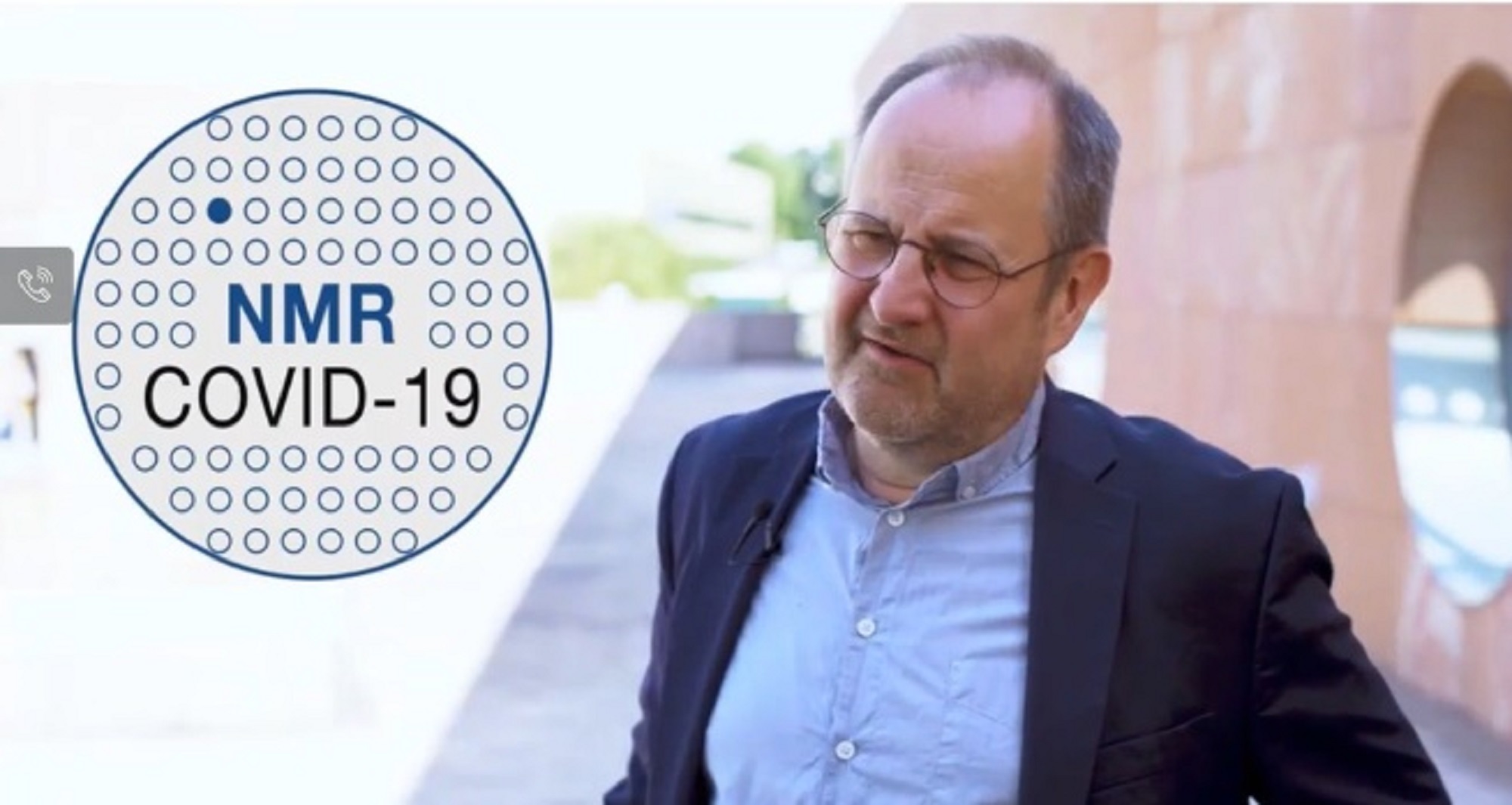
FRANKFURT, Germany--(BUSINESS WIRE)--Bruker Corporation (Nasdaq: BRKR) today announced its support of a worldwide collaborative project that investigates the structures, dynamics, function and binding of SARS-CoV-2 viral RNA and proteins using high-field nuclear magnetic resonance (NMR) spectroscopy. The Covid19-NMR (https://covid19-nmr.de/) consortium was initiated at Goethe University (GU) in Frankfurt, Germany, and leverages the extensive experience of the GU Biological Magnetic Resonance Center (http://www.bmrz.de/) and of 30 consortium groups in 15 countries in high-field NMR, structural biology, and small molecule drug screening.
The fight against the global COVID-19 pandemic is one of the greatest challenges currently facing mankind. The international Covid19-NMR consortium aims to determine the dynamics, function and potential for therapeutic intervention of the ribonucleic acid (RNA) and protein structures of SARS-CoV-2, with a focus on investigating the potential of small molecule drugs to bind to these viral biopolymer structures. The results are made publicly available prior to publication in order to communicate progress quickly and to a wide research network.
Goethe University-Professor Harald Schwalbe, a founder and the coordinator of the Covid19-NMR consortium, commented: “Since the beginning of the Covid19-NMR project, we have collaborated closely with Bruker. Bruker offers us access to its research facilities, support for our NMR spectrometers, as well as analysis software. The Covid19-NMR consortium, now with 140 researchers in 30 research groups in Europe, the Americas and India, benefits greatly from this collaboration, and we are fortunate to have Bruker as a key partner.”
The SARS-CoV-2 virus is comprised of almost 30,000 nucleotides in the RNA genome, which encode for around 30 proteins. The Covid19-NMR consortium has focused on NMR-based determination of secondary structures of the cis-regulatory structured RNA elements in the 5’- and 3’-UTRs of the viral genome, and the consortium has carried out fragment-based ligand screening of RNA target structures using both Bruker and consortium member NMR libraries.
As an example, high-resolution NMR spectroscopy using two Bruker 600 MHz spectrometers allowed the complete screening of 768 small molecule compounds in 54 hours. Among the 14 RNAs screened against these compounds, the SARS-CoV frameshifting pseudoknot (PK) – one of the best characterized cis-acting RNA elements in the SARS-CoV-1 virus – was investigated further. Previous research discovered that a compound targeting a specific region of the PK, called ‘loop 3’, significantly inhibited virus growth, and Covid19-NMR group confirmed that the structure of this region is identical to that in SARS-CoV-2, qualifying it as a prime RNA target for fragment-based screening. It was subsequently regarded as a potential drug discovery ‘hit’. Other study examples such as the protein assignment of Nsp3b (Macrodomain) have been performed on high-field NMR technology at 1.2 GHz.
Dr. Rainer Kuemmerle, Global Head of Applications at Bruker BioSpin, stated: “Only NMR spectroscopy can obtain structural, functional and binding information under near-physiological conditions. Valuable insights can be gathered about the location, affinity and kinetics of ligand binding, and researchers can visualize the conformational changes taking place at the RNA or protein binding site in order to better understand potential small molecule inhibitor efficacy.”
For more information about the Covid-19-NMR consortium, please visit https://covid19-nmr.de/, or watch the on-demand webinar: https://www.bruker.com/events/webinars/secondary-structure-determination-of-conserved-sars-cov-2-rna-elements-by-nmr-spectroscopy.html
For more information about Bruker’s NMR spectroscopy solutions, please visit https://www.bruker.com/products/mr/nmr.html
About the Covid-19-NMR Consortium
The Covid19-NMR Consortium was initiated at the Goethe University in Frankfurt in March 2020, and it has quickly grown into an international consortium. Today, 140 scientists from 30 research groups in 15 countries are collaborating in a unique effort to investigate SARS-CoV-2 using NMR spectroscopy, based on open science principles. The goals, and the shared scientific targets of the project, are coordinated by Professor Harald Schwalbe and his team at GU Frankfurt.
The core team includes five professors and junior group leaders from Darmstadt and Frankfurt and nine senior scientists from the Biological Magnetic Resonance Center (BMRZ), Frankfurt. This core team sets out and coordinates the research tasks carried out in Frankfurt as well as in research groups from all over the world. The overall goal of the consortium is to join forces to achieve excellent scientific results as quickly as possible. To communicate research progress rapidly, the consortium uses this website to make results available and communicate progress. To this end, the consortium is supported by the startup company SIGNALS from Frankfurt.
About Bruker Corporation (Nasdaq: BRKR)
Bruker is enabling scientists to make breakthrough discoveries and develop new applications that improve the quality of human life. Bruker’s high-performance scientific instruments and high-value analytical and diagnostic solutions enable scientists to explore life and materials at molecular, cellular and microscopic levels. In close cooperation with our customers, Bruker is enabling innovation, improved productivity and customer success in life science molecular research, in applied and pharma applications, in microscopy and nanoanalysis, and in industrial applications, as well as in cell biology, preclinical imaging, clinical phenomics and proteomics research and clinical microbiology. For more information, please visit: www.bruker.com.
Contacts
Media and Customer:
Thorsten Thiel, Ph.D.
VP of Group Marketing
Bruker BioSpin
T: +49 (721) 5161-6500
E: thorsten.thiel@bruker.com
Investor:
Miroslava Minkova
Director, Investor Relations & Corporate Development
T: +1 (978) 663-3660 x1479
E: investor.relations@bruker.com