
As New York Restricts High-Potency 7-OH, Mountainside Urges People to Seek Help Before Withdrawal Starts
As New York Restricts High-Potency 7-OH, Mountainside Urges People to Seek Help Before Withdrawal Starts
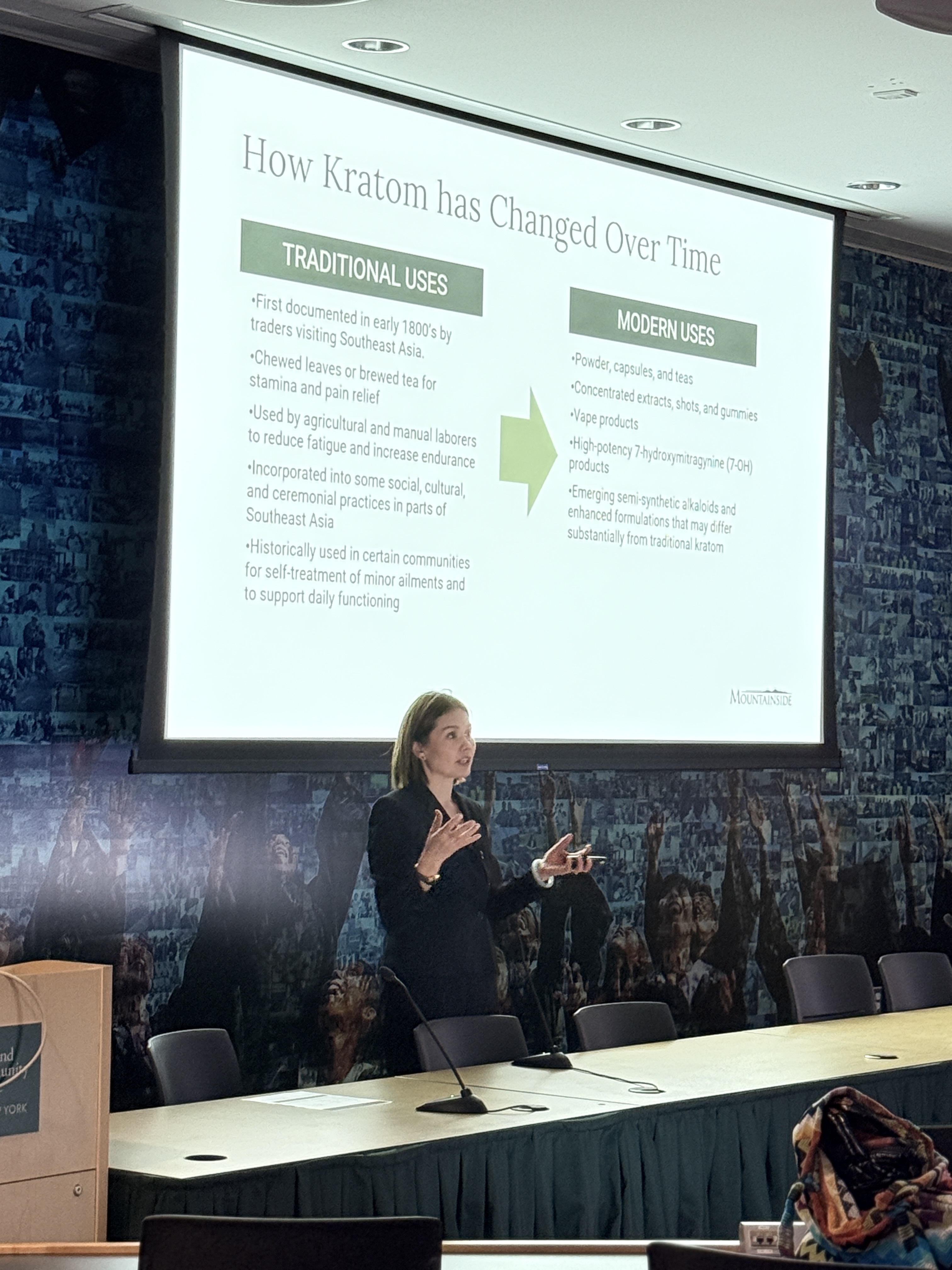
NEW YORK--(BUSINESS WIRE)--Following Gov. Kathy Hochul’s signing of legislation restricting sales of high-potency 7-hydroxymitragynine (7-OH) products on Nov. 23, Mountainside Treatment Center is encouraging New Yorkers who use these products regularly to talk with a healthcare professional before they’re gone from shelves. The law takes effect 90 days after signing and prohibits sales of products containing more than 2% 7-OH by total alkaloid content or more than one milligram per serving.
“We are seeing people come in sicker and sicker, with much more pronounced symptoms of withdrawal" —Jana Wu, director of clinical integration at Mountainside Treatment Center and founder of free weekly support group, Let's Talk Kratom.
Share
“Some of the people we see have been going to work and getting through the day without their family knowing they’re using 7-OH,” said Jana Wu, LCSW, LADC, director of clinical integration at Mountainside Treatment Center. “Then they enter withdrawal and they’re drenched in sweat, severely nauseated, agitated and anxious that it makes it extremely difficult to function. For some families, that’s the first time they learn what’s been going on.”
7-OH occurs naturally in trace amounts in kratom. Concentrated products can produce opioid-like effects and lead to dependence and withdrawal. “We are seeing people come in sicker and sicker, with much more pronounced symptoms of withdrawal,” Wu said. Withdrawal symptoms have become more severe in recent years as products have grown more potent. Some clients have described symptoms that were difficult to manage at home, including some who sought emergency care.
Wu was treating clients in Connecticut this spring as retailers were directed to pull kratom products from shelves. Mountainside also saw an increase in kratom-related admissions at its Canaan campus following Massachusetts’ emergency retail restrictions, which took effect Aug. 28. Both states took broader action covering kratom as well as concentrated 7-OH products.
“When Connecticut stores started taking these products off the shelves, we were already working with people who were having a hard time stopping,” Wu said. “People will still need care when access changes.”
In addition to medically supervised detox, Mountainside offers a free, clinician-led virtual support group, Let’s Talk Kratom, on Tuesdays from 7 to 8 p.m. ET. The group is open to the public and gives people a place to talk with others who understand what they’re going through.
About Mountainside Treatment Center
Mountainside Treatment Center is a nationally recognized behavioral health organization specializing in the treatment of substance use disorders and co-occurring mental health conditions. Through evidence-based care, innovative programming, and community partnerships, Mountainside helps build meaningful lives in recovery.
Contacts
Griffin Gonzales
Director, Media Relations
griffin.gonzales@mountainside.com
231-794-9450