Mosaic Emerges from Stealth with $47 Million to Build Intelligent Surgical Machines - Treating the Body from Inside
Mosaic Emerges from Stealth with $47 Million to Build Intelligent Surgical Machines - Treating the Body from Inside
Mosaic is developing sensing-enabled spatial intelligence and robotic infrastructure to safely navigate the human body’s main transport network: the vascular system
SAN FRANCISCO--(BUSINESS WIRE)--Advances in surgery have made it possible to reach nearly any organ deep inside the body through a needle puncture rather than a large incision. But physically navigating those pathways still depends on extraordinary human skill, requires the use of X-ray radiation and yields outcomes that vary with the experience of the person holding the instrument. Mosaic Intelligence Labs emerged today from stealth with $47 million in seed funding to build sensing-enabled spatial intelligence and robotic infrastructure to help physicians understand and safely navigate the body from within.
We kept returning to one question: what would it take to scale the knowledge of the very best surgeons? We believe that starts with making our machines aware and turning surgical repetition into experience we can learn from.
Share
Backed by investors including 8VC, Fundomo, Lingotto Innovation, and Obvious Ventures, Mosaic is developing full-stack intelligent surgical machines to extend the reach and precision of surgical expertise. The company is starting with endovascular intervention: procedures in which physicians guide flexible wires and catheters through blood vessels to deliver treatment.
Blood vessels provide access to virtually all bodily organs. Yet inside them, physicians work without a direct line of sight. Today they combine the skillful use of live X-ray images, preoperative scans, and the feel of instruments in their hands to understand where they are and what lies ahead. Interpreting those signals takes years of practice, and much of that knowledge remains difficult to capture or pass on.
Mosaic treats surgical intelligence as a learning problem, and starts by giving surgical instruments their own senses. The company is developing technology that combines sensing where instruments meet anatomy with advanced computation used to reconstruct the vascular environment from within. Its platform is designed to give physicians a continuously updated, three-dimensional understanding of anatomy and instrument position, paired with a robotic interface that supports precise instrument control.
“We spent years in operating rooms watching extraordinary people do extraordinary things. But what really stayed with us was just how much depended on knowledge that lived in the hands and minds of the person holding the instrument,” said Dr. Ileana Pirozzi, co-founder and CEO of Mosaic. “We kept returning to one question: what would it take to scale the knowledge of the very best surgeons? We believe that starts with making our machines aware, and turning surgical repetition into experience we can learn from.”
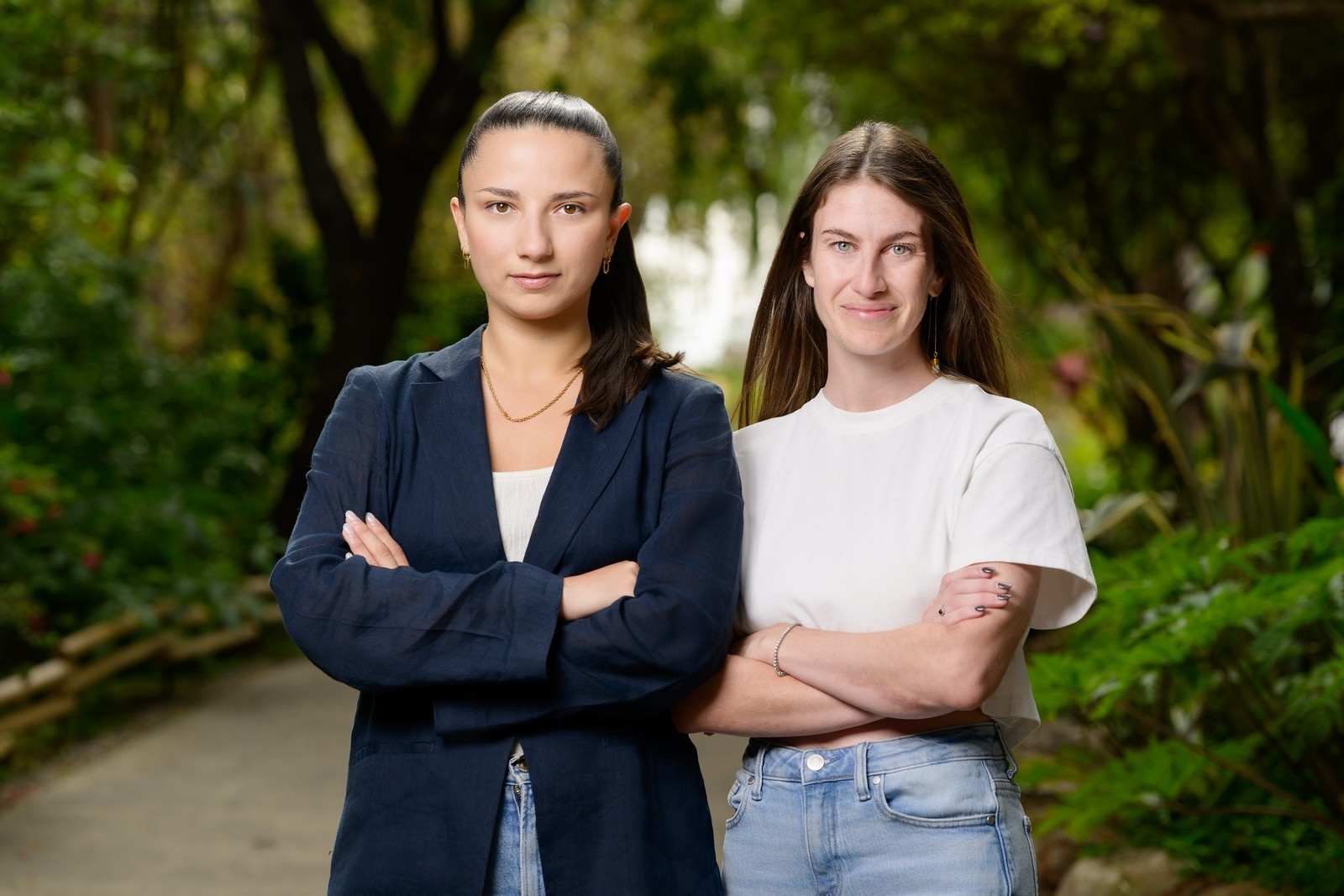
Pirozzi and co-founder Dr. Alison “Ali” Kight Mackanic met during their doctoral studies at Stanford. Their work alongside clinicians revealed a recurring constraint: less invasive techniques had expanded what medicine could accomplish, but the ability to perform difficult procedures became increasingly tied to individual experience. That observation became the foundation for Mosaic.
As AI advances into the physical world, Mosaic is tackling a fundamental prerequisite for embodied intelligence in surgery: making surgical machines aware of their environments. In robotics, a “world model” represents an environment and helps a machine predict how its actions will change it. Biology offers a related idea: an organism’s umwelt is the perceptual world shaped by its senses and its interactions with its surroundings. Perception informs action, and action changes what is perceived. That evolving loop is central to Mosaic’s approach to surgical machine intelligence.
Today, physicians supply the perception, judgment, and adaptation needed to guide surgical tools and machines through the body. The instruments themselves lack a continuously evolving understanding of the anatomy they encounter and how their actions affect it.
“There is no evolving loop between perception and action, and as a result they are structurally locked out of the ability to become intelligent,” said Mackanic, co-founder and CTO of Mosaic.
Mosaic is developing the infrastructure to connect those elements. By capturing synchronized information about the environment, instrument movement, and physician actions, and combining it with increasingly accurate physical models, the company is building a foundation for machines that can relate what they sense to what happens when they move. The goal is to support physicians today while making surgical experience a source of cumulative learning over time.
The longer-term opportunity extends beyond today’s vascular treatments. Catheters can carry drugs, energy, biologics, and other therapies directly to the target site. More reliable navigation could expand the range of treatments delivered through the vascular system and the settings in which clinicians can offer them.
Mosaic is recruiting engineers, physicians, and creatives in San Francisco with open roles across hardware engineering, sensing, perception, machine learning, and clinical engineering. Joining Mosaic means working alongside a group of builders who have created surgical systems used to treat more than 20 million patients, rockets, cars, artificial hearts and drugs.
Learn more at mosaicintelligence.xyz.
About Mosaic Intelligence Labs
Mosaic Intelligence Labs is a San Francisco–based company developing sensing-enabled instruments, spatial intelligence, and surgical systems to help physicians navigate the human body from within. Founded by Stanford-trained scientists Ileana Pirozzi and Ali Mackanic, Mosaic brings together engineering, perception, robotics, and clinical practice. Its mission is to expand what can be treated through the vascular system and help surgical expertise reach more people.
Contacts
Nancy Tran
nancy@mosaicintelligence.xyz