Tutor Intelligence Raises $75 Million Series B Led by Andreessen Horowitz to Scale Frontier Robotics Model Training, Manufacturing and Deployment
Tutor Intelligence Raises $75 Million Series B Led by Andreessen Horowitz to Scale Frontier Robotics Model Training, Manufacturing and Deployment
The new funding backs a full-stack robotics platform where every deployment trains better models, and better models unlock more deployments, with all robot systems built in and deployed from the United States.
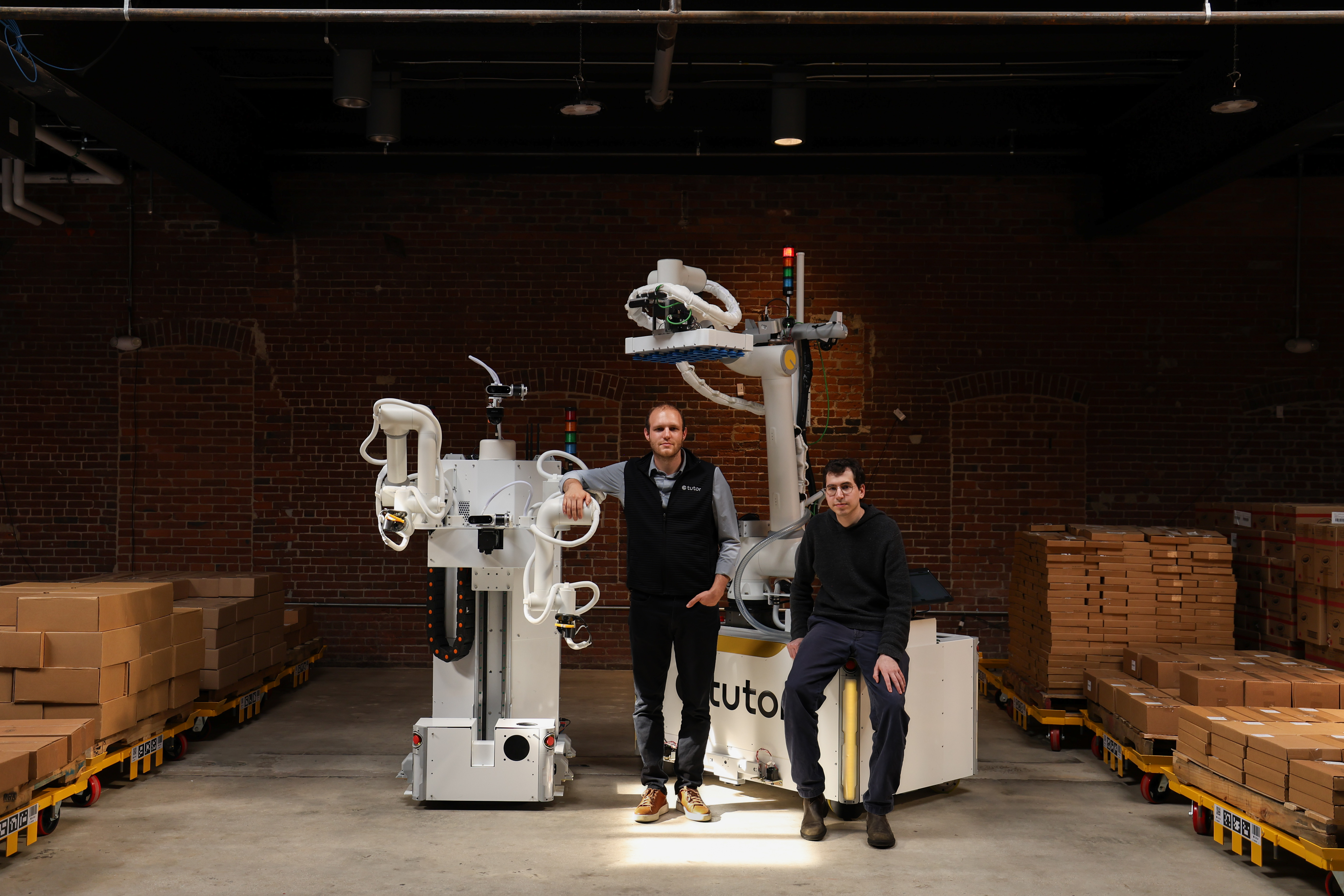
WATERTOWN, Mass.--(BUSINESS WIRE)--Tutor Intelligence, the robotics research and deployment company, today announced its $75 million Series B led by Andreessen Horowitz, bringing the company’s total capital raised to $117 million. The round will support Tutor’s frontier robot foundation model training, as well as the manufacturing and deployment of Sonny and Cassie, Tutor’s robot workers, which run the company’s models and work jobs across the United States. Union Square Ventures and Neo, which led the company’s Series A and seed rounds, respectively, also participated.
By offering a full-stack platform spanning robots, models and deployments, Tutor is building a network of intelligence in which each new deployment strengthens the entire fleet, making robots smarter, cheaper and easier to deploy over time.
Share
Artificial intelligence has transformed the digital world, learning to converse and code from the internet’s vast record of text and images. The physical world has no such record to train on, and AI has yet to transform it in the same way.
Tutor was founded to close the gap between what robots can do and what people can do. The company deploys fleets of internet-connected robots into production environments, where they do real work for real customers, with input from remote operators known as “tutors.” Every task the robots complete generates the real-world experience data that has been missing from the training equation. That data trains better frontier models, making the robots capable of more work and wider deployment.
“Tutor’s insight is that deployment isn’t just the destination for robotics research—it’s how you overcome its limitations. Rather than asking the real world to fit the research, Tutor starts with what real-world deployments demand and works backward through distribution, hardware and research. Continual learning across an expanding range of deployments is the path from specialized capabilities to general-purpose robotics,” said Raghu Raghuram, general partner at Andreessen Horowitz and former CEO of VMware.
By offering a full-stack platform spanning robots, models and deployments, Tutor is building a network of intelligence in which each new deployment strengthens the entire fleet, making robots smarter, cheaper and easier to deploy over time. This flywheel accelerates both deployment and training, building toward a generally capable robot workforce and a safer, more affordable and more abundant world for the American consumer.
“It’s not only that Tutor’s models let robots do jobs that robots have never been able to do before,” said Josh Gruenstein, co-founder and CEO of Tutor Intelligence. “This type of intelligence also makes robots affordable on a whole new level. We’re unlocking much broader access to the solutions that businesses need to survive and that make basic goods cheaper for everybody. And the demand is there. We can hardly build robots fast enough.”
Tutor sells robot work the way businesses already buy labor: by the hour or by the pick. Customers make no upfront purchase and sign no long-term contract, and Tutor handles deployment and maintenance and sends the robots upgraded software and intelligence on a regular basis. This business and service model is part of how Tutor is bringing automation into work that has long defied conventional robotics.
Today, Tutor’s robots are working in almost four times as many facilities as a year ago, and the team is on track to have more than 1,000 robots under contract by the end of 2027, all of which will be built in and deployed from the United States. The robots are currently in operation across some of the country’s largest manufacturing and logistics networks, handling the goods that fill the average American home: popular breakfast cereals, snacks, candy, cosmetics, home goods, toys and more.
Tutor’s growth tracks a broader turn in enterprise adoption of AI, as companies stop funding pilots and start underwriting systems that deliver measurable output inside their existing operations. Tutor’s robots take on the lifting, moving, and manipulation that keep factories and warehouses running, and customers are coming back for more: nearly a third of organizations who received Tutor robots in the past 12 months were existing Tutor customers installing more Tutor robots.
About Tutor Intelligence Tutor Intelligence is a robotics research and deployment company building across the full stack to deploy intelligent robots now. With Tutor-built robots, models and deployments compounding as a network, every robot Tutor puts to work makes the next robot more capable. Today, Tutor robots work real jobs across the United States, directed by human “tutors” and the foundation models the company has trained on the work done. Founded out of MIT CSAIL and based in Watertown, Massachusetts, Tutor sells robot work the way businesses already buy labor, with robot workers paid by the hour or by the pick. To learn more, visit tutorintelligence.com.
Contacts
Press Contact:
Hailey Cowan, Archetype
tutor-intelligence@archetype.co